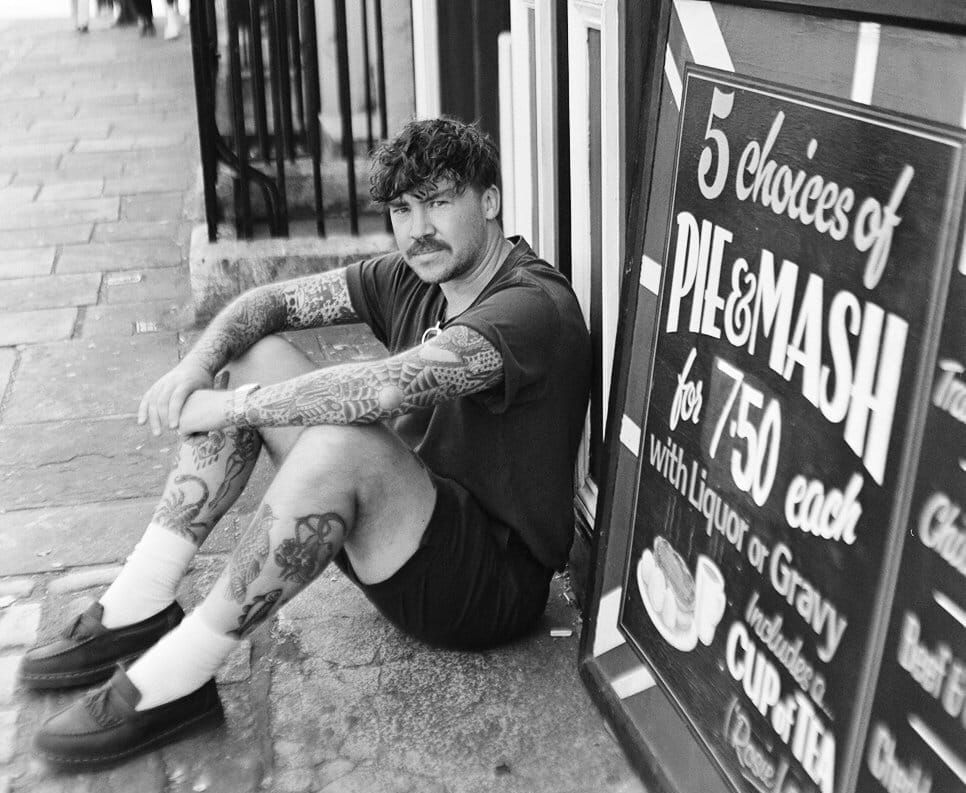
The Big Interview: Adam Casey, model maker - Part 2/3

The Big Interview: Adam Casey, model maker - Part 2/3

And here we are back with Part Two of our bog old chat with model maker and book nook creator extraordinaire, Adam Casey. In case you didn't catch the first part, you can read it here...

The Big Interview - Adam Casey, model-maker - Part 1/3
Adam Casey, book nook maker, miniature builder, and self confessed hoarder of junk, on authenticity, A.I, all things creative, and dealing with finding a larger audience on social media. In 2021, Adam Casey made his first Book Nook and has been on an exciting, inspiring artistic journey ever since.

For those up to speed, let's just crack on...

Have you got a set creative process down now? Are you pretty precise when you start a project? Or do you just dive in and then see where the project takes you? 
I think all my creations are very much in flux at every point in their creation. I come up with a concept and an idea of what I want. I'll hammer out a very crude floor plan sketch in felt tip. Then just work my way up. Then just think, oh, that fits. No, that doesn't fit. It’s like working with LEGO, but on a different kind of scale. You're just putting shapes together and seeing what works. I like working that way because nothing is really set in stone, you can just change on the fly. I will start off with an idea and 80% of it will be the same by the end of it. 

You're gaining a lot more exposure thanks to the social media clips that you do, as well as the ‘making of’ videos that accompany all of the Book Nooks that you make. How are you navigating uptick in exposure and how, if at all, has this changed how your art is received or how you think about your art when you're creating it?
It's very strange because when I started posting my stuff online, I never really put it up there for other people to see. When I posted the first slot of those horror movie dioramas on TikTok five years ago, I put it on TikTok because I needed something on TikTok to create an account. When I put them on there, they exploded in the first couple of days. I got six, seven thousand followers in the first couple of hours. I was really surprised by it. And so I just basically uploaded all the work that I had already made up there. And then I think, well, I've got to keep this going somehow. So I started making more things. For better or worse, with social media, you can't lose sight of why you're doing the thing that you're doing. Because I did for a while, I found myself realising that I was creating things for an algorithm and not for me. With the voiceovers and the videos and the makings of. It's not really stuff that I tend to like to do. But I want people to see my work. I have to do all this stuff. I've gotten more used to it now, it's been a couple of years. In the early part of it all, it was kind of uncomfortable. I was tripping over my own tongue quite a lot…it was all very awkward and weird. Although I think that might have been my appeal…

It's nice and authentic, isn't it? It's a real person doing it...
Exactly. I think authenticity is very important now in these social media spaces. People want to see real people making real things. Especially with the advent of generative AI taking over everything. I think I need to remember that and remember things don't have to be polished, things don't have to be perfect. You know, it's okay to make mistakes.

It's okay to even share things that aren't quite done. You know, perfection is cold and unfeeling and in the mistakes, you're given a chance to breathe and learn.

I think a lot of people need to understand that as well, for their own work. It's okay for it to not be perfect. You know, you're creating something and that's all that matters.

0:00
/2:59

Talk to us about online community that follow your work. 
When I started out I was in this action action figures, collectors, dioramas creation group that I joined. They're the loveliest people in the world, all model makers and a little bit eccentric, just lovely people who want to make just for the joy of making things. No one's trying to be 'Internet Famous' or anything. We're just sharing our ideas with each other and just making stuff. It's a lovely little family. Throughout my entire journey, whatever success I found in other platforms, I always share with them first because I feel those guys were there from the beginning. I trust their opinions more than anyone else's about what I've been doing. So that core community, they're like my little Book Nook family.

You recently did commission for a New York bookstore. How was that? How was it working with someone else on an idea and to someone else's brief. Did you find that changed your process at all?
It's called The Twisted Spine. They're based in Brooklyn and they're the first ever horror and fantasy centric bookstore. I get commission requests a lot…and I tend to ignore most of them. What struck me about the guys at the bookshop - first, they wrote a lovely long letter to me telling me what they were doing and what they wanted, their vision for the whole thing. And I tend to gravitate towards those kinds of requests, when it's something I want to be a part of. This is a lovely opportunity to to be a part of a little bit of history in that, in that sense would be lovely to do. I got in contact with them and then it was quite easy with the creative process because they had a lot of ideas and I had a lot of ideas as well. There was a lot of backwards and forwards about themes and mood and tone. It didn't take long for us to be on the same wavelength of what we wanted to create. Before they even contacted me, I had in my head, I wanted to do an infinity mirror tube line or underground station. I have a bunch of ideas just floating in the back of my head and that was one of them as well. So when they said they're from New York,  I said, ah, New York subway!

0:00
/3:57

Your work is beautifully steeped in spookiness and horror. So when you've had messages of support from people like Joe Hill (horror author and son of Stephen King) and Brian Wade who worked on the VFX for The Thing - that must be kind of incredible. How do you process occurrences like that?
It's completely insane. Really. It gives you a sense of worth. I mean, the fact that Joe Hill, I think he sort of like quasi quoted The Thing and he said, “you gotta be fucking kidding me!”. Not only is it Stephen King's son, Joe Hill, great horror author in his own right, but it's also one of my most favourite movies as well. It's just layers upon layers of encouragement, you know. Speaking to those people on that level and then other people see those comments and then they jump in as well. It's just lovely. You realise your community is bigger than just the people around you. It's huge.

So speaking of getting your inspiration boosted and encouraged with moments like that. Do you ever have, on the flip side, any moments of doubt or insecurity in your journey? If you have, how have you sort of overcome them?
Oh, dude. All the time. Right? I think everything I do is with an element of self doubt. I go into a project with, not confidence, but a vision of what I want to do and I think it's going to be great. I'm going to build it and then as the process goes I sometimes think 'this sucks. Why am I doing this? I'm rubbish'. So there's always that level but then you work through it, you keep going and eventually you get to where you want to be.

I've created my own little niche and I'm happy in that. I think sometimes you need to take a step back from the bigger picture and realise that what you're doing is cool in its own right. 

Speaking of the process, how do you balance it with your day to day life? Have you got set times where you will be creative, how does it work? 
I'm fortunate enough that I have a job that leaves me plenty of time for creative endeavours. I have all weekends and all the evenings to do everything. I finish my day job at 3 and then I can work untill my wife comes home and then I hang out with her and my dog. I'm very fortunate to be in this position where my time is my time and I use all of it to be creative and, you know, playing computer games or watching TV. I find you can be creative in so many different ways. 

0:00
/3:20

And that's the end of Part Two. of this series - we'll be back with more insights from Adam Casey soon. In the meantime, drop him a follow on Instagram and TikTok below.


We're constantly on the look out for new artists, creatives and initiatives to feature in TheNeverZine - so if you are, or know someone who is going their own way and doing their own thing on their own terms and would be a good fit to feature please smash that button below and get in contact. By talking to each other, and sharing our journeys, ideas and insights on creativity, art, mental health and resilience we can all create, share and thrive together. Nice thought that.

PS - Don't forget to subscribe below for more content from TheNeverPress 👇

Share this article
The link has been copied!