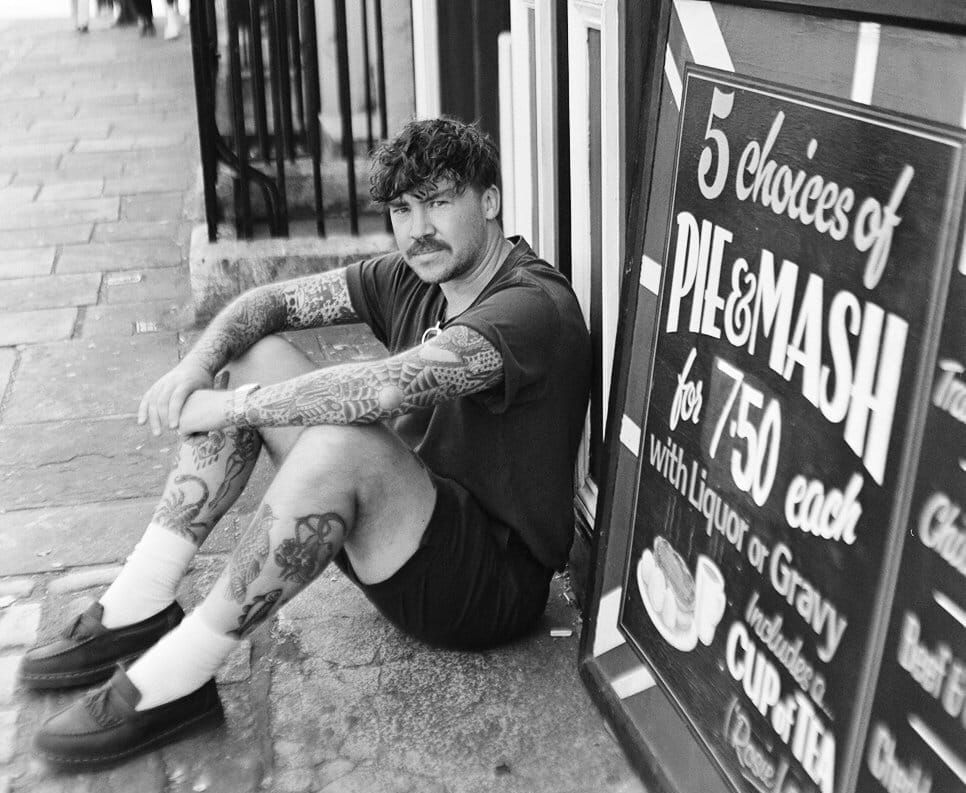
John Gay came to TheNeverPress from the cold - an unsolicited inbound that introduced us to Glasgow Anonymous, a print and digital project charting a recovery journey, and the anonymous public spaces where people meet to share and support each other. John's writing was immediate, tender and shot through with a striking honesty that was all too relatable. The spaces, the stories, the happenings occurring just around the corner, or just behind doors in public buildings. We were touched by his work and recognised, in Glasgow Anonymous, the type of work that we want to be involved in - raw, human, stories told with an unabashedly authentic voice. On the back of John's enquiry, we are working together on the print edition of Glasgow Anonymous, due for release in 2027. But first, let's meet the writer...
John, thank you so much for coming to TheNeverPress, please may you tell us about your creative journey so far
John Gay is a pseudonym I’m using for Glasgow Anonymous and a related novella, The Bedevilments, which deals with the same themes. I’ve also published a few books under my own name. I always try to write the most accessible, open-hearted books I can, but I’m resigned to the fact that my idea of what that means seems to be very different to how agents and the larger publishing industry see things. It seems I belong in the small-press world, and I’m okay with that. I’m lucky to be able to keep writing and publishing things.
Please tell us about Glasgow Anonymous
As the title suggests, it’s about the experience of anonymity in addiction and recovery: not only in the negative sense of being stripped of your sense of self and mastered by compulsion, but in the positive sense defined by the Twelfth Tradition of Alcoholics Anonymous, which states that:
‘Anonymity is the spiritual foundation of all our Traditions, ever reminding us to place principles before personalities.’
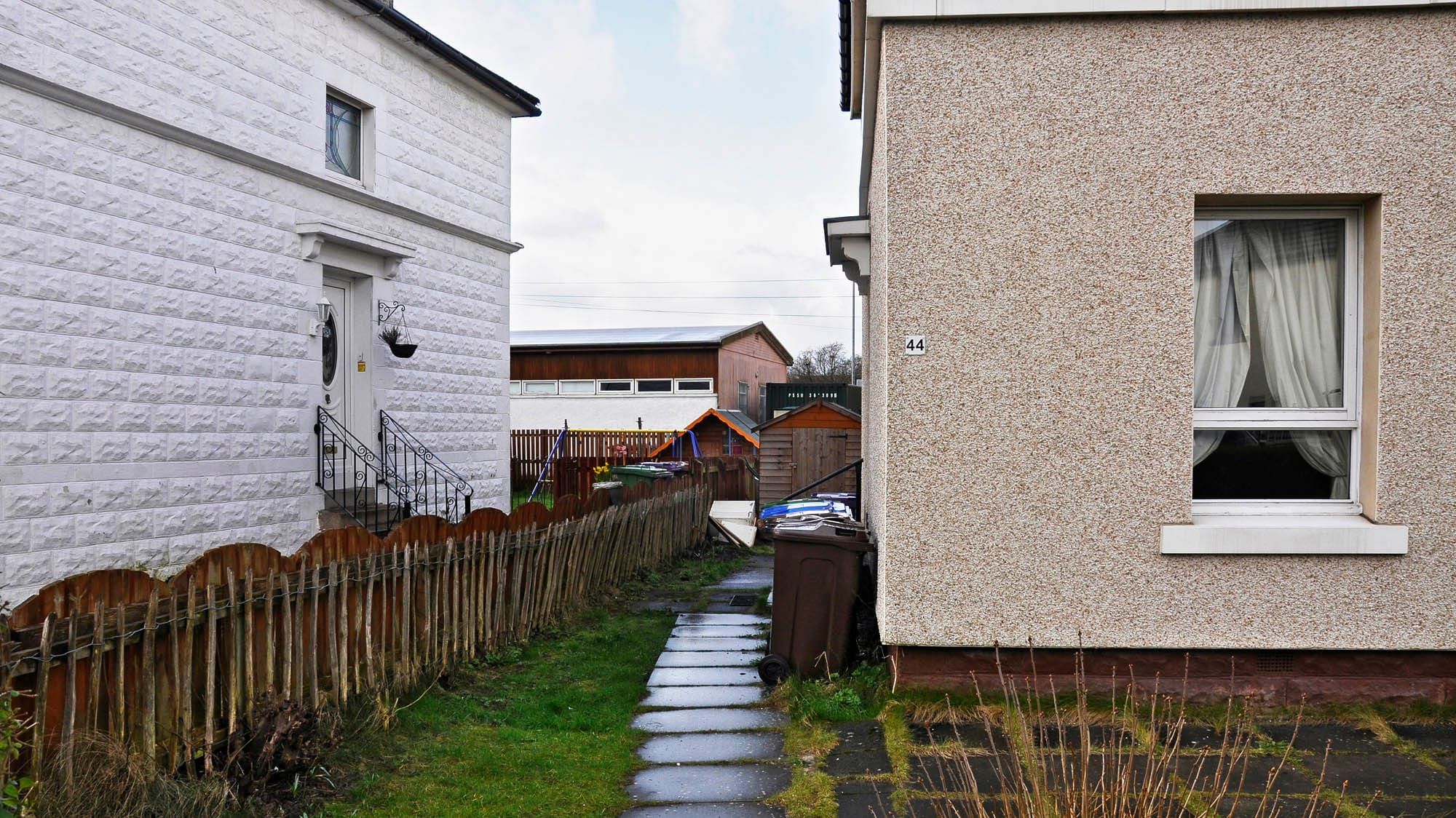
I wanted to explore what that means, both in a personal narrative, and in a series of photographs of the anonymous locations in the cityscape where recovery meetings take place. These are always shared spaces: church halls, community centres, etc. And in recovery you also learn to think of your own story as a shared resource.
Since Glasgow Anonymous and The Bedevilments are both about anonymity as an idea, and discuss my past membership of AA, it seemed appropriate to publish them under a pseudonym.
What conversation are you looking to start with this work
Anonymity has acquired quite negative meanings over the last couple of decades: it’s mainly associated with internet trolls, who feel liberated by it to indulge their worst instincts. So I wanted to reaffirm this quite different tradition, where it’s associated with humility instead.
When working on such difficult, and deeply personal writing, how are you accessing the required emotional truth, and how are you stepping away from it when you come back out of the writing session? Is it a dangerous tightrope given the subject matter?
With The Bedevilments, I had tried to write a version of it over a decade ago (it’s set in 2011), and I didn’t have the necessary distance. It turned out as an exercise in self-justification when it should have been an attempt at accountability. Eventually I had to put it aside. When I felt able to return to it, it got a lot shorter: that felt like a necessary discipline. Nobody needs to read four hundred pages about the protagonist of The Bedevilments. He has a lot in common with the narrator of Dostoevsky’s Notes From Underground (also a novella, perhaps for the same reason).
I learned from this experience to wait a few years before writing the memoir part of Glasgow Anonymous. Obviously writing about addiction (or withdrawal, as here) from the perspective of sobriety is quite different to writing as someone going through it. But it wasn’t possible for me to write authentically from within active addiction, precisely because that condition was for me a kind of enforced inauthenticity. However, sobriety doesn’t mean repudiating who you were, but trying to understand your past behaviour in a larger context.
My experience contains that of the person I was from about 2004–14, which is roughly the period I was an active addict (in one way or another), but that person’s experience doesn’t contain mine. Recovery for me is a way out of an eternal present, a permanent crisis. A way of saying to my past self: your life won’t always be like this. But achieving that perspective necessarily precedes writing.
I wrote the memoir part of Glasgow Anonymous in 2018, and took the photographs and wrote the location notes in 2020. It’s taken me six years to find a publisher, and in the meantime I rewrote The Bedevilments and found a publisher for that too.
I actually have quite a poor memory, so I’m not an obvious candidate for a memoirist, but in 2018 I realised I had this one episode from 2014 I could still recall vividly, and that it could stand for the whole lost decade of my life. It involved trying to get to a recovery meeting, and then trying to get home again afterwards to the empty house where I was staying. Again, I accept the compression as a discipline: the reader doesn’t need to know my entire life story. And after narrating this personal episode, Glasgow Anonymous moves outwards and becomes more ‘objective’ in trying to think about the locations where recovery meetings take place. But it’s still a short work, which is one reason it was difficult to find a publisher (along with its inclusion of photographs).
I’m not really answering the question, perhaps because I don’t pose it to myself in these terms. I try to observe emotions rather than relive them. If I’m reliving them, I probably don’t yet have the necessary distance.

Can you talk us through your daily routine when it comes to writing
I don’t really have one. In the larger cycle of my life, I write nothing for long periods until my discomfort with that state of affairs reaches an unbearable pitch, and then I start something new. At that point I try to write as regularly as I can, but still not every day, because I spend a lot of time reading and thinking. And on the days when I do write, I have a modest target of 500–1000 words. Obviously this is not a recipe for Stephen King levels of productivity, but I just don’t have that many ideas; moreover, the ones I do have take a long time to figure out. So between projects I’m still reading and thinking about things. But unlike the vast majority of people I did an MA with, many years after graduation I’m still publishing consistently (if infrequently). I count that as a win.
What is the editing process like – are you precious with your work, or do you like to kill your darlings?
My work goes through multiple drafts before anyone else sees it, but all my published work has also been extensively edited in collaboration with others prior to publication (some books more than others). Like many writers, I find that process painful, and my instinctive, defensive response to proposed changes is often ‘No.’ Or even ‘Can I get out of this contract?’ But then I think about it, and I change my mind, or come up with a different solution to the one suggested by an editor, and the work is always better as a result.
Are you precise in your undertaking of creative projects, or do you dive straight in and see what happens?
I like to know roughly where the book is going to end up before I start, and then as I start each chapter or scene, roughly where I want them to go, but it would be boring if I knew it all in advance, and also a little worrying if the actual process of writing didn’t reveal new things. And I don’t always know the story specifics beyond the chapter I’m working on right then.
Non-fiction writing like Glasgow Anonymous is obviously a little different. There it’s a question of trying to find an ethical way to balance memory with the shaping structures of narration. I don’t remember conversations or experiences in precise detail, so I have to reconstruct them. I’m not really troubled by this, so long as I resist the urge to ‘improve’ the story – you have to commit to the specificity of your own experience in all its banality and anti-climax as well as its drama. I also need to resist the urge to justify bad behaviour, to say, ‘Yes, but …’
If your memoir makes you look good, you’re doing it wrong. Publishing under a pseudonym makes it easier to be honest.

On audiences, how is your relationship with them at a story-level base. Do you consider the reader at all?
I’m always surprised by writers who say they don’t consider the reader. Why are you publishing then? And how do you edit, given that the editor’s role is to act as an advocate for the reader? For me, writing is fundamentally about communication, not self-expression, and so it needs to be judged on how effectively it manages that task. But I don’t think about how to make my stories conform to generic categories or market expectations, and my imagined reader is someone intelligent and sympathetic to what I’m trying to do. It’s not an agent or an industry professional.
Have there been any moments of true doubt or insecurity in your journey and how did you overcome it?
My life as both an addict and someone in recovery has been an ongoing struggle to adjust my expectations to the reality of my situation, and to get a right-sized sense of my own potential and achievements. If you publish with a small press, there are hard structural limits to the level of success you can expect that have nothing to do with the book’s merits. I know by now that, if I persevere and am willing to improve my work, most of the stuff I write will eventually get published, but I also know that might take several years and the resulting book might sell a thousand copies.
How good a writer am I? I don’t get to judge that, and so I try to leave the question open, which is the hardest thing to do. My instinct is to gravitate towards either ‘I’m an unappreciated genius’, or ‘I’m a piece of shit.’ Neither of those feelings are true or helpful.
What inspires you day to day
Everything I read, everything I see, everyone I meet. Or at least, potentially. Like most of us, I’m oblivious to much of the outside world much of the time, caught up with my own internal monologue. It takes an effort of will to become aware, to be open to what the world might have to say to me.
Who or what have been great influences on your work, outside of your chosen medium
Like most of us, I love film. There are obvious dangers in trying to translate that enthusiasm directly into prose writing. There’s a great piece by Lincoln Michel on this. Nonetheless, The Bedevilments was inspired by the films of Paul Schrader and Robert Bresson (both namechecked in the book), and in retrospect I wish I’d made the protagonist a film scholar rather than a literary one.
Glasgow Anonymous has a direct non-literary influence in that it includes a set of photos inspired by Joel Meyerowitz’s series on the Empire State Building, in which that landmark often appears only as a tiny detail in the background of the composition (Meyerowitz was in turn inspired by Hokusai’s woodcut series, Thirty-six Views of Mount Fuji).

Has your art positively helped your mental health in any way?
Writing for publication and writing for therapy are different things, precisely because the former involves an obligation to the reader that the latter does not. But I did think of Glasgow Anonymous as a form of amends, a way of acknowledging the support of my friends. And I found it liberating to be honest about these experiences, to look at myself and try to accept what I found without trying to excuse or justify it. Because that’s an essential precondition for change.
Equally though, even in memoir I don’t owe the entire world every squalid fact about myself. Some truths are better reserved for a trusted confidante, or the people they directly affect.
What advice would you give to anyone out there who is starting out on their writing journey
It might be a very long journey, and you might have to surrender particular ideas about what ‘success’ means for you along the way. I’m embarrassed by how little I understood about fiction when I wrote my first novel – which is still the largest publisher and advance I’ve ever had. So as I’ve got better, the rewards I’ve reaped have diminished! I’m far from alone in that, and I have no control over how people receive my work (or whether they encounter it at all, which is the bigger problem). I can only keep trying to improve.
Also, it’s better if the entire meaning of your life isn’t bound up in writing. This is not only bad for your mental health: it also doesn’t result in good work, which is fed by meaningful relationships. In my case, trying to pursue writing single-mindedly resulted in my not being able to write at all, because eventually I had nothing to write about but myself. That might sound like an odd comment from the author of a memoir, but good writing is never about the self, alone. It’s about the self encountering others and being changed by that process.
We will be publishing Glasgow Anonymous in print in 2027, to learn more about the project then hit the button below.
Also, we're constantly on the look out for new artists, creatives and initiatives to feature in TheNeverZine - so if you are, or know someone who is going their own way and doing their own thing on their own terms and would be a good fit to feature please smash that button below and get in contact. By talking to each other, and sharing our journeys, ideas and insights on creativity, art, mental health and resilience we can all create, share and thrive together. Nice thought that.
PS - Don't forget to subscribe below for more content from TheNeverPress 👇