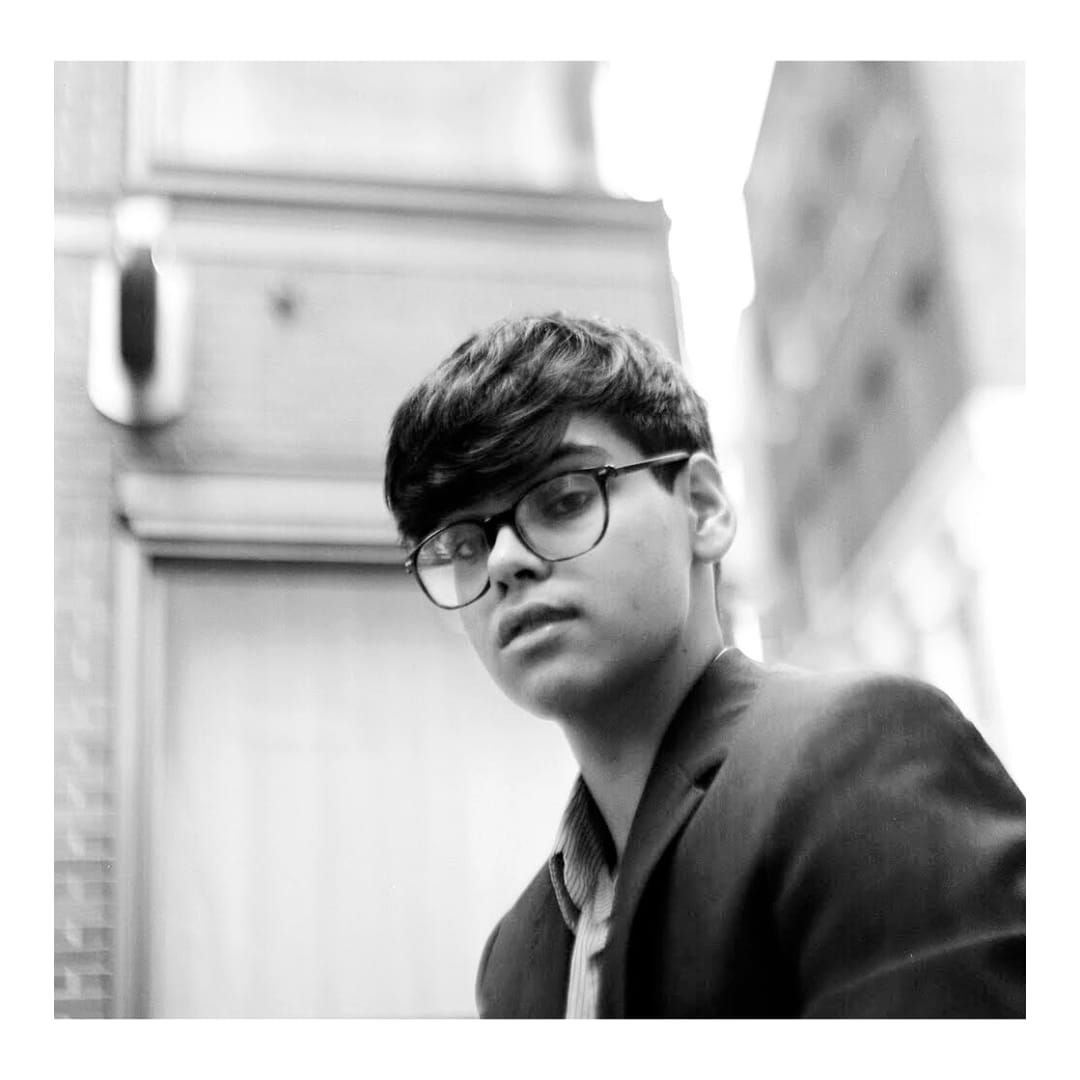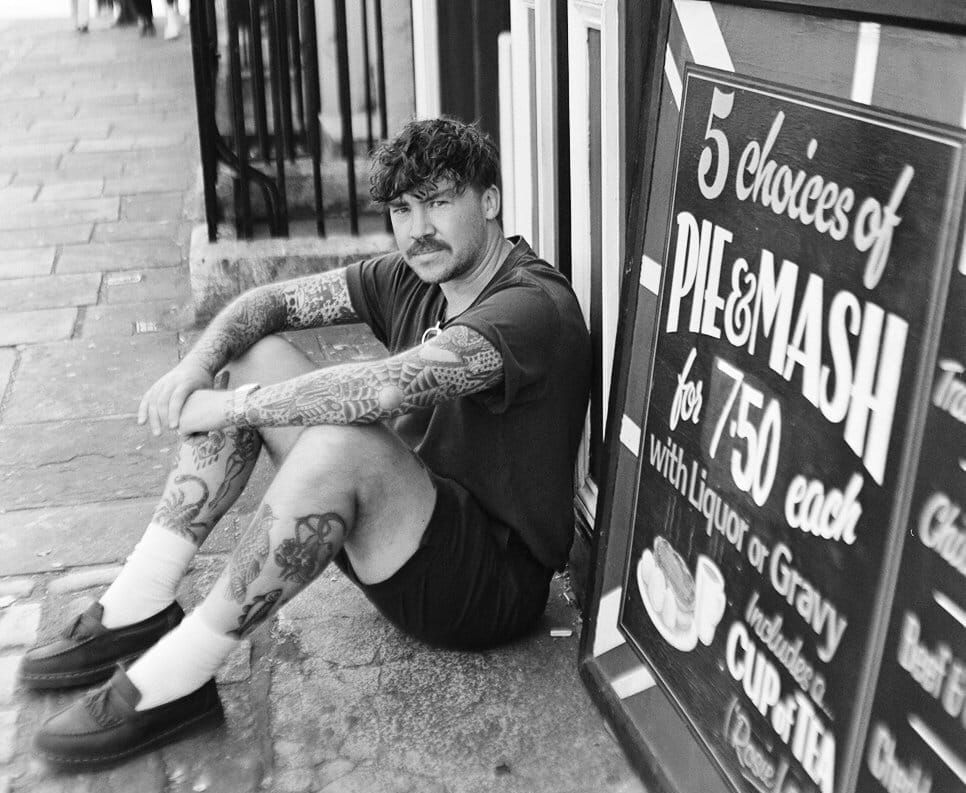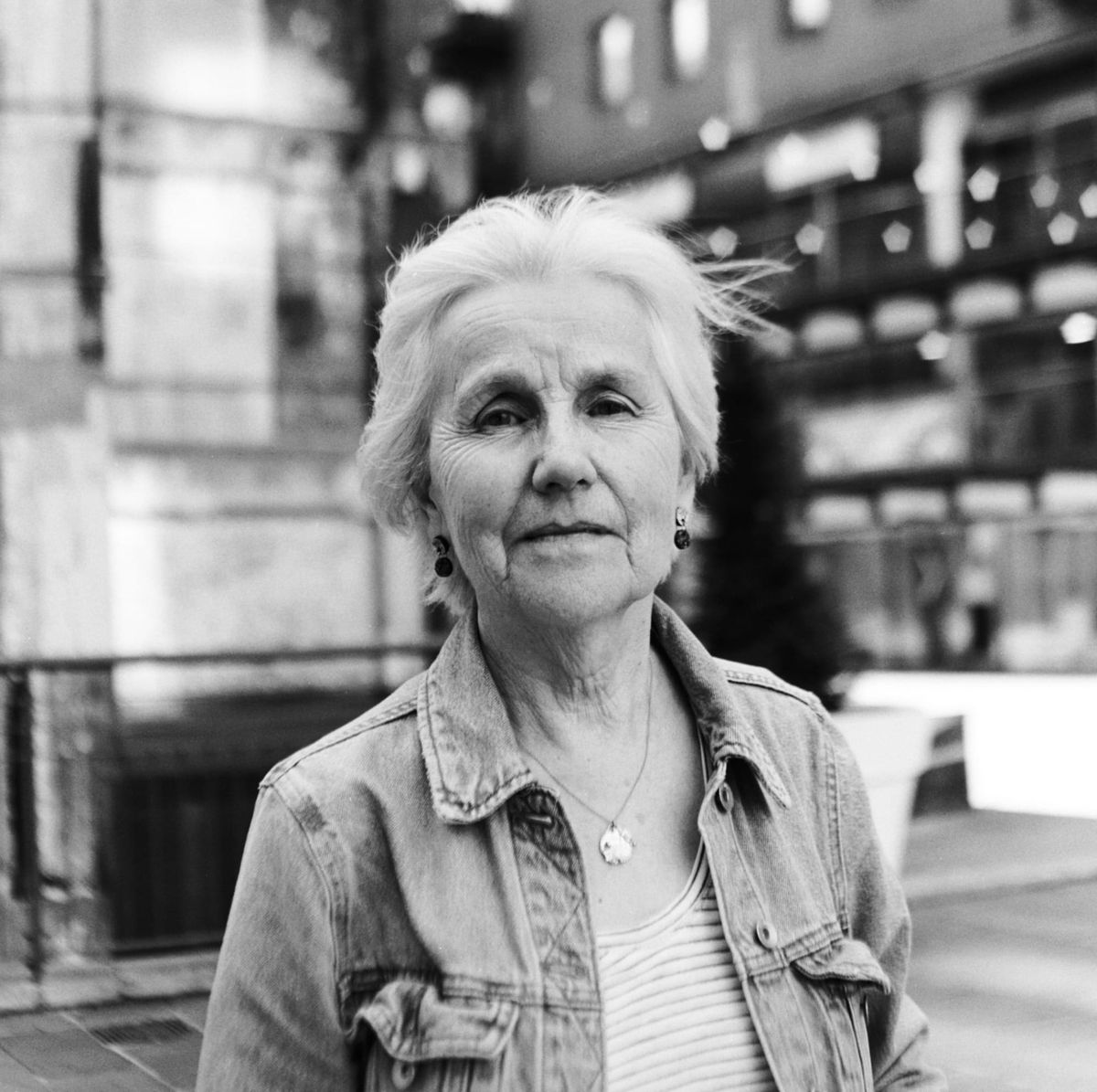
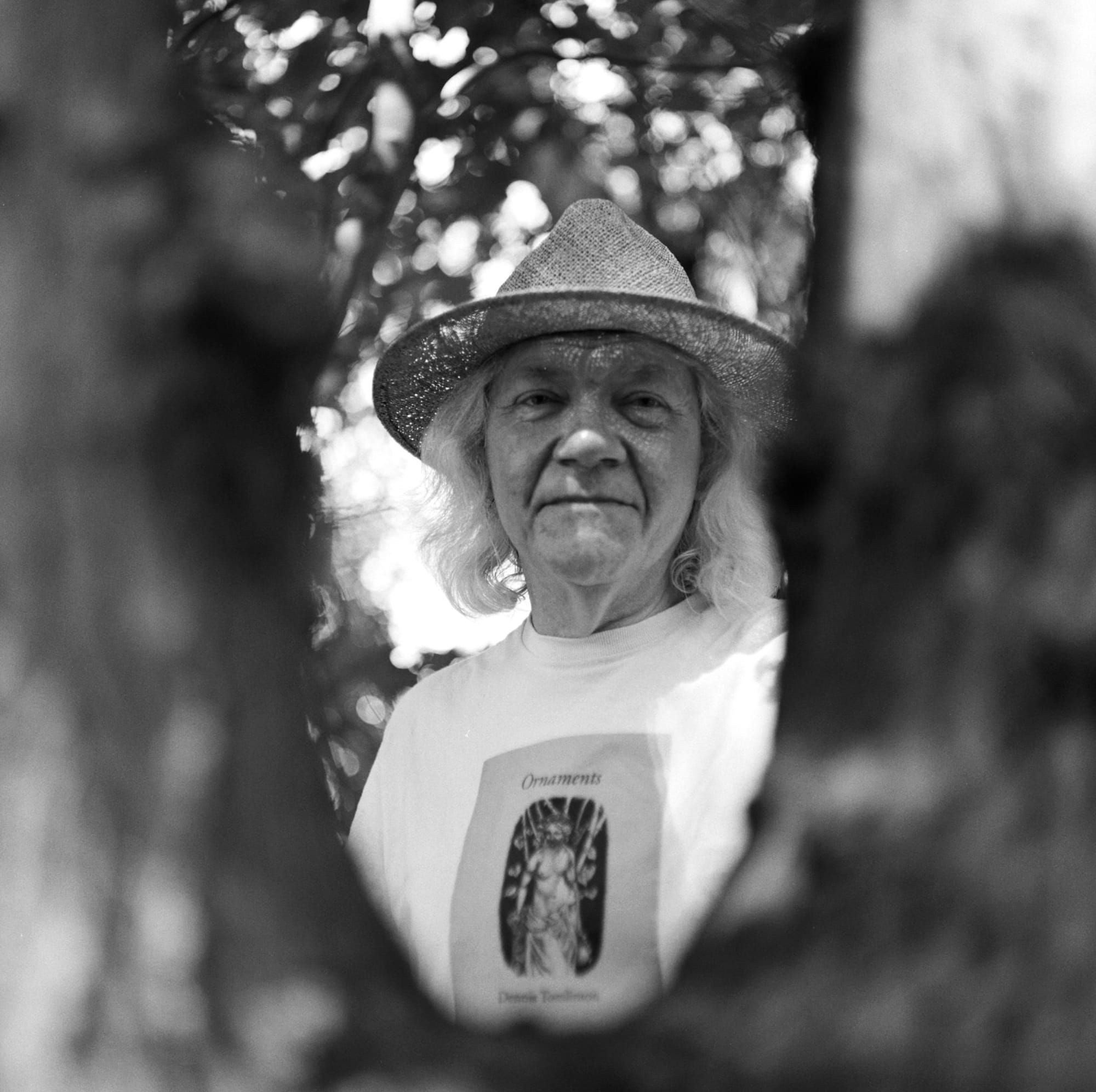
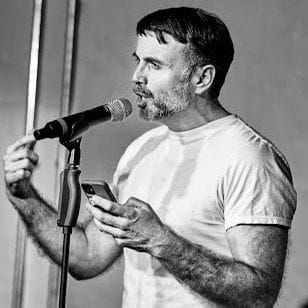
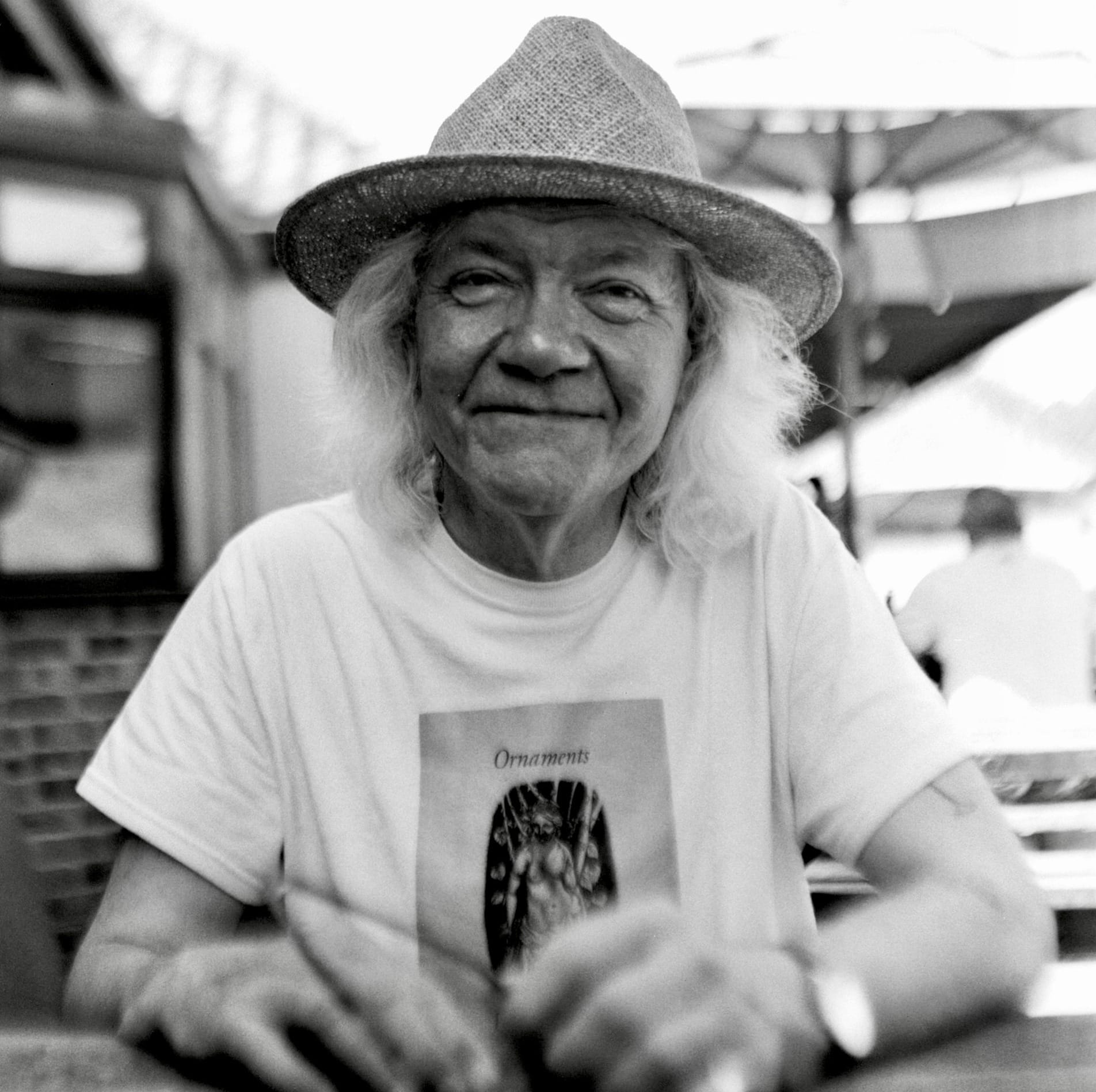
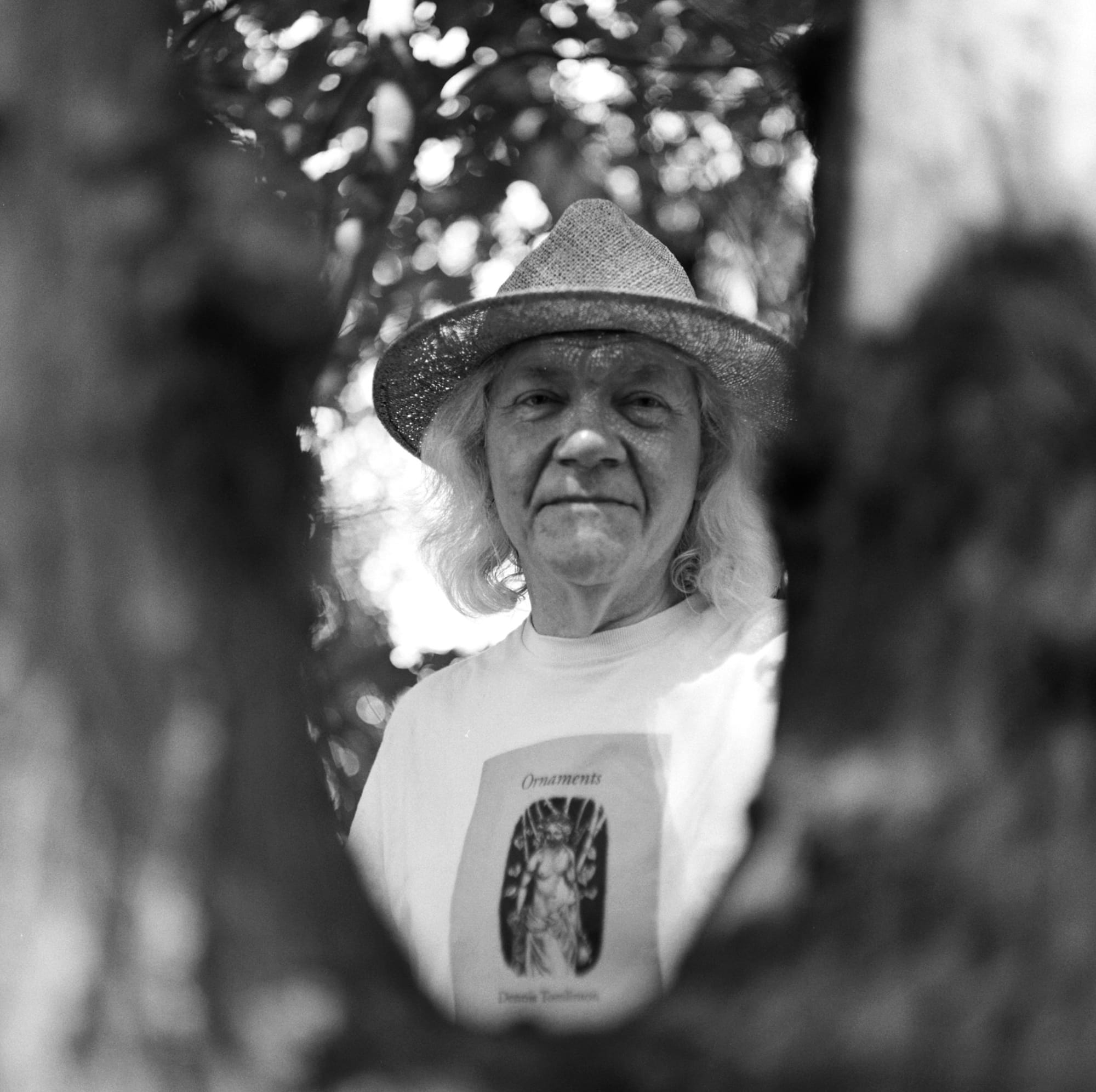
Dennis is one of my favourite poets to watch and listen to. He has an earnest style of delivery, always sharing poems layered with lived experiences, feeling and a connection to the natural world. We met for the photo shoot on a beautiful spring morning at the Wimbledon Windmill which I wasn’t even aware of. Dennis told me he used to walk with his wife and dogs there. It reminded me of sharing walks with my wife and dog under the sails of the San Francisco Golden Gate Park windmills. This was the energy of our time together, as the light and the trees lent a magic to the morning - Two worldly wizards sharing intertwined stories, wandering a wooded pathway.
Please be mindful that WSR content can be thematically sensitive.
Dennis
Once upon a time I went off to university to study German and Russian, stayed to do a PhD, took on a delivery job at Royal Mail that was meant to be a stopgap but ended up staying for 27 years. (At least that gave me the opportunity to observe the world and think my own thoughts.) On the way I met a lady with a passion for foreign travel, but she unfortunately suffered a stroke in 2018 and I became a carer.
When I joined a writing group (Poetry ID) twenty years ago after youthful versifying and dabbling in fantasy literature, my intention was to find a welcoming community but also to compose poems of some literary merit. I was writing descriptively, often formally and usually with a sense of detachment that one friend called ‘flat’.
But over the years more and more emotions have worked their way through and found release through my poetry, though I still prefer to weave feelings through events and things. It’s not so much a ‘recovery journey’ as a means of coping with various trials of life, working through them, writing them down and letting things settle down, sometimes immediately but sometimes a long time later. When I was younger I spent years with obsessive, negative thoughts running through my mind. There came a point in the year 2000 when hypnotherapy and tricyclic antidepressants had brought me so far and I resolved to make a break and carry on unaided. But it wasn’t until last year that I had got some distance and wrote the experience down in the poem ‘Cheddar Gorge’:
I walked up the road from Anne’s hotel,
climbing onto limestone heights,
kaleidoscope inside my head.
I can’t … I can’t … It’s impossible …
Similarly, I wrote about my last visit to my dying grandmother years after the event, since somehow it took a long time to process the grief fully. (We are English, stiff upper lip!) But when I had written ‘Granny at 98’ and got it published in a small magazine, now defunct, a few readers found it helpful.
As I write this now, I realise that it has grown easier for me to express emotions in recent years, both in verse and in talking to people. Writing poetry has surely helped me to get freer in expressing myself and therefore more at ease. Soon after my wife’s stroke, I was recording life with her in poem sequences, a life which got more demanding until she was eventually taken into a care home. Another blow was the death of my father in December 2024, which immediately prompted a small set of Dad poems, when the world seemed shrunk to a small perimeter (see ‘The Empty Field’ below).
The Empty Field
i.m. Tony Tomlinson
The day after the hubbub in the pub
with wine and sandwiches and everyone
I drove up to the empty hillside field,
passing the stately crematorium
once built by your old buddy John the Death
who’d told macabre stories in his time.
Under a mizzly sky the low green hills
stretched out to a sharp spire on the world’s edge.
Up on the field your solitary grave,
where we had thrown in petals the day before,
was now filled up with clay in a long mound.
If modest in life, in death a pioneer.
Casting another glance at All Saints’ Church,
I circumambulated where you lay
beneath the claggy soil, whispered Farewell.
No-one walked this field, no birds, damp breeze.
On the writing process
Well, I haven’t got a fixed writing process. I don’t reserve certain times of day for writing or carry a notebook around, as some people do. Sometimes it’s just an idea that occurs to me, sometimes two or three lines of verse in a flash, which I write down on scrap paper, the back of an envelope or an A4 sheet. I have an idea of the nature of the poem – light or serious, formal or informal, rhymed or unrhymed - and the poem grows like a plant from the original seed. For example, I recently wrote a piece alluding to Donald Trump’s shady past career as a casino-owner in Atlantic City; the germ was the rhyme ‘Taj Mahal’/’banal’.
I write it down directly by hand first of all and go through a series of drafts without the intrusion of digital technology before I find it satisfactory enough to write up on the laptop (which rests permanently on a table anyway). Maybe I am old-fashioned, but I need the physical connection of hand and pen and paper when I am ordering my thoughts, without a computer or mobile phone getting in the way. Resist domination by machines! AI is a plague! I could be satisfied with a draft after a couple of days or I could come back to an old poem after a few years, see weaknesses and make changes. Again, there is no standard process.
As I indicated above, I came back to writing poetry twenty years ago and it took me some time before I could set sad episodes or painful experiences down in verse and come to terms with things. School bullies included, come to think of the little bastards. But with plenty of practice, things have got easier, I can express emotions and maybe live more stably in consequence.
Favourite poets, poetry nights, books or other resources:
Since my schooldays I admire Robert Frost for his storytelling skills and Philip Larkin for telling it like it is, without beautification but with humour. It was actually an evening class on Sylvia Plath many years ago that incited me to write in earnest; there is suffering and a great range of emotions in her work, but all given a literary form, not sheer ‘confession’. Charles Baudelaire inspired me as a teenager and still has a shocking appeal. Also a few of the melancholic German poets I studied at university – and met in person – Günter Kunert and Wulf Kirsten for example.
I attend Lost Souls at the Exhibit, Balham, religiously, where Hannah Stanislaus is an enthusiastic host encouraging all kinds of talent. I can also recommend David Joey’s open-mic evenings at Charing Cross Library and Poetry Performance at the Adelaide pub, Teddington, where they set store by competent performance (no microphone there, so you must project your voice).
I subscribe to a couple of stimulating poetry magazines, Acumen and Modern Poetry in Translation, but there are many more out there. Ask your friends and subscribe before they disappear! Out of a steady stream of poetry books that I read, I can recommend Hannah Lowe’s The Kids as a skilful representation of multicultural London life in sonnet form. Recently I have been revisiting short stories and poems by Rudyard Kipling, old-fashioned in politics but superb in capturing down-to-earth life.
Anything else you’d like to add/in closing
Life is poetry. Poetry is life.
Write Speak Recover, in collaboration with TheNeverPress is an open, free collection of original portraits of poets using their art to find strength in their recovery journey from any form of dis-ease.
We invite you to follow Write Speak Recover on Instagram and to reach out to Tim Foley at WSR or us directly at the zine to learn more, or put yourself forward to be featured in this initiative.
Hit the logo for more Write Speak Recover content 👇
If you need support, here are some resources:
Samaritans
Alcohol Change
Recovery Dharma
Alcoholics Anonymous
This article was brought to you by Tim Foley and Graham Thomas.
We're constantly on the look out for new artists, creatives and initiatives to feature in TheNeverZine - so if you are, or know someone who is going their own way and doing their own thing on their own terms and would be a good fit to feature please smash that button below and get in contact. By talking to each other, and sharing our journeys, ideas and insights on creativity, art, mental health and resilience we can all create, share and thrive together. Nice thought that.
PS - Don't forget to subscribe below for more content from TheNeverPress 👇