The Big Interview: Svetlana Rumak, artist

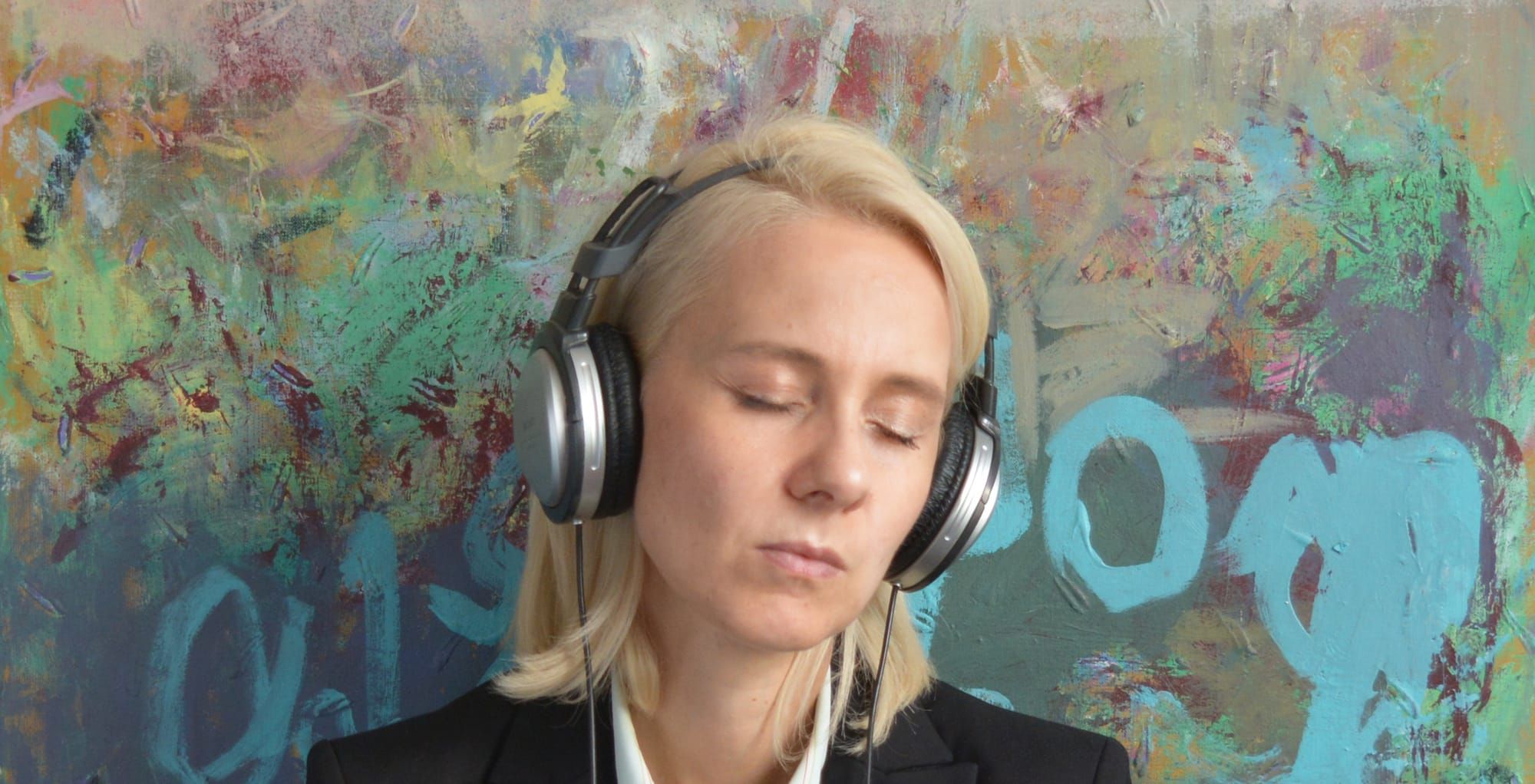
Dreams often feel symbolic, yet can we ever claim that only one interpretation is truly correct? The same is true of my paintings: one can return to them many times over the years, and each time their meaning may reveal itself anew.
The Big Interview: Svetlana Rumak, artist

'I believe that what distinguishes an artist, or anyone in a creative profession, is the vital necessity of the act of creation itself.'

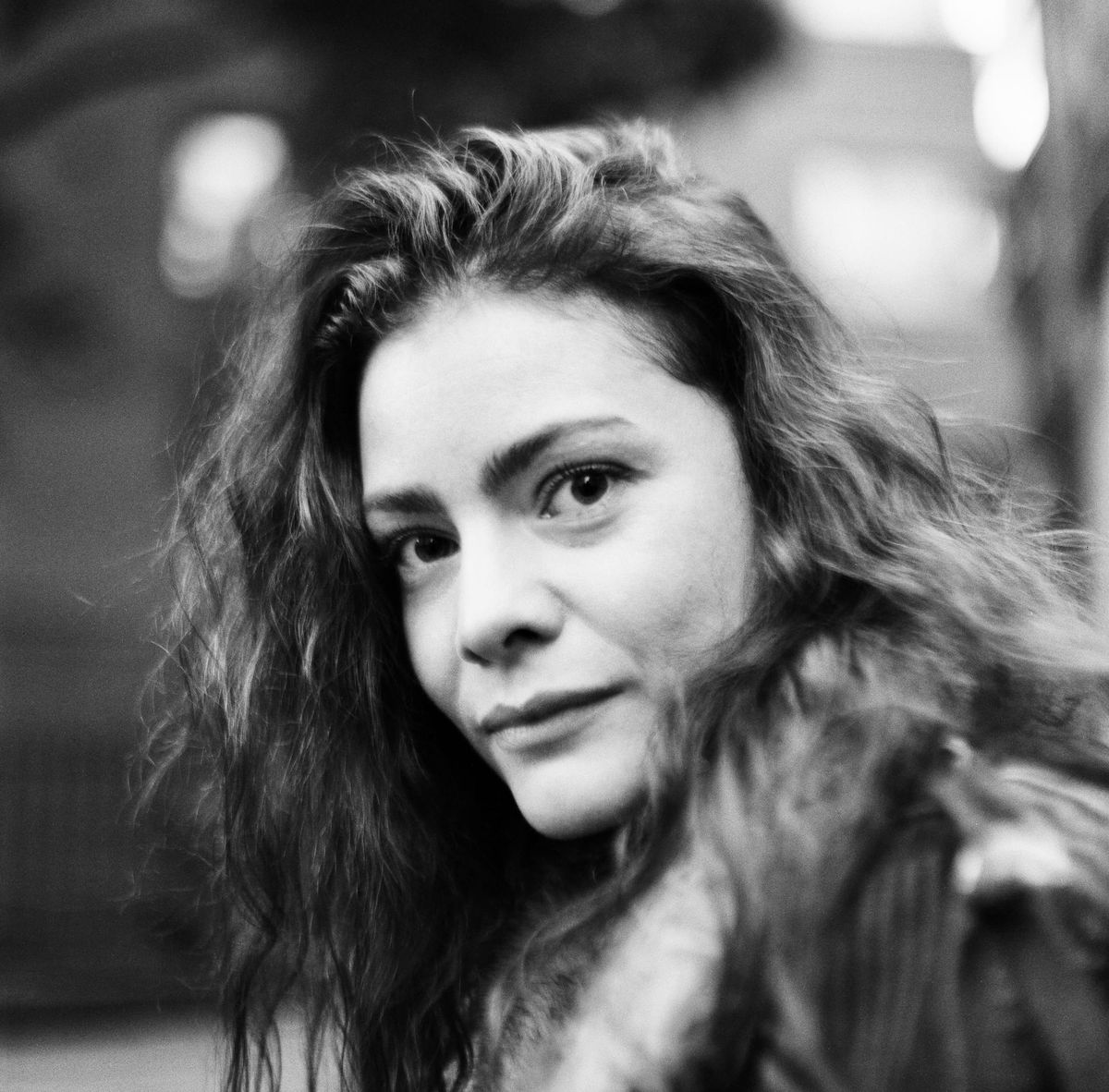
Front Street - This is a mega interview. Mega in length, mega in depth and insight. We were introduced to Svetlana via master doll-maker Alisa Jakamanskaja who we featured here...and my word, were we unprepared for such of a powerful artist in Svetlana. Not only are they in masterful control of their voice, and their instrument but also of their career and their value. Coupled with this, Svetlana Rumak shares her vast knowledge and experience with students, propagating the world with artists who are nurtured, encouraged and supported.

We talk a lot on this zine about artistic expression and unlocking one's voice, but it is not so often we talk about the 'business' side of things - the 'how to', the practical steps one can take in making a career out of one's art. We wanted to turn a lot of this interview over to this subject, to shine a light on that path - illuminated by a master artist, who can lead us all to dreams realised.

And so, over we go to Svetlana Rumak...

Svetlana, thank you so much for your time. We have a lot to get through, but let's dive right in at the start. May you please tell us about your artistic journey
Art interested me from very early childhood. Without a doubt, a profound influence on me was the remarkable collection of books my parents assembled — it included magnificent large albums devoted to the world’s greatest museums, as well as beautifully illustrated children’s books. I would spend hours reading, immersing myself more and more deeply in the worlds of illustration and painting, until at the age of twelve I finally voiced my childhood dream to my parents: I had decided to become an artist. They immediately took me to a local children’s art school. This is how I began studying the fundamentals of academic drawing and painting, while at the same time trying to create my own imaginative works in pencil and watercolour. 

By the age of seventeen my passion for art had only grown stronger, and I decided to continue my education at the art faculty of an institute.  I was fortunate that my teachers recognised this passion and supported me wholeheartedly — they gave me additional individual assignments, were understanding when I stayed late in the studio after classes, and increasingly encouraged me to seek a creative approach even in traditional academic still-life and portrait studies, experimenting with different painterly manners and techniques. My first truly independent artworks were created during this student period, and my further study of “old masters” techniques significantly shaped my artistic method and attention to detail.  Of course, this was followed by years of creative experimentation, including with materials. Over time I moved from oil painting to acrylic, and later developed a mixed technique based on acrylic and pencils — the medium in which I continue to work today. 

You have maintained your career for over 25 years now – what is the key to longevity as an artist, both creatively and professionally?
If I include the very first independent works I created during my student years, I have been painting for over forty years. Twenty-six years ago, on my thirtieth birthday, I made the decision to dedicate my life entirely to art, and since then I have worked as an independent artist. To be completely honest, there has not been a single day when I have regretted that decision. Painting remains my love, my passion, and my true vocation, just as it was many years ago. Of course, over time my approach has become more professional. I began to think strategically — about exhibitions (to date I have participated in more than 300), about presenting my work on international art platforms, and about collaborating with galleries. Yet the most fulfilling days are still those when I can simply spend the entire day in my studio, from morning until late evening, immersed in painting. Fortunately, my life consists largely of such days. 

In terms of getting artwork seen or exhibited, how does one start out?
Although my decision to pursue painting was a choice of the heart, from the very beginning I understood that professional results were also essential — interest in my work from collectors, gallerists, and curators, as well as sales and exhibitions. I started by focusing on the study of contemporary art, since both in childhood and later during my academic training my attention had been directed almost exclusively toward classical painting and the Old Masters. It was during this period that I began experimenting with techniques and more current visual approaches in order to develop an authorial style that would allow me, on the one hand, to integrate organically into the contemporary international art scene, and on the other hand, not to lose my artistic identity.  

I believe that my admiration for masters such as Bosch, El Greco, and Leonardo da Vinci can still be sensed in my work today — this influence has remained present throughout the years without fading. This visual research and experimentation gradually led to meaningful results: my visual language became more contemporary, my paintings more 'magnetic,' and I began to gain recognition, invitations, and growing interest from galleries wishing to collaborate. Over time, a circle of loyal collectors from different countries also formed. At the same time, I studied everything related to the art business and marketing — the strategic tools available to the contemporary artist — trying to apply this knowledge in practice and to analyse the outcomes.  Such a scientific approach is not always typical for artists, and to be honest, most of us would prefer to spend more time in the studio than in front of a laptop. However, understanding marketing instruments and the legal aspects of the art world is an important part of an active contemporary artistic strategy, even if at times it may feel less inspiring. 

It is important to find a creative approach to strategy itself — to awaken a sense of curiosity, determination, and even азарт (a spirit of challenge and excitement).

The ability to plan and to follow one’s plans should not feel tedious, especially at the beginning of the journey, when tangible results are still ahead. Over time, I began supporting many emerging artists — inspiring them, sharing my experience, offering consultations, and conducting masterclasses based on my own painting techniques. In recent years I have also developed several educational courses in which I structured my knowledge of contemporary visual approaches and strategic tools for artists. 

You paint, print and work in collage – how do you find the right vehicle to deliver the dream?
Over the past three to four years, about 90% of my artistic practice has been devoted to painting in my own mixed technique. I still love collage, but recently it has become more of a technical element within my paintings — I combine it with acrylic and other materials on canvas, having largely moved away from “classical” collage as a separate medium. Unfortunately, I no longer work in printmaking, as painting has completely absorbed me and continues to be deeply fulfilling. Through the use of mixed techniques, it offers everything I seek — both a familiar working environment and an open field for experimentation whenever I feel the need for change or renewal. 

Why this medium to voice your art?
There are several reasons why I ultimately chose to focus on painting, specifically within mixed techniques. On the one hand, painting offers maximum strategic potential — it does not require specialised equipment, it is relatively easy to exhibit, transport, and frame, and prices for paintings are generally higher than for works on paper. This medium integrates naturally into residential interiors while still allowing for a high degree of creative freedom and experimentation. 

'He Who Sees'

Everything related to painting — including materials, tools, and technical processes — is something I have explored for decades. At a certain point, experience becomes liberating: when technical aspects are fully internalised, it becomes possible to focus entirely on creative tasks. The results also tend to be more controlled than when working with completely unfamiliar materials. At the same time, the use of mixed techniques provides a built-in potential for variation. Having a range of materials, tools, and numerous working methods at my disposal allows me to adjust my approach and develop distinctive technical features for particular series, giving each body of work its own unique character. This enables me to remain within the framework of my recognisable style while continuing to surprise collectors with new works — and, equally importantly, to keep the process engaging and dynamic for myself. 

Your work is very dreamlike, and ‘far away’ – the textures and tones feel like daguerreotypes from a dream-state half remembered. How do you conjure your visions?
I truly love your comparison of my paintings to daguerreotypes! To be honest, I deliberately strive to achieve this effect. Many years ago, a close friend of mine, a photographer, instilled in me a deep appreciation for antique photography. At that time, he himself was experimenting extensively with digital photography, attempting to recreate the atmosphere and visual qualities of early daguerreotypes. As a painter, I became deeply inspired by this, yet I searched for technical ways to convey a similar atmosphere through painting. 

My work balances between symbolism and surrealism, where each detail functions simultaneously as a symbol — I always find it meaningful when viewers manage to 'decode' these visual messages — while also immersing them in a state akin to dreaming, illusion, or what might be called a “subtle world”: slightly mystical, barely manifested, strange yet somehow familiar. This sense of recognition is extremely important to me. If a viewer recognises a feeling or a state, if the idea embodied in the painting appears somehow familiar, perhaps something they have seen in a dream, read about in a book, or experienced in meditation, then I feel that my dialogue, or even my game, with the viewer has truly taken place. In the language of Hermann Hesse, my painting is my own “Magic Theatre.” Of course, it is not meant for everyone, but with those to whom this sensibility feels close, I believe we are speaking the same language. At the same time, I do not consciously aim to move into overt mysticism, intellectual speculation, or moralising narratives. The images and symbols remain elusive — like small lizards: the moment one tries to grasp them by the tail, they slip away! Viewers often approach me and ask whether they have interpreted a symbol “correctly.” Yet there is no single correct answer. Yes, there is the meaning I personally invested in the work at the moment of its creation — and I often share this in my texts and posts — but alternative interpretations are equally valid.  

Here again, the parallel with dreams that you so perceptively mentioned becomes relevant. Dreams often feel symbolic, yet can we ever claim that only one interpretation is truly correct?

Tomorrow, a new experience may allow us to understand the symbolism of a dream in an entirely different way.  The same is true of my paintings: one can return to them many times over the years, and each time their meaning may reveal itself anew. 

What does art and creating mean to you?
I believe that what distinguishes an artist — or anyone in a creative profession — is the vital necessity of the act of creation itself. Even more than talent, this need determines whether a person will follow a creative path. We are all born different, and the fact remains that there are people whose psychological makeup requires them to create, just as essentially as they require water, food, or oxygen. Whether they become successful in this field often seems secondary. Many artists in the past — and even today — have continued their work despite poverty or difficult circumstances, unable to abandon what feels like an intrinsic calling. I recognise myself in this. It is both a strength and a vulnerability. Art is a separate world, almost a parallel universe, with its own challenges and joys, victories and defeats.  If we momentarily set aside the fact that art today is also undeniably connected to business, investment, and sometimes significant financial value, it may be even more important to recognise that for many people — both artists and viewers — art remains a refuge, a space one longs to reach and return to, a kind of inner homeland. 

Who have been your influences and mentors and how have they shaped you?
My teachers had a profound influence on me — not only as artists, but as mentors who recognised my potential, still fragile at the time, and my very strong desire to grow as an artist. There were several of them; they were friends, and now I sometimes think they must have quietly agreed among themselves to support me — their encouragement felt so coordinated and thoughtful! I am deeply grateful for the atmosphere they created around our communication: a creative and nourishing environment, a sense of trust, the presence of experienced guidance, and at the same time complete freedom, where every artistic experiment was welcomed. They did not indulge me, and they could be very strict — sometimes even stricter with me than with other students.

Yet they intuitively found the precise balance that I needed at seventeen-eighteen. Only much later, when I became a teacher myself and began working with dozens and then hundreds of artists, did I fully realize how fortunate I had been.  I saw how often teachers can suppress a student’s potential — either through excessive rigidity and overemphasis on academic discipline, or, conversely, by encouraging creativity without providing the necessary knowledge and technical grounding that young artists need as a foundation. Thanks to my teachers, I not only became an artist but also understood what kind of teacher I wanted to be myself — what to give, how to support, and how to nurture potential.  For this, I am grateful to them twice over. 

Tells about your teaching – what are your classes like and what can pupils expect from them?
I have been teaching for many years. Initially, these were in-person masterclasses held in different cities and countries, focused on my authorial painting techniques.  These techniques attracted many artists, which gradually created a demand for video lessons, since not everyone was able to attend the live sessions. Our masterclasses often shifted toward discussions of artistic strategy. I could teach artists how to paint, but many of them did not understand what to do next — how to approach galleries, how to participate in exhibitions, how to build a sustainable professional path. There were so many questions that I first created one lesson, then another…

Today, I have recorded nearly 300 text and video lessons covering a wide range of topics relevant to artists.  I sometimes joke that a beginner has not yet even formulated a question — and I probably already have a three- or four-hour lesson dedicated to it. Artists appreciate that I explain complex subjects in depth while keeping them clear, engaging, and supported by humour and relatable real-life examples. At the same time, I make a conscious effort to keep my courses, lessons, and consultations financially accessible, and to provide a substantial amount of useful material free of charge. When I was just starting out, I lacked both knowledge and guidance. My work did not yet generate income, and all my resources were spent on art materials — canvases, paints, tools. At that time, access to information was far more limited. Today, social media and platforms like YouTube offer powerful opportunities to support and inspire large numbers of people simultaneously.

'The Pink Wing'

Has your art positively helped your mental health in any way?
Of course, I would distinguish between professional art and art therapy as a psychological tool used in therapeutic contexts.  However, I am convinced that any person engaged in a creative profession will confirm that the creative process inevitably affects the author’s psyche. This influence is not always positive. It can be destructive when trauma is repeatedly reactivated through the act of creation, or when artistic practice becomes a form of sublimation for experiences that must be consciously lived through and integrated in order to reach a new level of personal maturity. Like many people, I have had traumatic experiences in my life, and at a certain point I had to make a conscious decision: would my art influence my mental state in a constructive or in a destabilising way?  This choice is far less obvious than it may seem. 

'The Book Without Words'

During periods of intense transformation or difficult decision-making, my work becomes more supportive for me. New themes, symbols, and figures emerge that carry a healing function. It is an ongoing internal dialogue that unfolds parallel to my dialogue with the viewer. A perceptive and attentive audience can sense these shifts, and I speak about them openly. I believe that sincerity is an important role model for an artist in contemporary society — it implies vulnerability, but it does not imply a victim position. For example, several years ago the figure of a “woman-knight” appeared in my paintings: a fragile female body enclosed in armor that both conceals and strengthens her, becoming a source of confidence and resilience. I returned to this image repeatedly, in different compositions, gradually feeling myself becoming this armored woman — stronger, more protected, more assured. These were the years when my emigration journey began. Anyone who has experienced relocation to another country knows how often one can feel vulnerable, uprooted, disoriented. Through artistic creation I was able to process this experience and find an additional inner support, alongside the support of family and friends. 

How do you know when it’s done?
It is an inner feeling that comes only with experience.  Through my work as a consultant and coach for artists, I know how common this problem is — some artists cannot finish their paintings, while others, on the contrary, overwork them because they cannot stop. Very often, it is precisely the sense of incompleteness that becomes a painting’s greatest strength!  Yet inexperienced artists are afraid to stop at this stage; they lack the courage and visual maturity to trust themself -  incompleteness always carries a certain challenge. Another frequent mistake is overloading the composition with details — adding so much that the space becomes crowded, the main focus disappears, and the idea is lost. 

My method, which I began using more than 30 years ago and still follow today, is not to force the process. I often put a painting aside at different stages — sometimes for several days, sometimes for months. To be honest, there have been cases when unfinished works rested in my studio for years. I always work on several paintings in parallel — often more than 10, sometimes even several dozen. I almost never focus on a single painting from beginning to end. When I come into the studio, I review all unfinished works and choose the one that resonates with me at that particular moment. Experience allows me to feel internally when a painting is ready.

How do you like to work?
Calmness and silence are essential for my full immersion in painting sessions, which can last more than five hours. In the past, I sometimes listened to music or podcasts while working, but now I have given this up — complete silence feels much more natural and focused for me. At times I work on one painting while keeping another unfinished work within my field of vision, occasionally glancing at it before switching their positions.

Has there been a moment in your life or in your work when you have realised that you had something, that you were where you belonged. Tells us about that.
A rewarding part of my work has always been the enthusiastic response of viewers at exhibition openings, the passionate comments on social media. In the beginning, such reactions felt especially meaningful; over time, however, one becomes accustomed to both praise and criticism. Occasionally someone will write that I am untalented or a poor artist — I do not take such comments emotionally. In fact, neither negative nor overly positive reactions disturb my inner balance. I am deeply immersed in my work, in painting, in processes. Constant engagement is the best protection from unnecessary self-reflection. The most memorable and truly valuable recognition comes from more experienced artists, respected gallerists, and curators. When professionals within the art field acknowledge your work, it becomes a clear marker that you are moving in the right direction. 

'Rhinoceros'

What advice would you give to any artists out there who are at the start of their career?
An emerging artist should observe, study, and analyse 3 groups of trends: 1 - visual trends, 2 - developments within the art world and art business, 3 - broader social trends that may eventually influence the art space. The foundation of success for a contemporary artist lies in two elements: 1 - creating magnetic artworks, 2 - clearly understanding the goals and tools of one’s strategy. Today artists have access to a wide range of strategic instruments. It is important to learn them, master some independently, and delegate others in order to preserve time and energy for creative work. 

An authorial style that can lead an artist to recognition must possess three key qualities: 1 - magnetism, 2 - relevance, 3 - uniqueness.  Combined with strategic awareness and perseverance — the ability not to give up during difficult periods — these qualities make meaningful results inevitable. Magnetic artworks are not necessarily “beautiful” in a conventional sense, since beauty is subjective. Rather, they are compelling, seductive, attention-grabbing — works that stop the viewer’s gaze and awaken a desire to return to them, or even to possess them.


We're constantly on the look out for new artists, creatives and initiatives to feature in TheNeverZine - so if you are, or know someone who is going their own way and doing their own thing on their own terms and would be a good fit to feature please smash that button below and get in contact. By talking to each other, and sharing our journeys, ideas and insights on creativity, art, mental health and resilience we can all create, share and thrive together. Nice thought that.

PS - Don't forget to subscribe below for more content from TheNeverPress 👇

Share this article
The link has been copied!