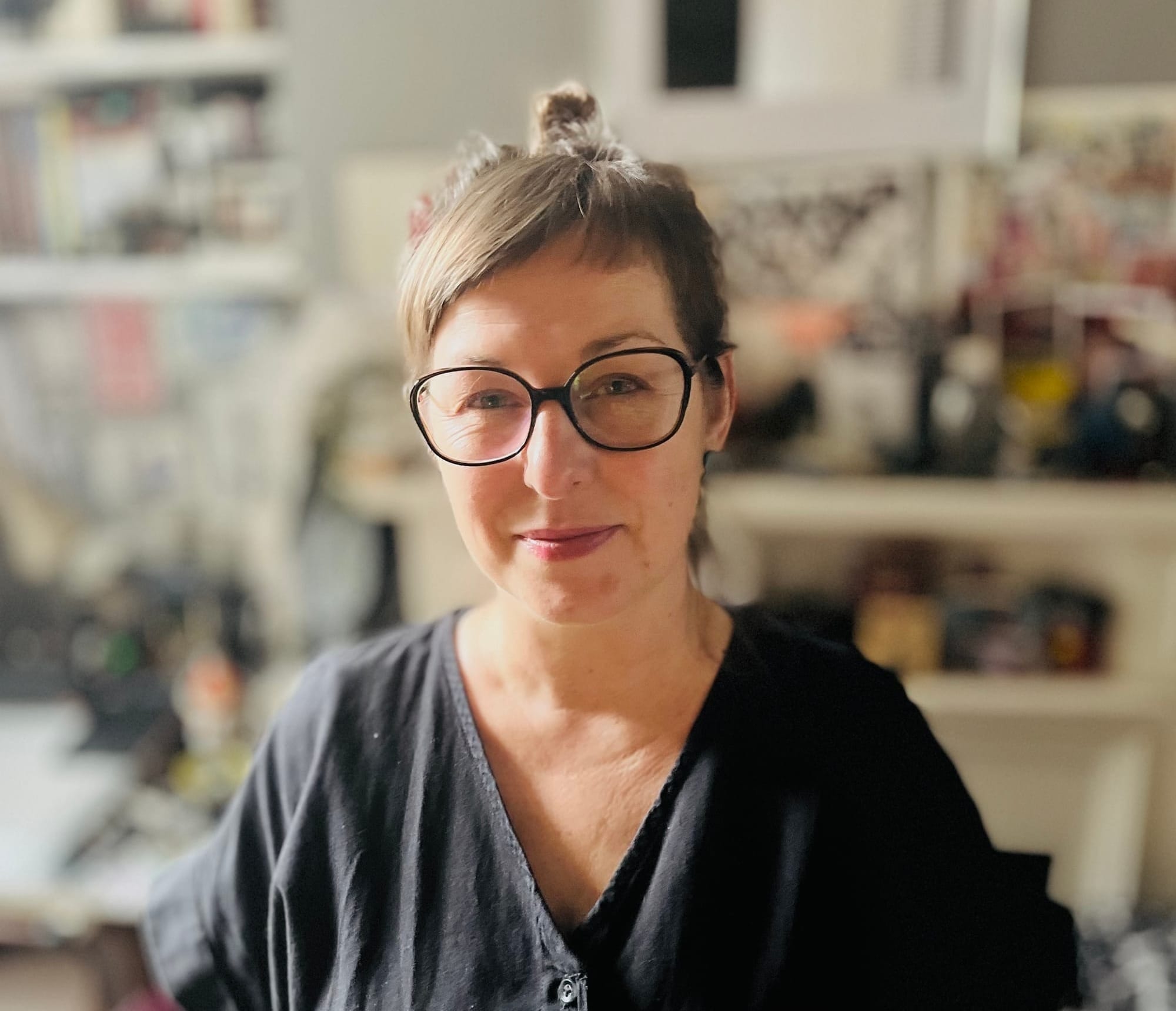
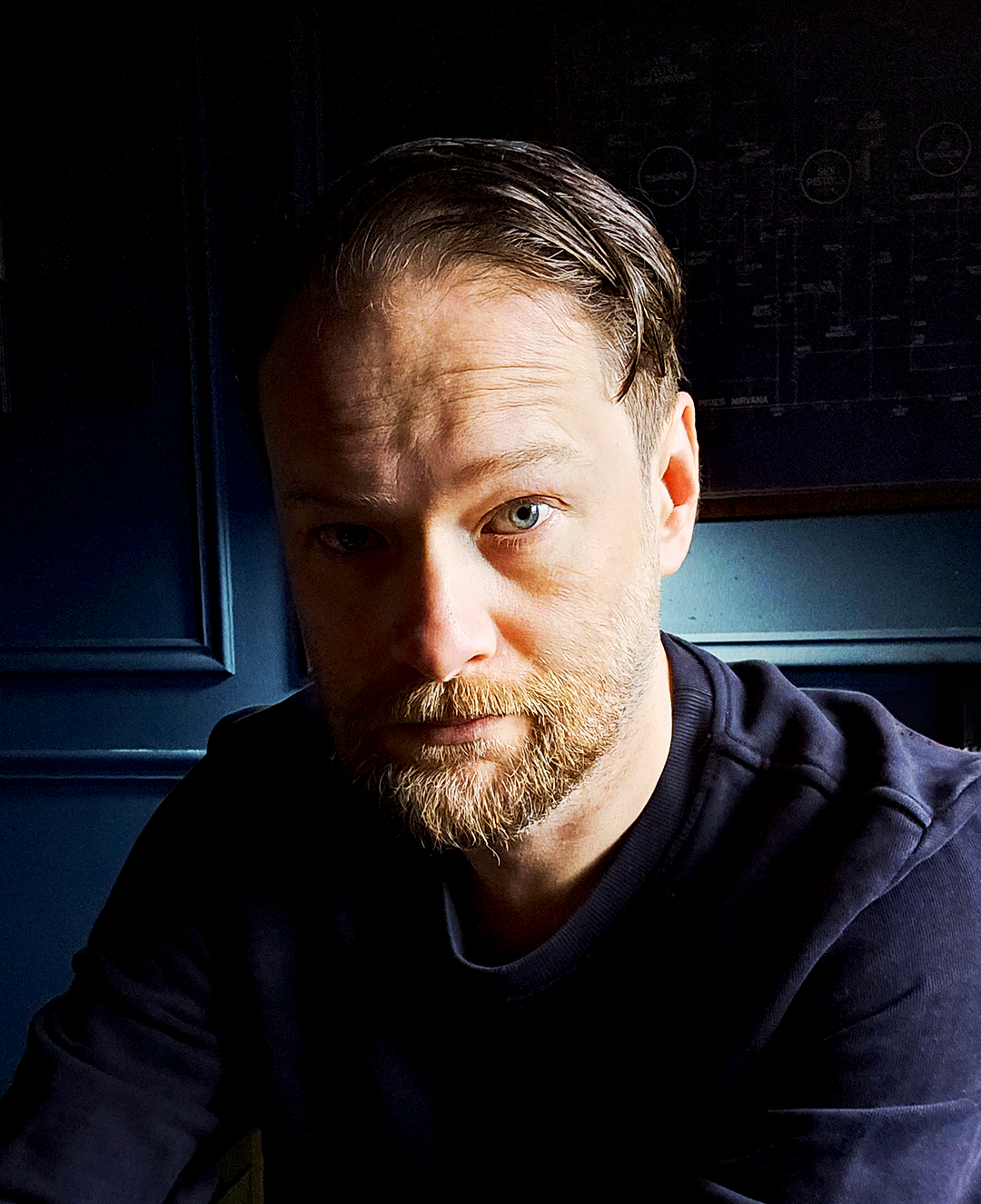
We're absolutely thrilled to bring you this hefty interview with Lucy Sullivan, an outstanding artist who has had an incredibly successful career bringing her unique, vivid and expressionistic dream-like voice to audiences for decades.
Lucy's has been commissioned by a ton of great titles such as Killtopia, Skrawl Magazine, Metallic Dynamite and for our buddies over at Colossive Press (who actually introduced us to Lucy).
Lucy's graphic debut novel 'Barking' is a monochromatic fever dream - a descent into grief, depression and the failures of institutional care. It's a powerful, dark and heavy - like a thunderstorm unleashed across 130 pages. And, like a thunderstorm, it is also incredibly beautiful and awesome in the true sense of the word.
We could talk forever on the power, pace and energy of Lucy's work but it's better to bring her in and let her do the talking. As mentioned, this one is a big one...so buckle up and let's get to it!
Lucy, it's a great honour to have you with us today. We'll start as we always do - please may you tell us about your creative journey so far
I’ve always scribbled. I was one of those kids who drew on everything; my walls, my bed, the table, my schoolbooks… much to everyone’s chagrin but it was a natural urge and always a comfort. As I got older my Dad would get me to draw things for our pub and events. I’d get to draw the chalkboards or design t-shirts. It was fun but it didn’t occur to me that I could make a living from it until my Dad died and I had to rethink my life.
I went back to college as a slightly older student to get a Foundation in Mixed Arts then onto Kingston School of Art to take a BA (hons) in Illustration & Animation. I was nearly 30 when I graduated so it was hard to take on poorly paid gigs but I worked where I could and built my portfolio. I created illustrations, short animations, drew backgrounds at an animation studio and animated music videos as part of a collective. I mostly earned any living teaching life & observational drawing, in the day for Uni students and evenings for adult education classes.
I had to take some time out when I was pregnant so decided to develop an idea for a graphic novel. One of my Life Drawing attendees, now friend, Nick Abadzis (Laika, Hugo Tate) encouraged me to go for it and so I did. I couldn’t draw during that time so instead absorbed research from books, films, music and comics. All in it took about 10 years to go from idea to publishing BARKING. Since then I’ve worked full time in comics, creating my own stories, as well as drawing for others and recently on-screen art for the feature film The Thing With Feathers [Dylan Southern, 2025]. I feel extremely lucky to have found my creative fit and will probably keep making comics and zines until I drop.
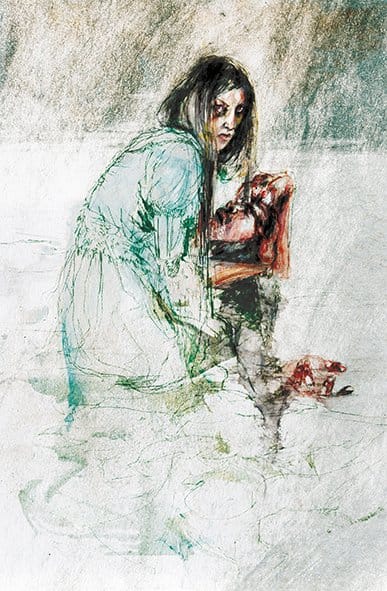
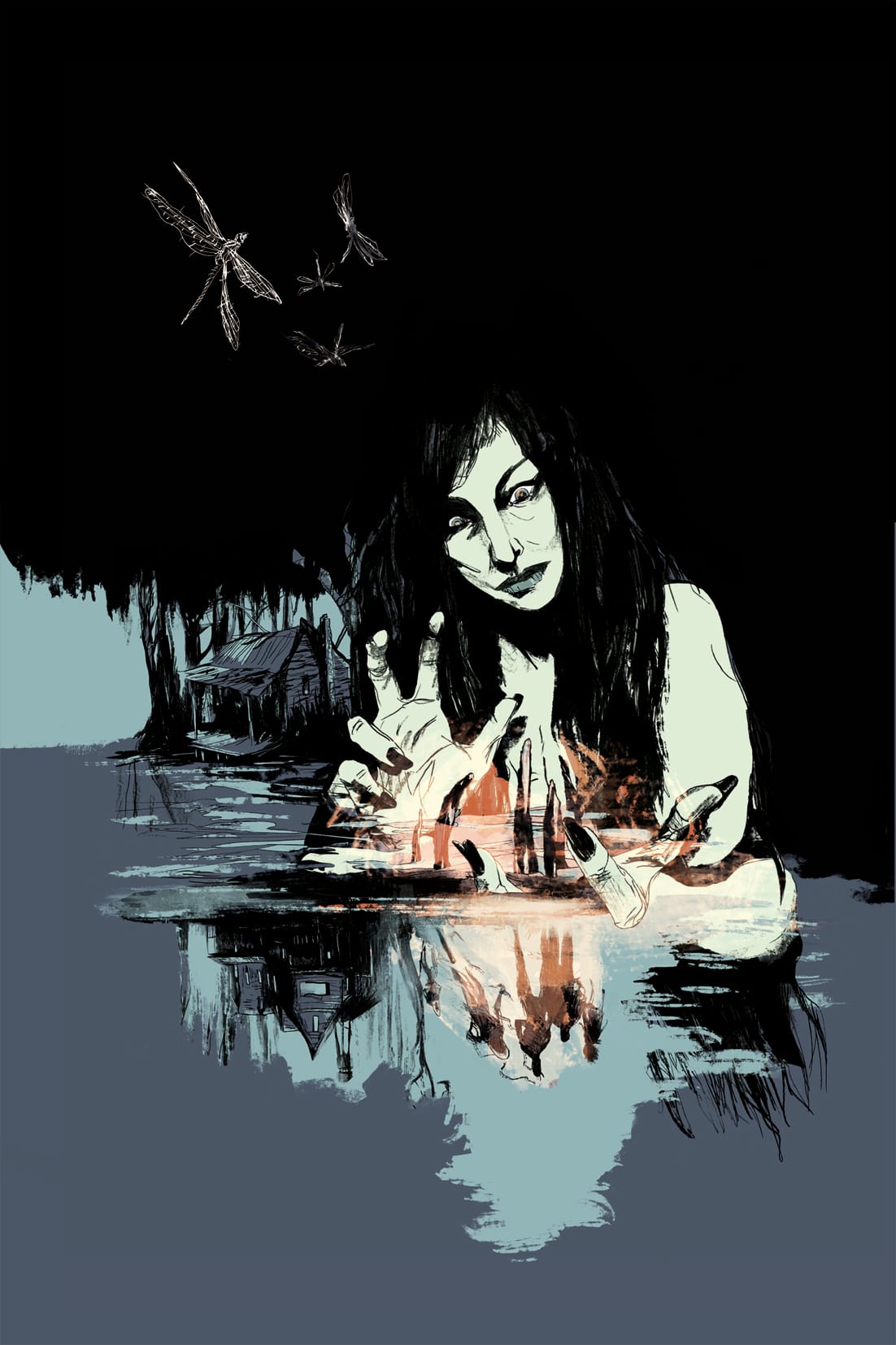
Commissions for Dept. Of Truth - Wild Fictions (Image) / Black Hammer - Age of Doom (Dark Horse)
Your work inspires a feeling of speed and pace in TheNeverPress – as if you’re recalling a dream or sketching out an event while you remember it. How intentional is this, or do you work in your way and leave the feelings and interpretations up to the audience?
Thank you, it is intentional. I think comes from a number of aspects. Firstly from Animation; Finding the key pose in any narrative is crucial to animation and a skill that adapts well to comics. We live in a world of constant motion, particularly in cities like London so I want my art to reflect a captured moment rather than a still panel.
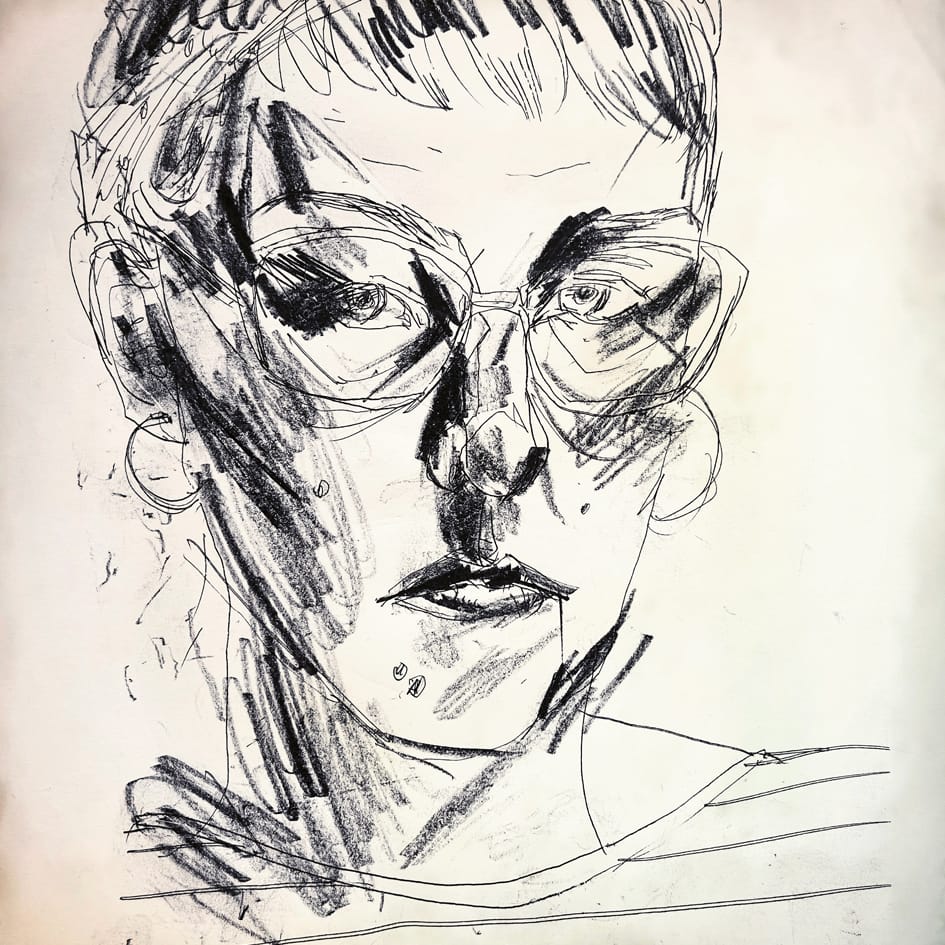
Secondly it’s the media I use; I’m naturally a perfectionist, like so many of us are, but the more I fuss on an image the more life drains from it. To keep the energy I try to sketch quickly with mediums that won’t allow for tinkering. I work traditionally to start, drawing with ink or Carbon typewriter sheets. It’s become a USP for my work as it produces a very textural line. I use blade/dip pens, sharpened sticks and often my fingernails to scratch out the line art. It’s a satisfying, physical way to draw and gives that kinetic feel to the art.
Lastly, it’s from some excellent advice. When I started out in comics I met Paul Peart Smith (Souls of Black Folk - Rutgers University Press) who advised me to be economical with my art when making comics.
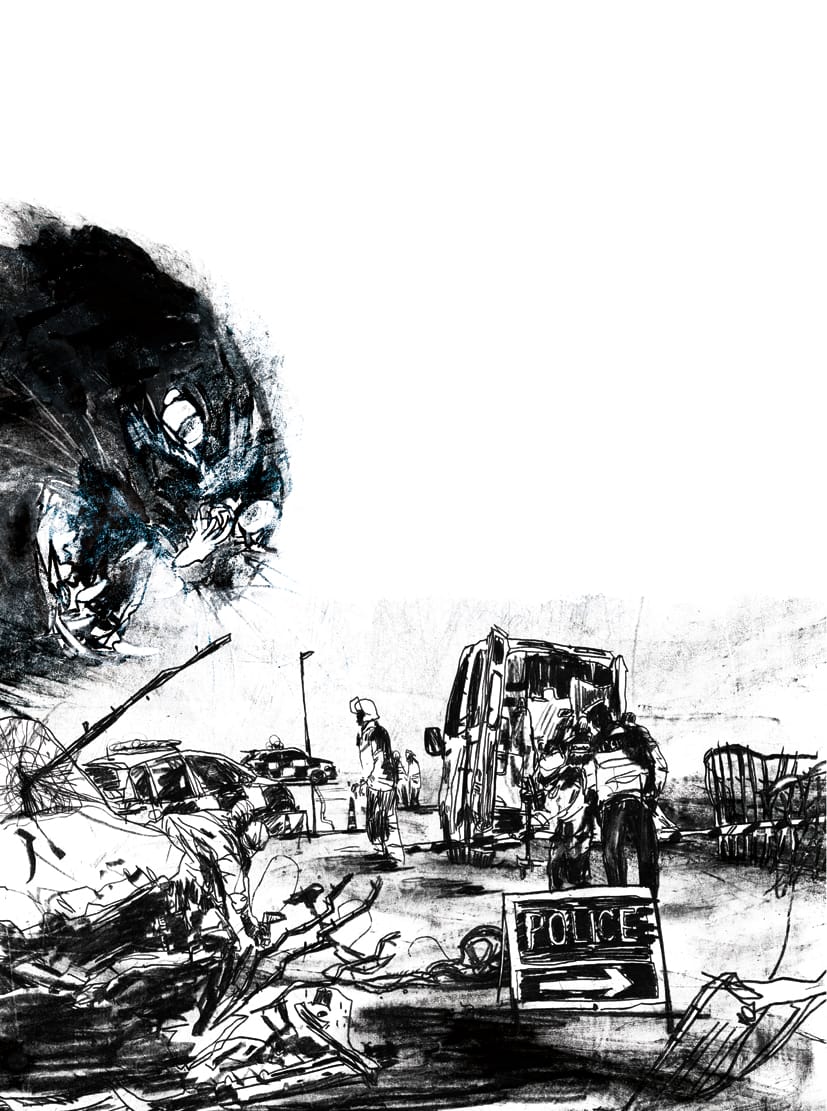
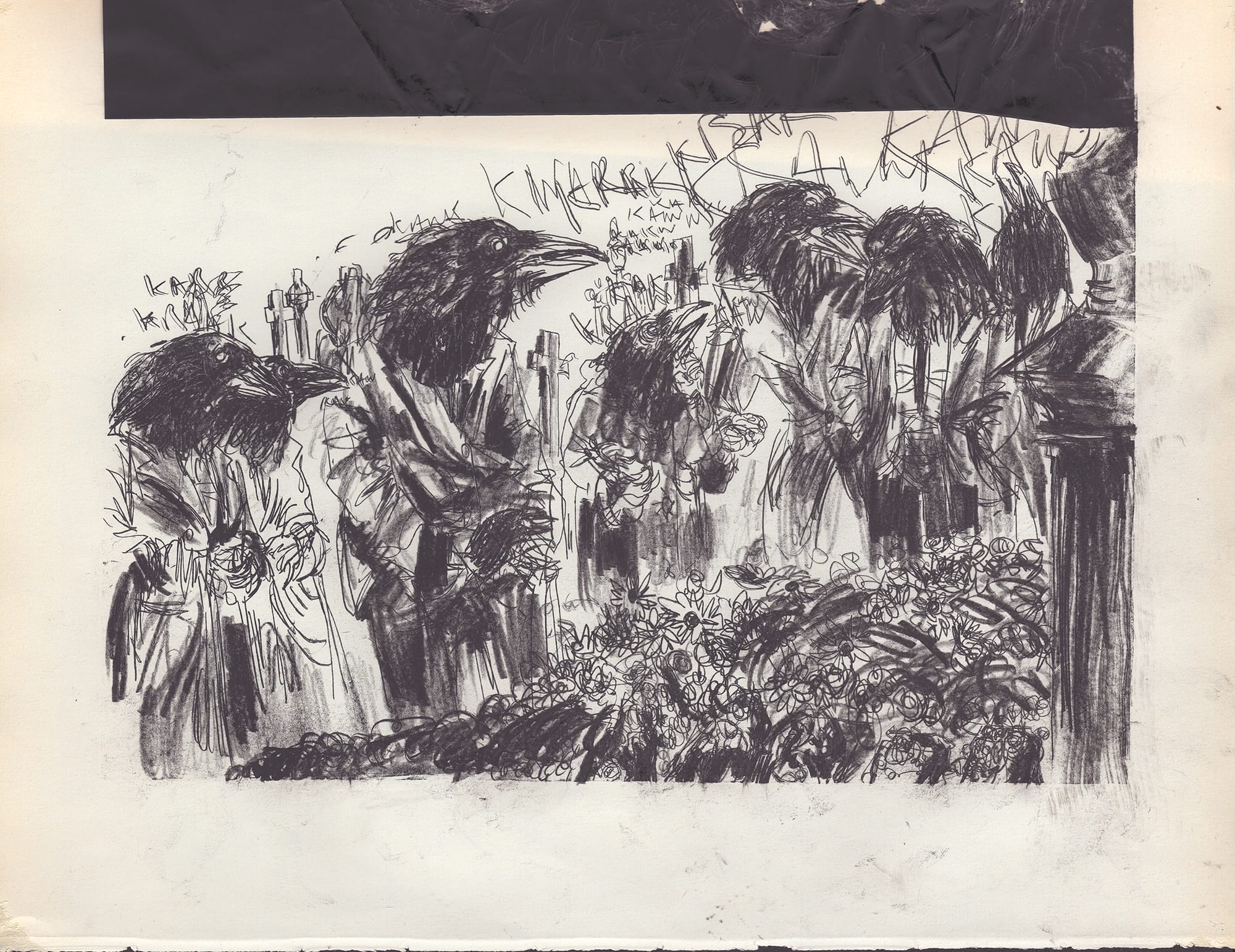
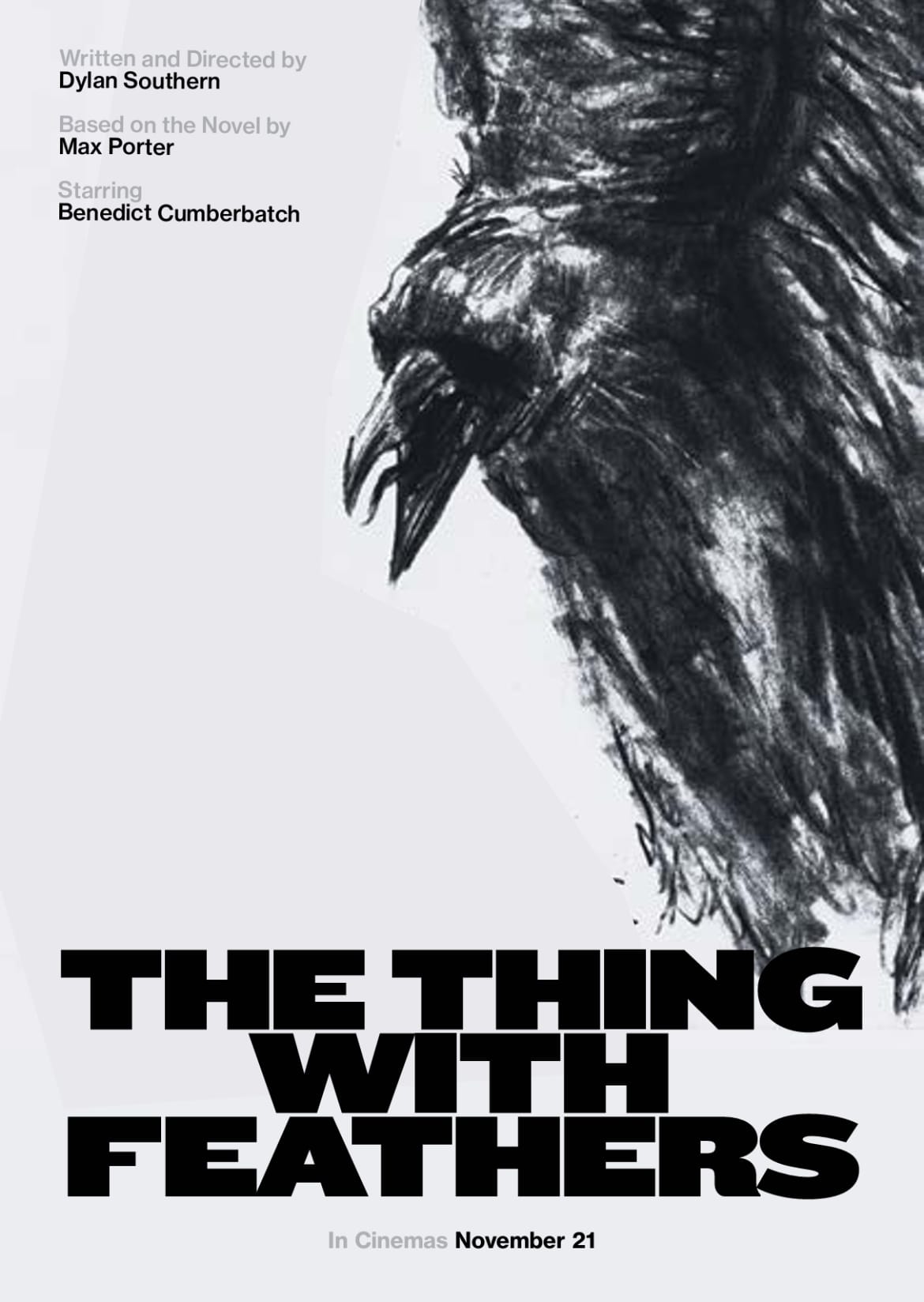
Commissions for Black Cat with John Reppion (Skrawl Magazine) / The Thing With Feathers [Dir: Dylan Southern 2025]
Are you precise in your undertaking of creative projects, or do you dive straight in and see what happens?
As my work and practice develops I’ve found different ways of approaching projects. This differs of it’s an art only project but they all start with research. If I’m writing it then I’ll have a slew of notes on my phone. I find ideas hit me at unusual times so I note them down to make sure I won’t forget. I’ll then research through books, comics, websites, film, podcasts… whatever best suits the project and build up a visual reference library. This will collect mood, inspiration or era specific material and act as a prompt when I’m writing and drawing.
If it’s art only then I’ll go onto reading through the script, noting details and number of word balloons to allow for space in the art. I’ll then sketch layout ideas and scan these into Photoshop. The sketches will get composed into to scale layouts and drawn as roughs, I’ll also print it off to make a dummy book of the story to check the pagination. Once I get the okay from the writer & editor I’ll draw the final art, scan it back in and letter (if I’m doing that) then hand in the files digitally.
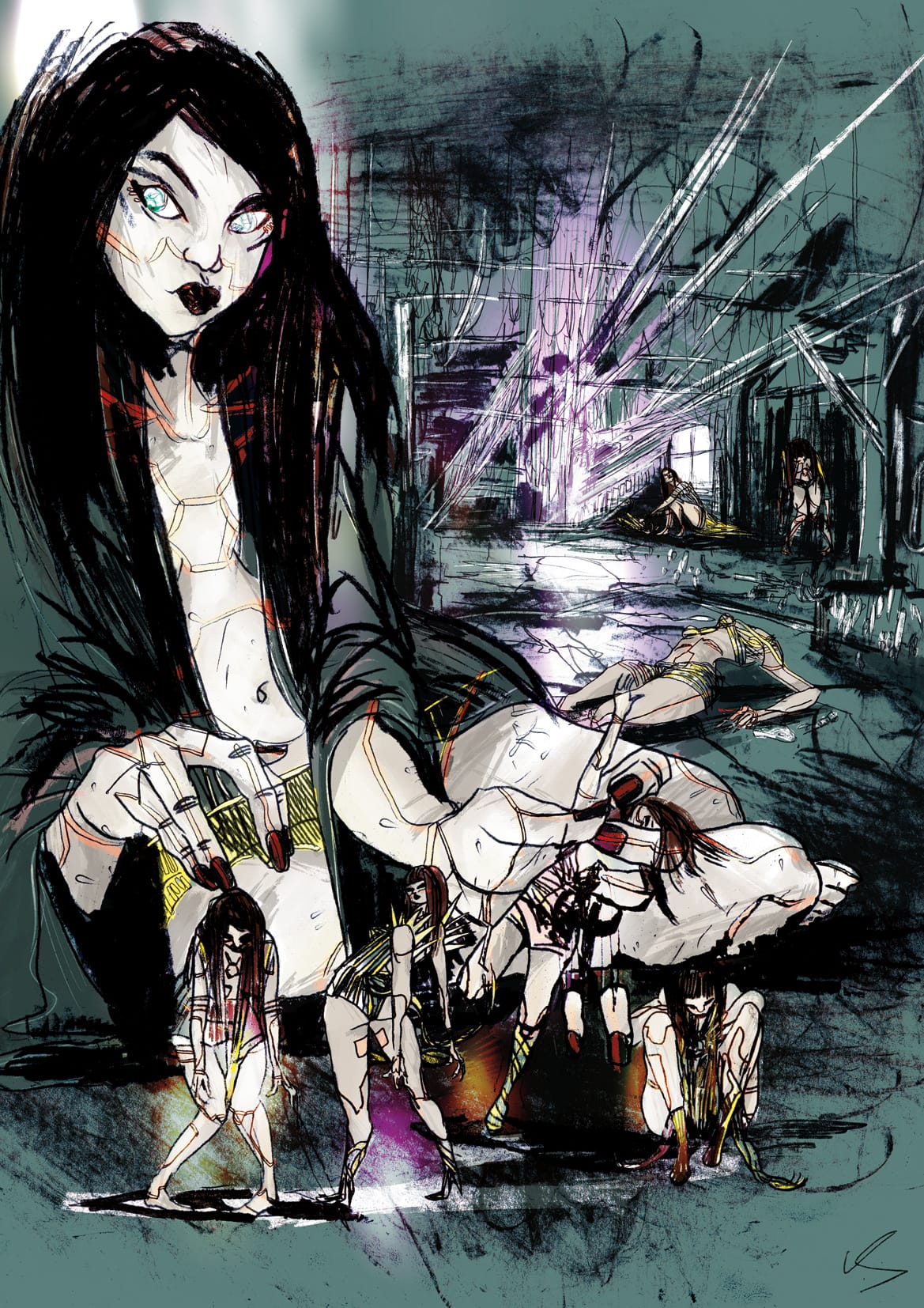
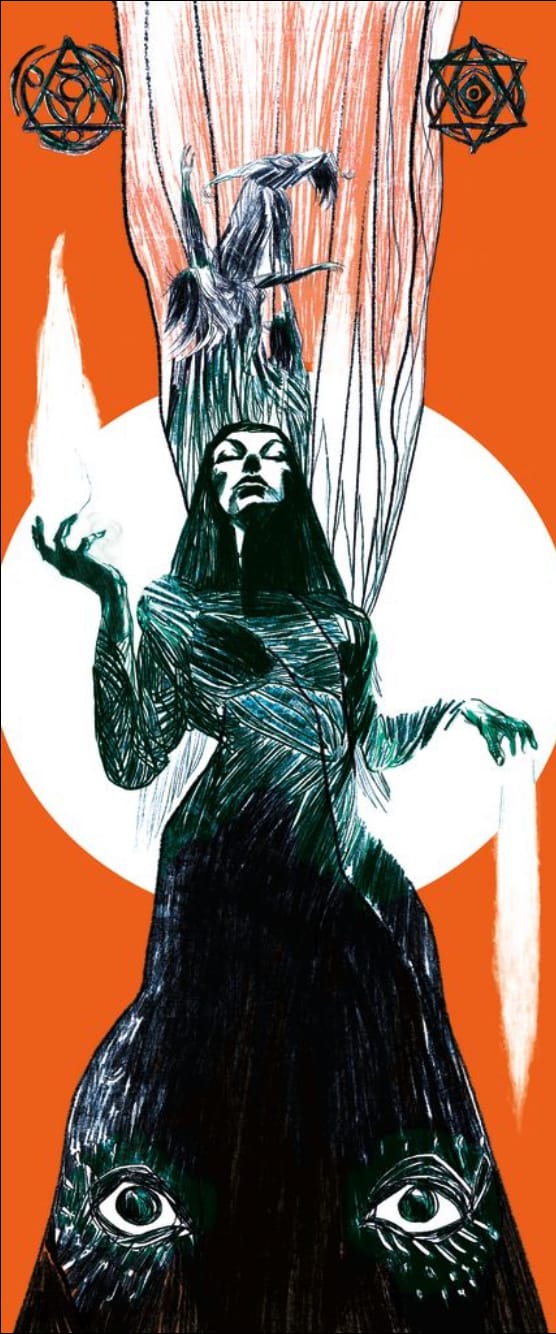
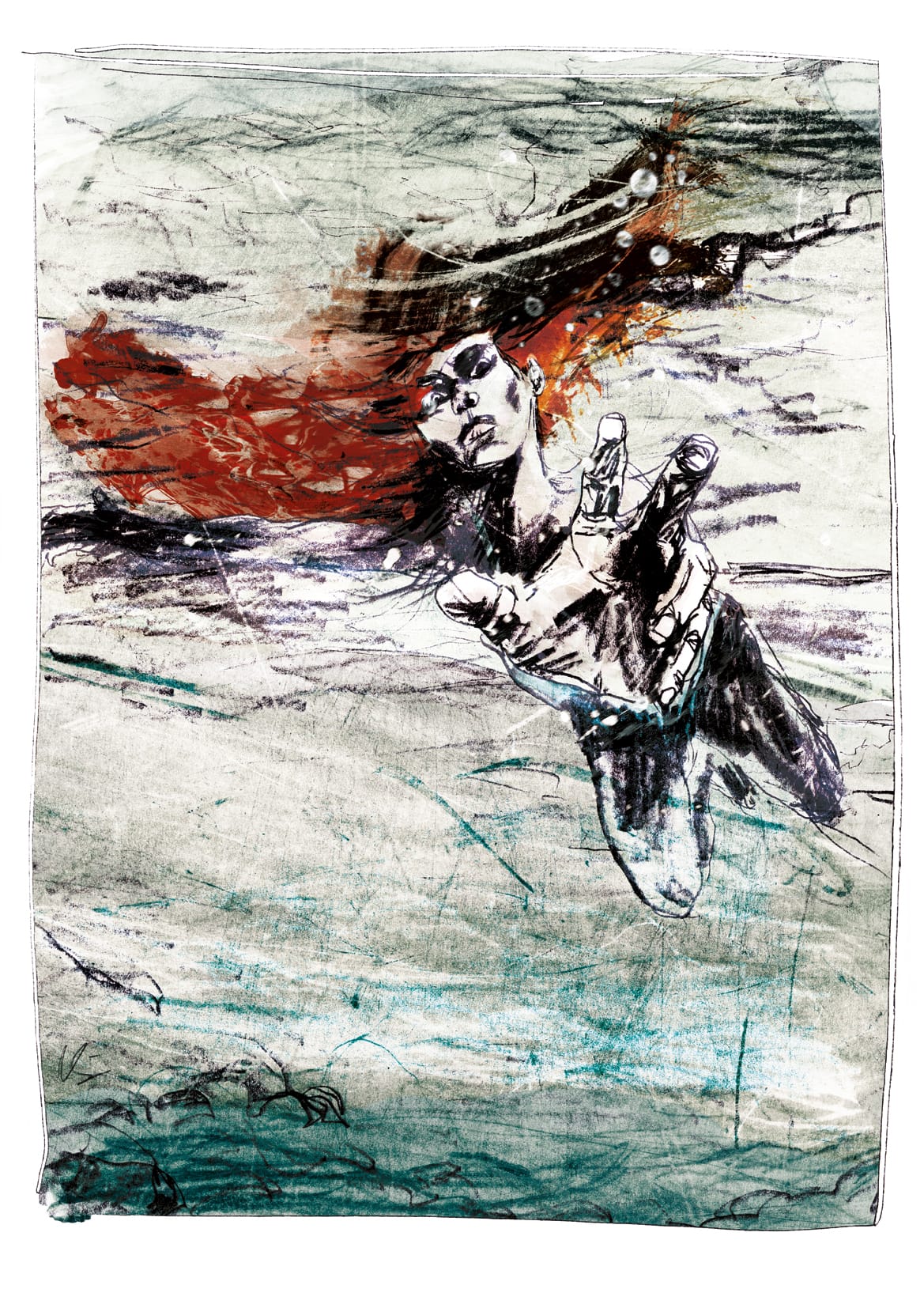
Commissions for Killtopia with Dave Cook (BHP) / Black Hammer Encyclopedia (Dark Horse) / Murky Waters (Carnouche Productions)
On my creator owned projects it’s slightly different and has changed depending on the project. For zines I allow myself no more than 2-3 days to write, draw and compile it ready for print. This is to keep them as a freeing way to get ideas down and stop me getting bogged down by the work involved.
For longer form comics after researching I would then go onto developing an outline for the story, maybe sketching ideas as I go then writing script and thumb-nailing layouts at the same time. It’s a relatively new technique that I’ve found whilst working on my next book Mothers Ruin (Avery Hill Publishing - Fall 2027) and seems to be working well. I’ll do roughs and a Dummy book on this too plus print off the roughs to lay onto my lightbox. For this series I would paint the colours in Watercolour first then draw the line art over with carbon paper or ink. I tend to letter separately so will draw Sound Effects, panel frames, word balloons and tails on a separate sheet then compile these with the art in Photoshop. I had a typeface made of my hand writing by Dan Berry so that I could edit the dialogue without having to redraw it every time. It’s been a life saver. Once the project is complete it’s off to the editor or printers, depending on whether I’m self publishing it, and then it’s just a matter of getting folks to pick it up at festivals.
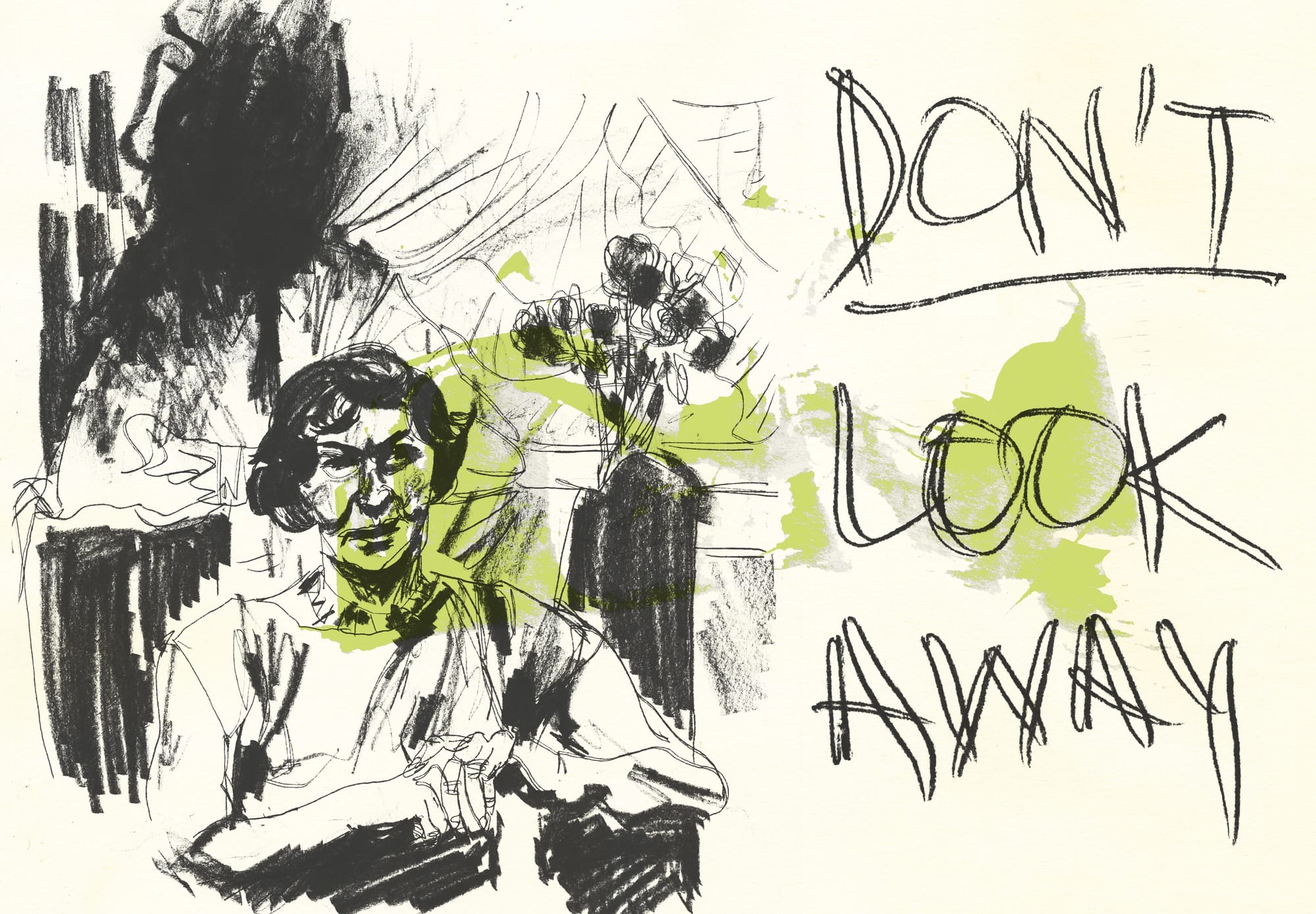
On audiences, how is your relationship with them at a story-level base. How do you consider your audience?
I prescribe to the notion that you should never create for the audience. For one thing you never actual know who that might be. When I was making Barking I thought that, due to its auto-bio nature, I would attract readers interested in that genre of comics. In reality my readership is more of folklore and horror fans and I’m delighted by it. I now try to not imagine who my reader is but instead hope to engage them through narrative devices into stories of personal experience and social concerns. Hopefully also putting them into the shoes of experiences that are different to their own and gaining empathy through that. We are intimately connected through the act of creating and reading. It’s a conversation with your reader. I’ll whisper tales of crows and damaged woman who are reborn through trauma. Of heartbreaking grief and raging sadness that manifest in Black shadow dogs and they will hopefully absorb it and bring their own experience and curiosity to the story. It’s a partnership, a tacit agreement and midnight meeting at the Crossroads. I rather enjoy it. Even more so when we meet in person and chat further about stories and life.
Your work is heavily researched – is it focused to underpin your vision, or does it lead you into new areas and direct you to new ideas and narratives?
I started researching as a practice whilst making Barking as there were aspects of the mental health sector I wanted to get factually right. Particularly practices on hospital wards and how patients are treated in often brutal ways. Since then it’s become an early stage in every project. I’ve used visual research such as film and comics since I started as a creative professional. Adding research to my stories does definitely underpin them and add a weight that they could otherwise lack. It gives you a solid foundation to set in reality that then allows you to take glorious flights of fantasy. The same goes for drawing. If you can give the reader something they recognise… a skyline, a certain quality of light or familiar object then you can take them to extraordinary visual places.
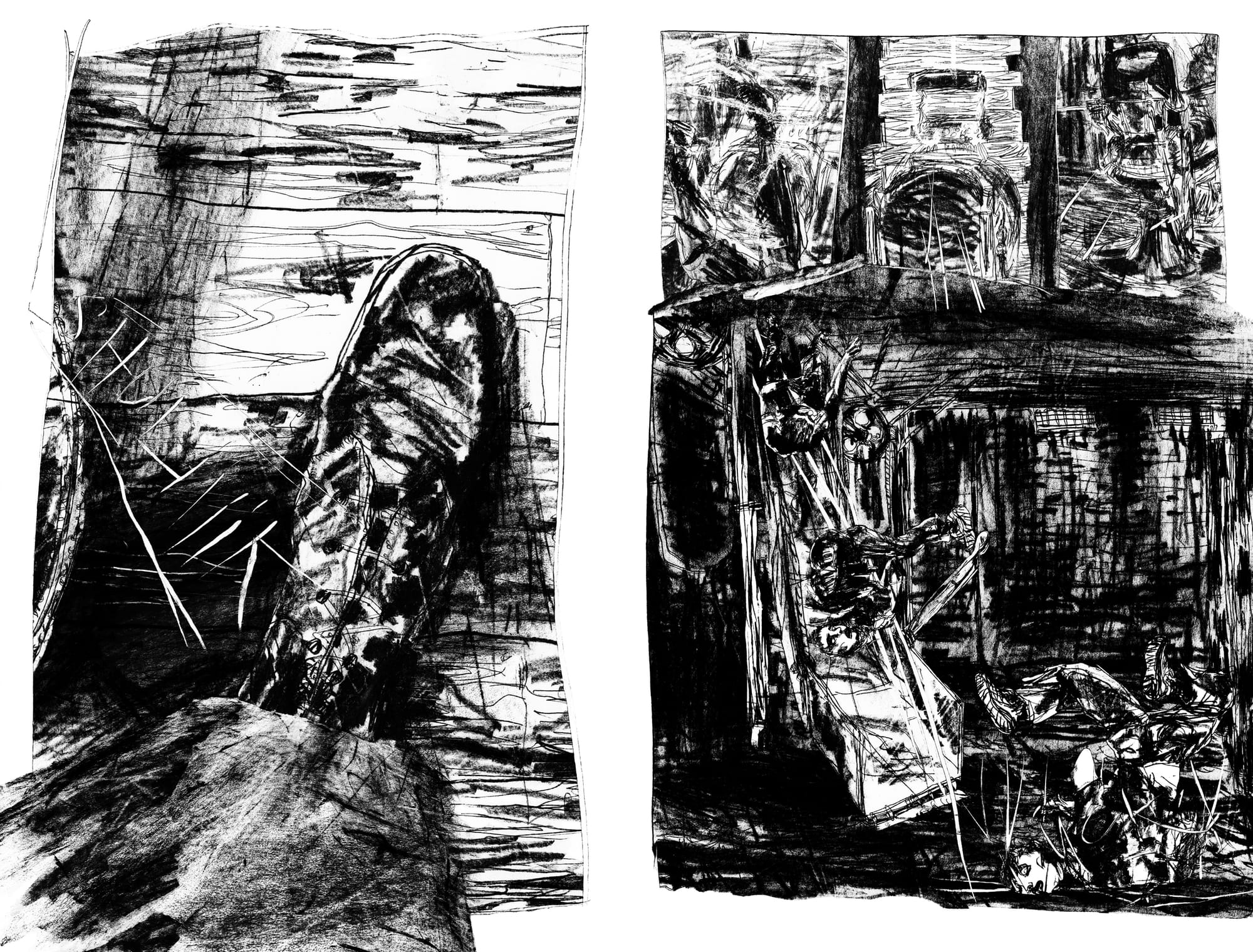
Commission for Sweeney Todd & I with Dan Watters (Razorblades Anthology - Image)
In 2023 I was awarded an Arts Council DYCP grant to research and write my next SHELTER story, Mothers Ruin, and found it very much lead me into new ideas and narratives. I had the indulgence of spending 12 full days at the British Library reading relevant works on aspects like Celtic Folklore and Folk songs, witchcraft, traditional medicine, West London in 1970s and Woman’s Lib meetings. I read magazines and newspapers from the year my story is set and found my book went from 30+ pages for the first story, Early Doors, to a whopping 180-200 pages. The only issue now being that it’s painted in watercolour and drawn with carbon paper so is going to take rather a while to create. But still, the story is all the better for the research.
You’re some years into your career – how are you now, compared to how you were then? Has age and experience played a part in how you access your voice and find your stories?
I’m just coming to the end of my first decade in comics as a creator but not quite yet professionally, maybe 5 years so far but certainly 20 years since I graduated from my degree. I think both age and experience have been vital in growing confidence in my abilities and having the courage to make the work I’m interested in, without fear of the response. When I started out I tried to adapt to what industries wanted. In animation this was a cute aesthetic. If you’ve seen my artwork you’ll know it’s not something I’m a natural fit for.
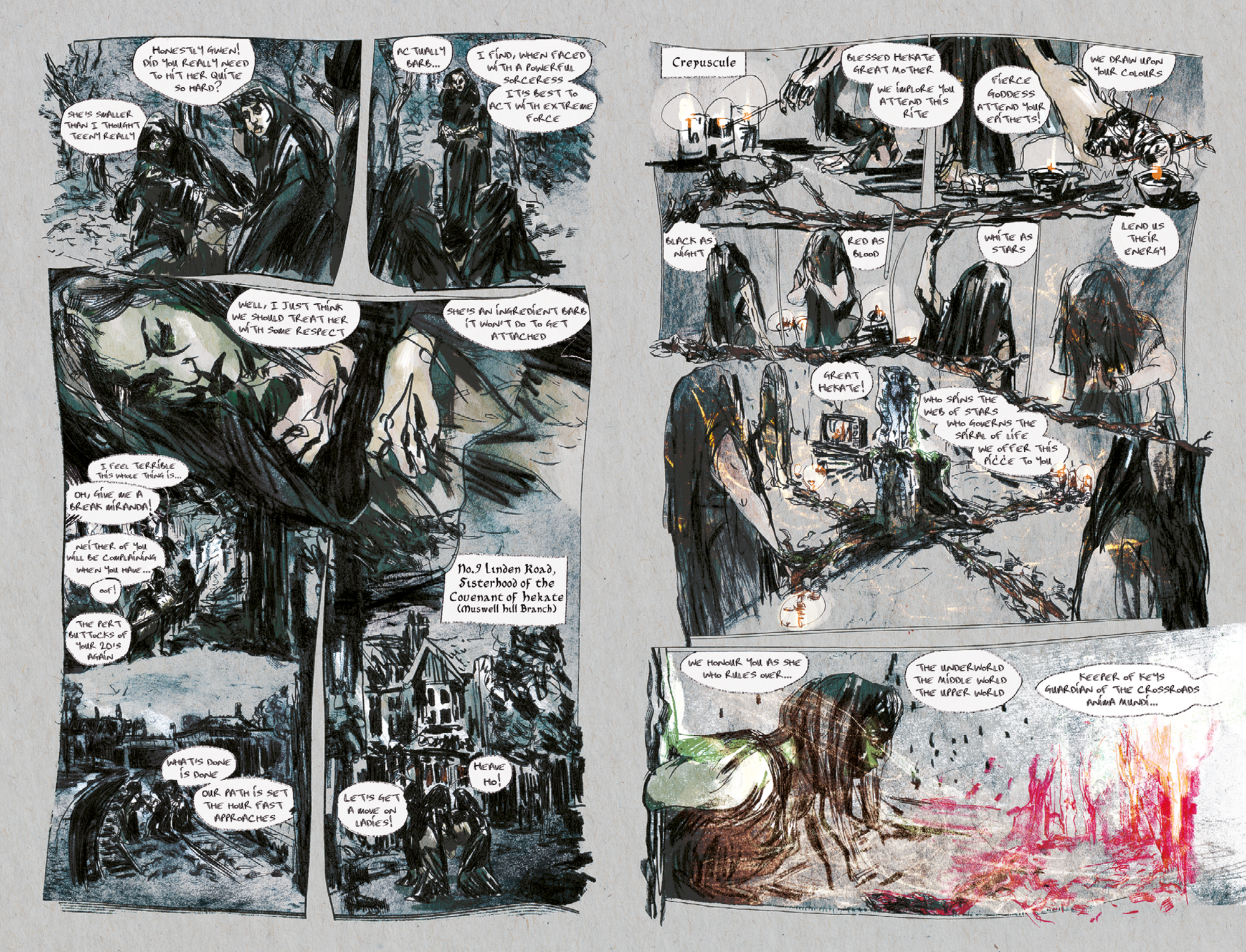
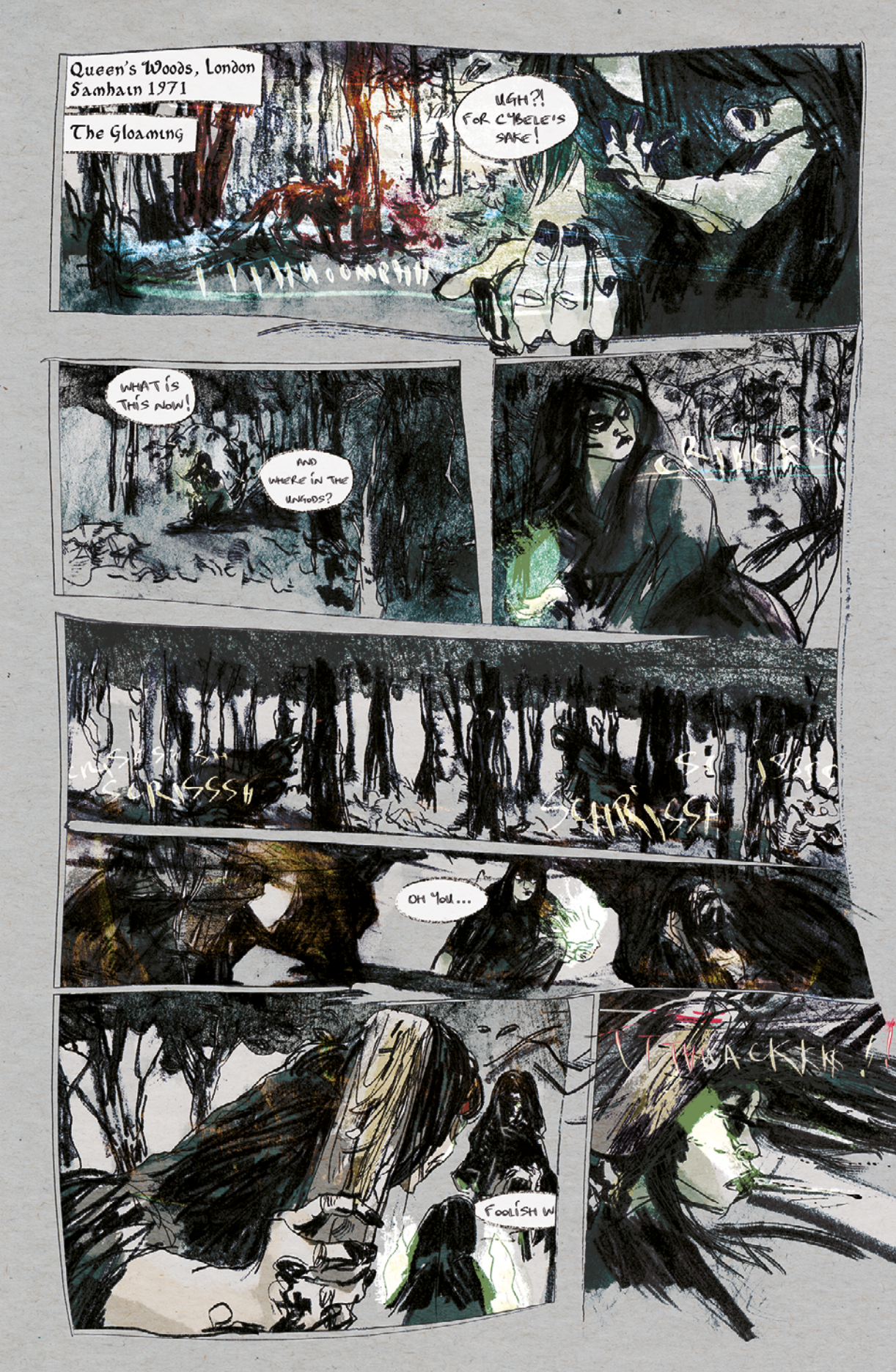
Commissioned comic Betwixt, Between a Black Hammer short for Jeff Lemire (Tales From The Farm)
Comics however is a much broader church. People are looking for all different sorts of comics. For me it’s great storytelling driven by unusual but exciting art such as Gareth Brookes, GIPI or Eleanor Davies who all bring another level to the art of comics. I try to aspire to their work and bring my passion and interests to my own work. I was extremely nervous about how Barking would be received, not only as it was so personal, but also because I threw out all the art rules for making comics. I kept telling myself this might be the only book I ever make so just go for it. The response was largely positive and that buoyed me to keep trusting my instincts and pushing my work where it nudges me to go.
I’m enjoying aging, finding my voice not only as a creator but also as a Hag in waiting. I think we, as society, have forgotten to fear older women and that was really a very silly thing to do. I’m using my age, experience and voice to remind you of that.
You have recently worked with the brilliant Shelly Bond on your latest project. How has it been bringing in an outside opinion/expert to your work from such an early stage?
Although I had worked with an editor before I had yet to have one go over my work with as keen an eye or grasp of the form as Shelly. It was an exhilarating and deeply encouraging experience. Having an editor with such vast knowledge was one thing but Shelly is also incredibly passionate about storytelling. I knew I needed her brilliant mind on my project when I reached the end of my research stage on Mothers Ruin and had a rough outline for the book. I had so many ideas and lots of different story arcs with interesting characters and yet it felt boring. I couldn’t get why it lumbered along. I was also getting a little overwhelmed by the ambition of the project, it’s multiple stranded tale and seen from various characters POV. Shelly worked on titles such as Bitter Root, Sandman and Fables so was going to know exactly what I was doing wrong and she did. It was exciting, if a little nerve wracking, to see my outline dotted with her infamous red pen. We spoke through her thoughts and she gave me excellent ideas on how to shake up the narrative of the story and find the rhythm and hit the story beats. If you need Shelly innumerable skills I strongly suggest you get her book Filth & Grammar: A Comic Book Editor’s (Secret) Handbook from Off Register. It’s chock full of superb tips and practical notes on creating great comics.
Creativity requires a deep level of thought and commitment – how do balance that with day-to-day life?
I’m still figuring this one out. I once read an article by Dave Eggers where he described the process of writing as akin to deep sea diving. That in order to access that part of your mind you need certain environmental settings, specific equipment and time. You have to slowly sink to that space. If you get suddenly interrupted you are dragged out with the bends. It then takes the same amount of time to get back to those depths.
I have a school aged child and very neurotic dog who get first billing then there’s the general stuff of households to deal with… it’s a lot. During term time I try to work as much as possible during school hours on my comics or creative work such as writing and drawing. I need to get into a specific headspace for each one with different ambient needs and no interruptions. Which is clearly impossible but somewhat doable. If I’m painting I also need time enough for layers to dry and to complete whatever task I might be tackling. Even if that’s just a feeling for an image or notion for a script.
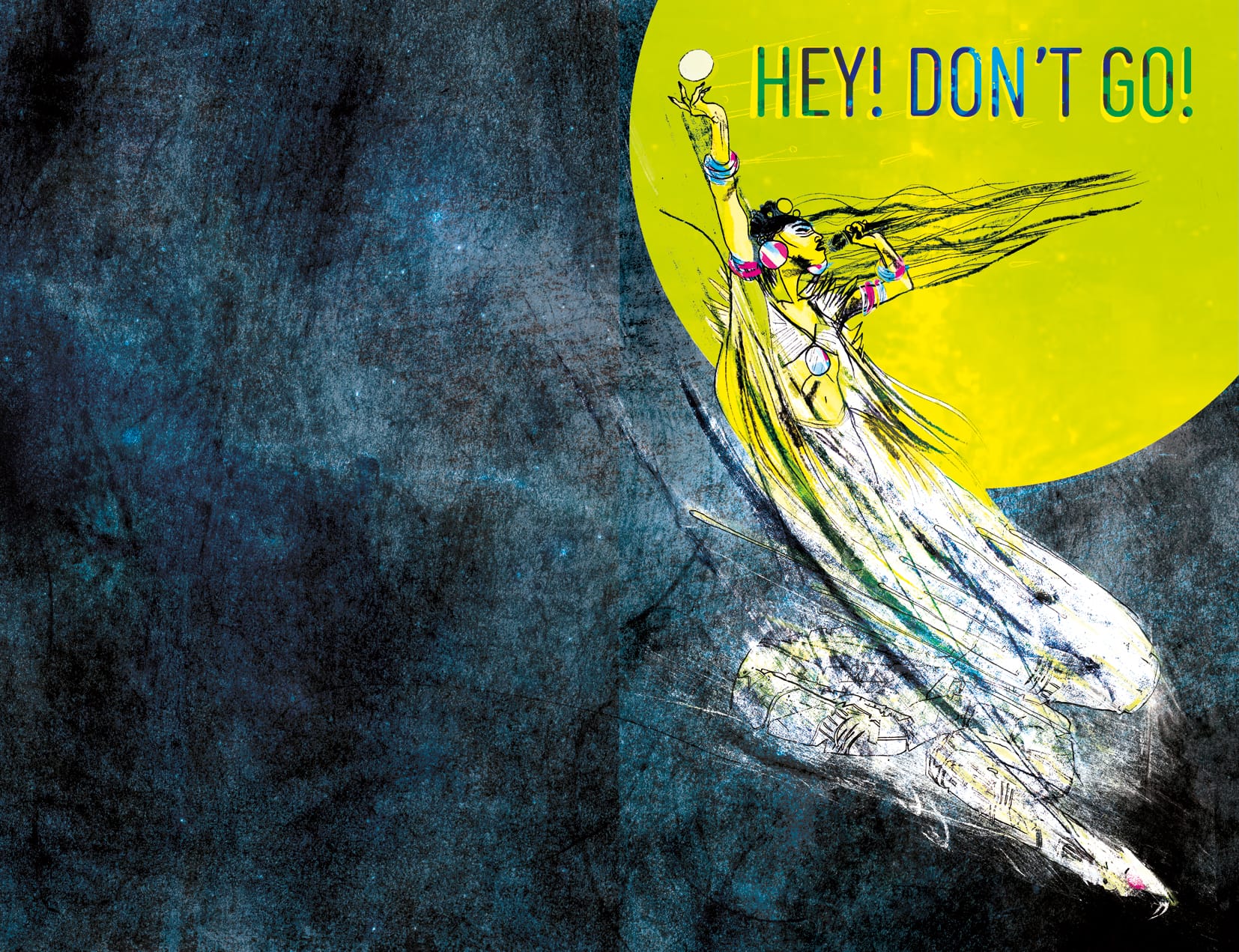
Commissions for HEY! Don’t Go! - Cover with Steve Thompson
Who or what have been great influences on your work, outside of your chosen medium?
Books primarily. I get very little reading time these days, the irony of which is not lost on me, so I tend to listen to audiobooks. These are often around topics I’m interested in social politics, folklore, fantasy or just straight up pleasure to remind myself why I enjoy making stories. Authors I return to frequently are Max Porter, Juno Dawson, Nick Harkaway and M.R Carey.
Podcasts can be equally inspiring especially those that take time to craft the episodes in a narrative structure that appeals to my thought processes. I’ve taken much from Tortoise investigative series, Crime Analyst and currently somewhat obsessed with Alex Andreou’s Podessy that takes Greek mythology and studies it through the lenses of adaption, academia and society. It’s transformative. I can be fundamentally altered by great storytelling or beautiful art, as we all can, and anything that triggers that in me stays forever embedded. I realised recently that I have Hyperphantasia so have to be careful what I imbibe. I’ve always describe myself as struggling to differentiate fiction from reality, as if I watch a horror film it becomes something I actively witnessed and stays in my head in that form rather than a passive viewing. It can be deeply distressing so choice of art is crucial. Although I do love a good fright so will have to allow for months of nightmares if I’m taking in horror.
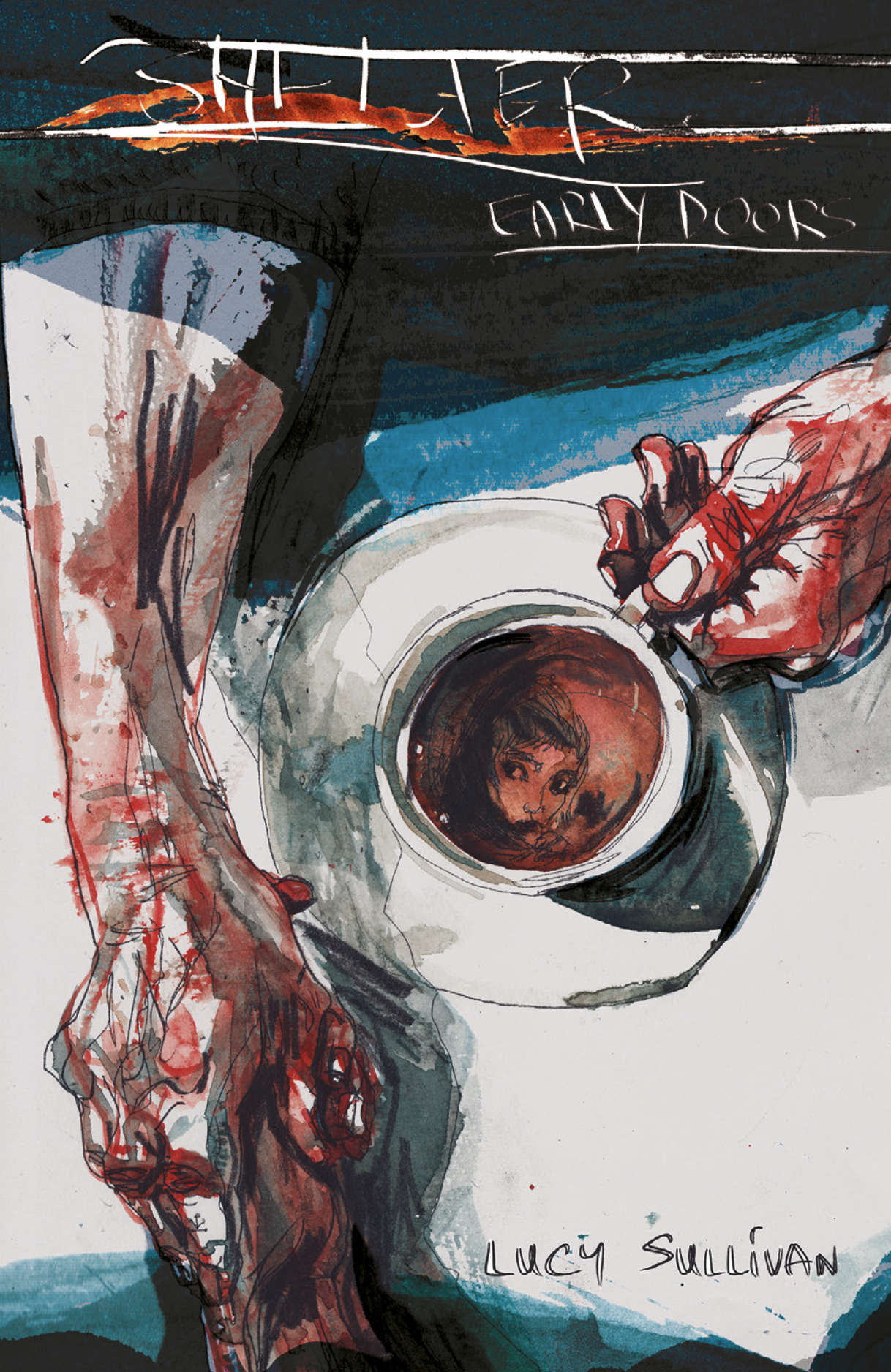
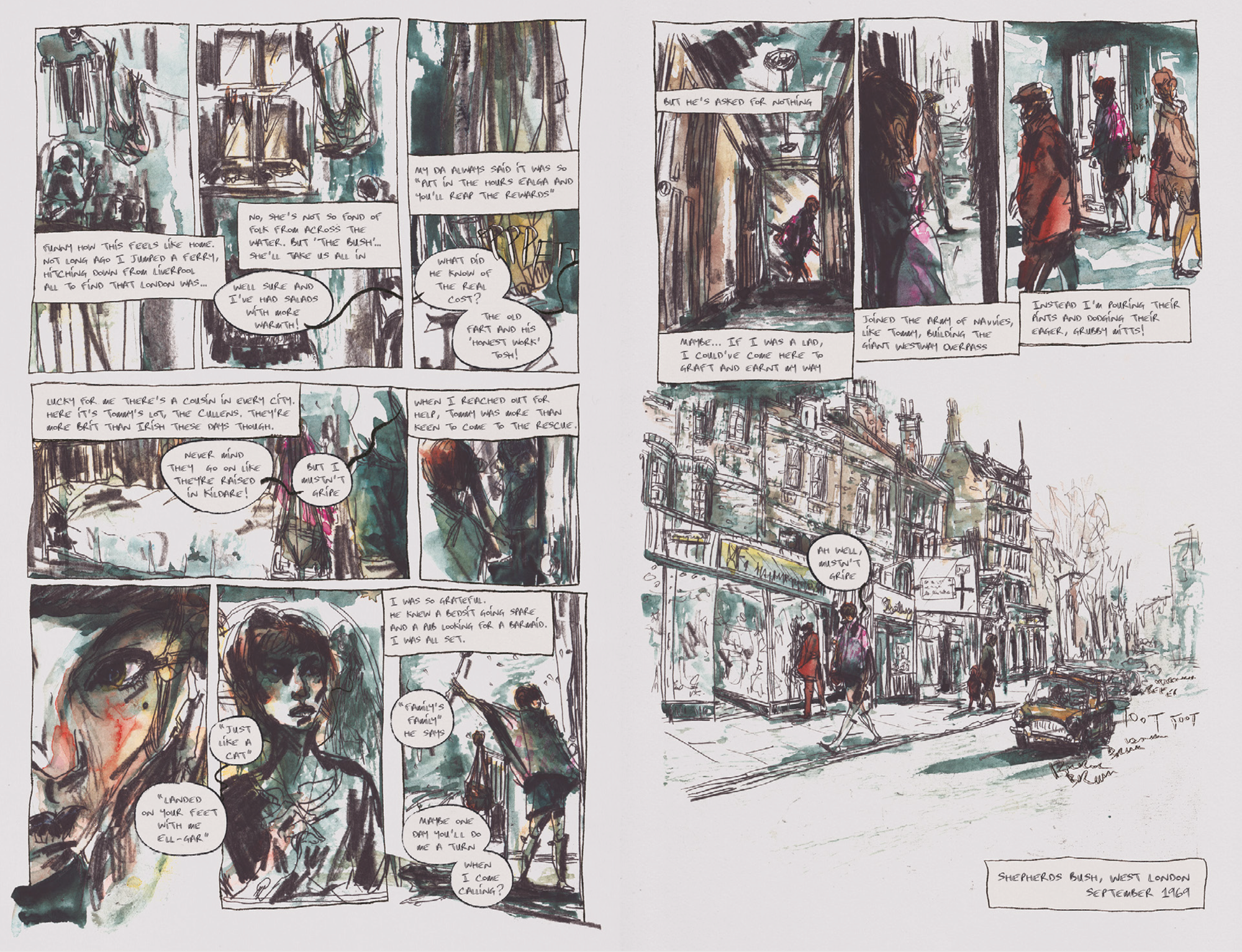
Cover and interior pages from SHELTER: Early Doors (Self Published)
How can art help us?
By showing us others experience and putting us in their shoes. By sharing different ways of seeing and being and existing. Whether it’s through moments of light relief or profound, thought provoking work. Art can stop you in your tracks, make you pause and disconnect from everything around you. It can project horrors and delight in beauty. It’s transformative, extraordinary, sometimes frightening and utterly necessary in every one's lives. It should never be made only for money or profit but for purely for itself. It is the ultimate expression of what it is to be human and we need to remember that and treasure it. It is never ever made by robots. AI is not capable of and will never be able to truly create art.
Has your art positively helped your mental health in any way?
I find the practice of creating deeply positive for my mental health. Despite the frustrations of writing or the days when my art isn’t rendering as I would like it to or my story isn’t living up to it’s promise in my head… It’s still a good day in my mind by doing it. I realise this most when I’m unable to work. I start getting tetchy and irascible which leads to low moods and if I’m not careful depression.
I use my creative work not only to express my ideas but also to manage my mental state. Creating art gives my life meaning and that’s an invaluable factor in feeling happy. When it also connects with other people and they speak to me about it I feel incredibly lucky to be able to experience such a profound connection. I know making art is a very privileged thing to do so I won’t squander it.
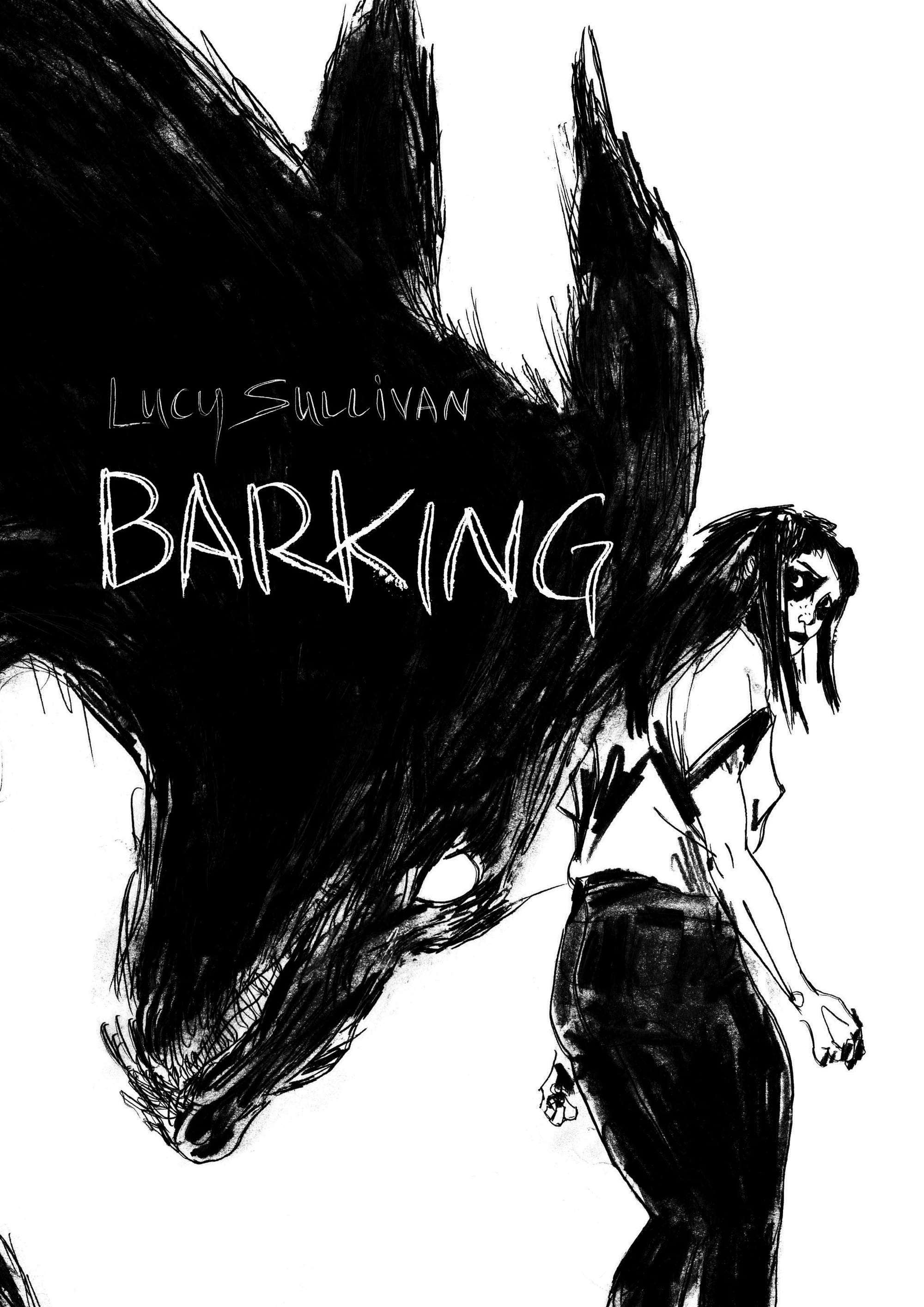
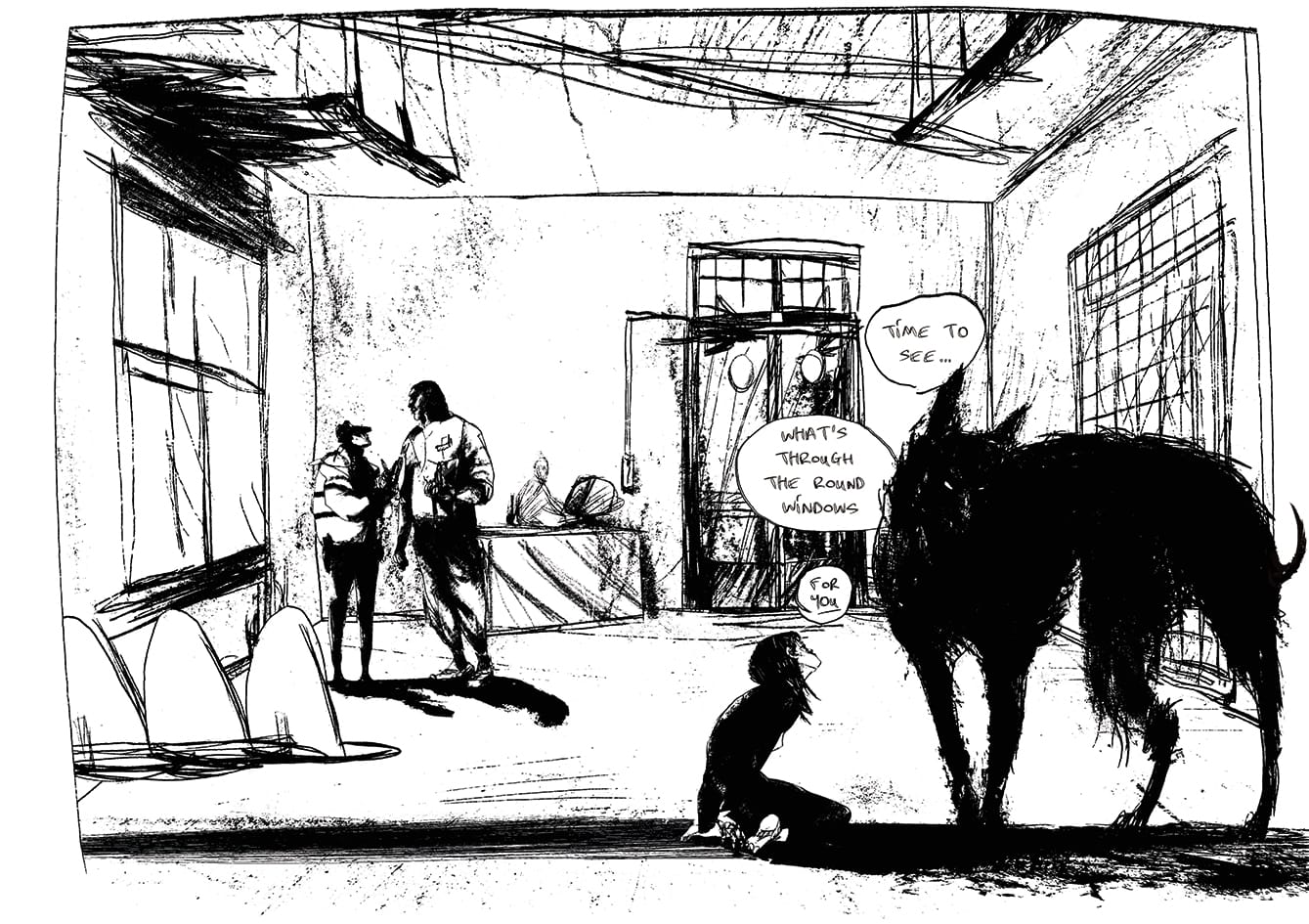
Cover and interior pages from BARKING (Avery Hill Publishing)
What advice would you give to anyone out there who is starting out on their creative journey?
Makes mistakes. Fail spectacularly. Try out ideas even if you think they won’t work because they might. Don’t concern yourself with who might read it or look at it or listen to it. As Willian Goldman once said ‘Nobody knows anything’. The most important thing to do is just get started.
Even a small act towards making something is creating. This could be jotting down notes or ideas in a book or on your phone. Reading a book or comic, watching a film, going to the theatre. Take photos, doodle ideas and collect your thoughts. Try to set aside a small part of every day to work on it. Don’t beat yourself up if sometimes you miss that time. Keep at it. Don’t give up.
Find your people. Every creative area has a community. In comics this is at events such as zine fairs and comic festivals. Also book launches at cool shops like Gosh in London or reading groups at OK Comics in York. There’s drink & draw groups like Broken Frontiers or mutual working groups like WIP Comics. There’s talks and meet-ups a plenty such as LDComics in London or Cartoon County in Brighton, both of which are online too. Go out and find your people and build a network. Support and encourage each other and before you know it you are the scene and people are joining your group.
But don’t forget that bit of time in the day for you to work on your project. Don’t give up.
What we love about Lucy is that she has always gone her own way - whether it's with her commissioned work, or personal projects such as with her incredible debut graphic novel Barking. With acclaim and success comes some tough choices, especially concerning creative control and artistic survival within the huge machine of mainstream media. Lucy has always stuck to her guns and gone with measured instinct - the harder route, with smaller presses and more limited runs - thus preserving creativity and pursuing an undiluted truth, rather than potentially becoming lost in the corporate shuffle of, say, Marvel. It's a great testimony to Lucy's integrity as an artist to forge her own path and allow herself the freedom of experimentation and expression that comes with the more roughly-hewn path.
Now, we're not saying that one can never thrive within the machine, working for the man - we're just saying that sometimes going your own way on your own terms enables your voice and your power to exist and run amok, untrammelled. It's a space we yearn to be in, so we're quite bias on this one.
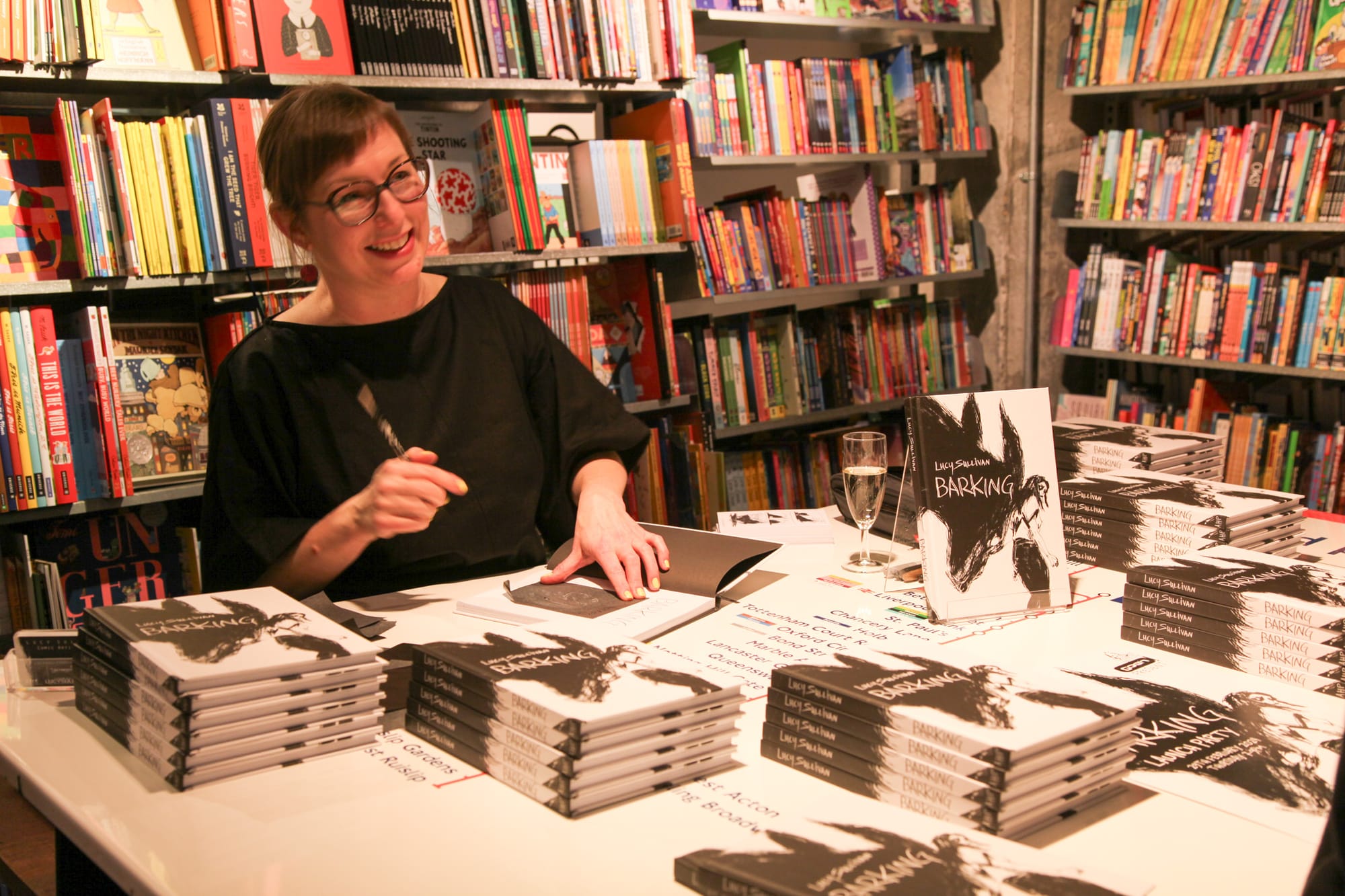
If you've enjoyed conversation with Lucy Sullivan, and would like to pick up a copy of Barking, learn more about her work and follow her on Instagram then hit the buttons below!
We're constantly on the look out for new artists, creatives and initiatives to feature in TheNeverZine - so if you are, or know someone who is going their own way and doing their own thing on their own terms and would be a good fit to feature please smash that button below and get in contact. By talking to each other, and sharing our journeys, ideas and insights on creativity, art, mental health and resilience we can all create, share and thrive together. Nice thought that.
PS - Don't forget to subscribe below for more content from TheNeverPress 👇