
It's a tangled old web we weave, to half quote Sir Walter Scott and navigating it all can be incredibly challenging. Our experiences, our past and our understanding of the world around us can be confounding at the best of times. How to make sense of it all so that we can endeavour to make our way truthfully, with kindness and purpose is a noble pursuit. Also noble is understanding, surviving and overcoming what you have travelled through - in some cases this may prove to be the most important thing we can ever do. But where to begin? How do we find ways to unpick the threads of our tangled loom? Well, through reading, storytelling and imagination. The communal human experience laid out in art is foundational tool in understanding ourselves, each other and the to ponder the nature of 'us' - the power within literature to shape, change and binds us is unfathomable. Renowned bibliotherapist and author Bijal Shah is here to talk to us about this power and the ways in which reaching into reading, and storytelling, can inform, nurture and heal us. Let's get into it...
Bijal, thank you so much for taking time out to talk to us today. May you please tell us about your creative journey so far and what led you to becoming a leading light in the bibliotherapy field?
My journey into bibliotherapy began after completing a diploma in psychodynamic counselling, during which I was also in therapy myself. At the time, I was working in investment banking, having graduated with a Bachelor of Science in Mathematics at the University of Warwick in the UK. During my own therapy sessions, I noticed a recurring pattern: whenever I explored a personal issue, I instinctively turned to books to better understand the context. My therapist would often recommend books, Greek myths, or simple stories to illustrate key points, and I found this immensely helpful in deepening the therapeutic process. It was then that I realised the profound power of literature as a tool for healing and self-discovery. This realisation sparked my curiosity, and I began delving into research on bibliotherapy. I connected with several leading experts in the field, including Dr. Pirjo Suvilehto, a Finnish bibliotherapist and Doctor of Philosophy and Literature at the University of Oulu and Dr Kelda Green at the University of Liverpool.
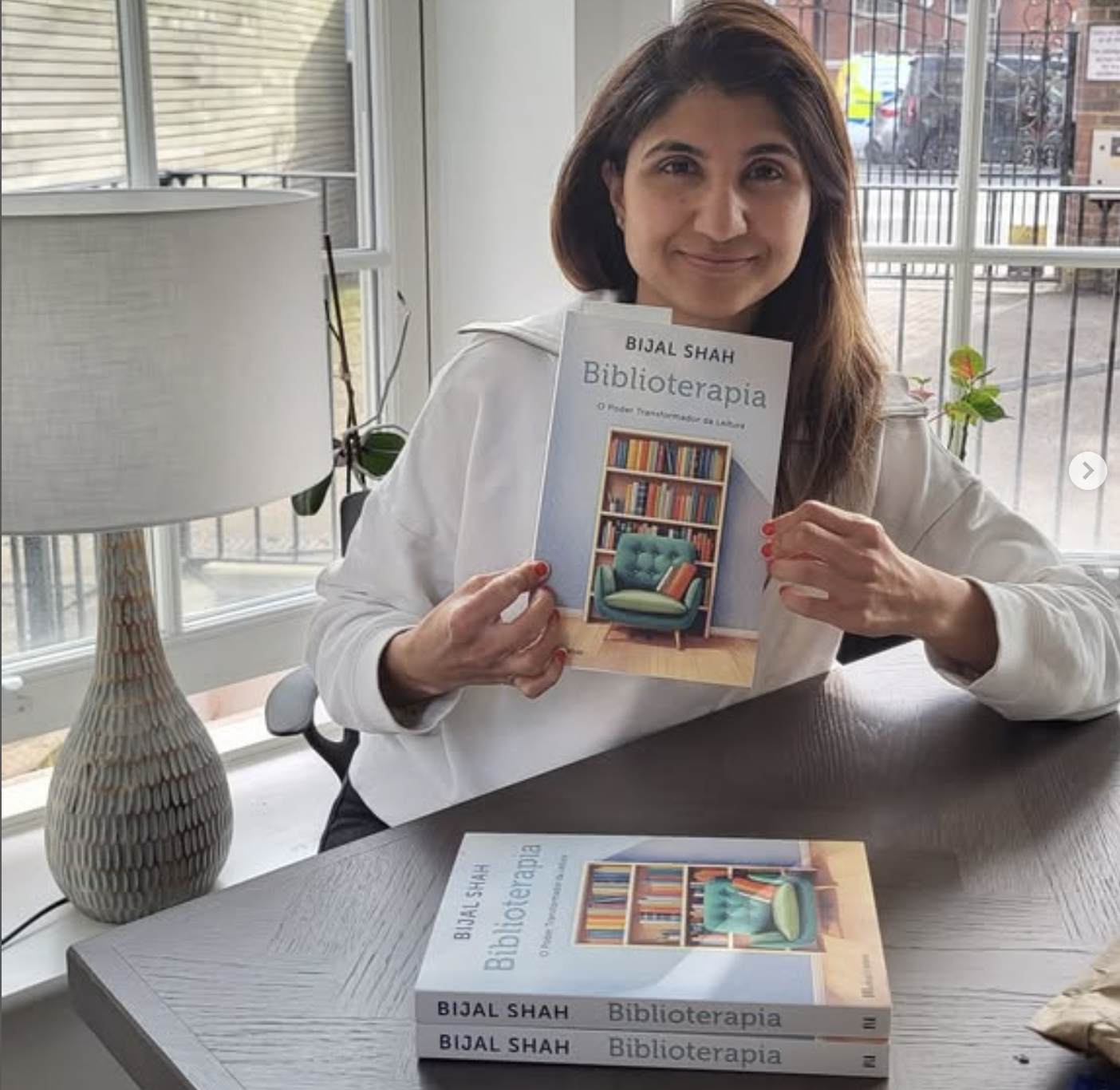
Their work further cemented my belief in the transformative power of literature, as well as more historic pioneers of bibliotherapy and therapeutic reading, which, if of interest, you can read about in my recently published book, Bibliotherapy: The Healing Power of Reading.
During this time, I developed a three-step methodology for curating reading lists and selecting books tailored to address a wide range of personal issues, building up a large database of book recommendations across a diverse range of mental health themes from anxiety, depression, mid-life crises, relationships issues, grief, bereavement and many more.
My hope is that [my work] will empower others to harness the transformative potential of literature for their own well-being and growth.
May you break down bibliotherapy into some fundamental blocks. What is the essence?
At its heart, bibliotherapy is the intentional use of literature for healing and personal growth. It rests on four pillars:
1. Connection with the text/author – connect with the text or relevant character. experiencing resonance, belonging, or shared experience.
2. Identification – seeing oneself mirrored in a story, character, or theme.
3. Catharsis – The text needs to be able to help the individual connect with their emotion, allowing them to release these (i.e. provide for a ‘cathartic response’).
Insight/Self-awareness/Integration/Reframing – Provide insight into the individual’s own situation based on the issues faced by the character/discussed in the text and allow the individual to consolidate these in a therapeutic fashion, and integrating those insights to understand one’s life differently or make change possible.
It is both science and art: a psychological tool and a deeply creative, soulful process.
Historically, how has bibliotherapy presented itself – has it always existed, if not by name, throughout the ages?
Yes, bibliotherapy has always existed — though the term itself only emerged in the early 20th century. Throughout history, from the reading of sacred texts to storytelling circles, people have turned to words for comfort and meaning.
The roots of bibliotherapy reach back to Ancient Greece, where libraries were seen as places of both learning and healing, and Aristotle viewed literature as medicine for the soul. Similarly, King Ramses II of Egypt created a “House of Healing for the Soul,” a chamber dedicated to therapeutic reading. By the nineteenth century, doctors were formally prescribing books for emotional relief, and libraries became integral to European psychiatric institutions. During World War I, soldiers used reading to cope with trauma, prompting military hospitals in the US and UK to develop substantial bibliotherapy programmes. One influential early resource was Edith Kathleen Jones’s 1913 guide A Thousand Books for the Hospital Library, designed to help select uplifting literature for the physically and mentally ill. The field expanded further in the 1950s when Caroline Shrodes theorised that readers could find deep psychological benefit in identifying with characters in literature.

How can one benefit from integrating bibliotherapy into their lives and reading habits?
When we read consciously — not just for information or entertainment, but for understanding — it deepens empathy, enhances self-awareness, and provides comfort in shared human experience.
Integrating bibliotherapy into daily life helps us slow down, connect with our emotions, and cultivate meaning in a world that is becoming more and more fragmented and disconnected.
How do you work with your clients – is there a typical journey or pathway you can talk us through?
Each client’s journey is unique, I start by understanding their emotional landscape — what they are experiencing, seeking, or struggling with, by getting them to fill out a questionnaire, similar to the one on here that seeks to understand what sorts of issues my client is facing, and what they would like to address in their bibliotherapy sessions or as part of their personalised book prescription request.
Secondly, I will want to understand what their reading preferences are, fiction, non-fiction, any particular genres they like to read, literature they have enjoyed in the past. In addition, I will want to know, whether there are particular reading formats (Kindle, paperback, hardback) they enjoy and how much time they have to read. Based on this I will curate a reading list for them. And it’s important to note here that these book prescriptions can be both for therapeutic purposes but also for personal interest purposes.
This reading list will either be shared in a bibliotherapy session, and we will use this literature for counselling purposes, or will be emailed directly to the client if they simply wish to receive a personalised book prescription and not partake in a bibliotherapy session.
If they decide to proceed with the latter, I offer books that resonate with their needs. They go away and read, journal their reflections, and we discuss these in the session, including feelings evoked, and insights gained, drawing out further insights, coping mechanisms, and next steps in terms of their personal development.
Bibliotherapy requires thoughtful selection of texts. Where do you begin with your book prescription lists?
I begin with the person, not the book. The most important question is: What does this person need to feel, to see, to release, or to remember? Once I understand that, I turn to my research, and literary database — where I document and catalogue books I’ve read, or that have been read by my clients or wider professional network and which have been valuable for specific needs and thoughts. Based on this I will then suggest 7 – 10 books out of which they will select two or three that resonate the most and begin their literary journaling, either for personal reflection or to bring to a bibliotherapy session.
You must have an encyclopaedic knowledge of literature — how do you organise it all?
I categorise books by theme or genre, and feelings — loss, hope, belonging, transformation. I also keep detailed notes and a database, relying on my own reading but also on the contributions of clients, my wider professional network of coaches, therapists, psychologists, librarians, and teachers to help with finding the most helpful book for a client at a particular time, some of which I may not always have read.
How has your work and bibliotherapy in general helped people navigate personal challenges and live more balanced lives?
Stories allow people to see themselves without judgment. They help channel and virtually share experiences. Through bibliotherapy, individuals learn that their emotions are shared, their struggles echoed. This recognition softens isolation, fosters empathy, and cultivates resilience. I’ve seen literature help people process grief, anxiety, burnout, and even rediscover joy after long spells of depression and anxiety.
Can the techniques and benefits be found in other media — audiobooks, film, etc.?
Yes, very much so. The healing potential of story extends beyond the page. Audiobooks bring in an emotional element of the story through voice, making it a powerful format but also incredibly appealing to people who are more oriented to learning through audio than visually. Film also combines narrative and visuals to evoke emotion. The essence is not the medium, but the reflective engagement with story — the willingness to feel, question, and connect.
What are the core three things we could all do to start on our bibliotherapeutic journey?
1. Read with awareness – notice what emotions arise as you read.
2. Reflect – write or speak about what the story brings up.
3. Respond – allow the insights to gently shape your life or perspective.
Bibliotherapy is an active, participatory form of reading.
Have there been moments of doubt or insecurity in your journey?
One hundred percent. Any creative or therapeutic path involves vulnerability. There were times I questioned whether bibliotherapy would be adopted in the way that it has been by others. But time and again, I have witnessed clients often turning to story when more traditional forms of therapy have failed or not had the same impact.
How do you balance creativity with day-to-day life?
It’s a challenge and not easy! However, I work in 90 minute sessions through the day – morning, afternoon and evenings, organising myself around kids, school drop offs and pick-ups and I do a few hours over the weekend too.
I also carve out sacred time for reading and reflection before going to bed. But I am not rigid with the above – if one day I haven’t managed to do the above, that’s okay and instead I accept that not giving myself a hard time. I think to be productive, counter intuitively also requires us to do nothing, taking necessary breaks.
Has your journey affected your relationship with literature and storytelling?
I am more aware of how words shape us – and in the different ways they can. How words affect everyone differently and the power of stories, to influence us, to bring an overnight shift and their power to process emotion – from inviting even the stubbornest one out from deeply buried parts of us.
Literature has become, akin to nature, where I go to when I need to feel at one with something.
Where does it come from?
Ever since I was a little girl, I have turned to books from my younger years growing in Kenya, in an orthodox Jain Community to my teenage years emigrating to the UK, turning to Judy Blume and Louise May Alcott’s literature for comfort and affirmation to making sense of what it means to be human in a world where suffering is something you cannot ever escape, whatever your life station, reading young adult novels whilst working in investment banking. It’s been a lifelong passion, habit and I guess a form of love - love of stories and words, born from a lifelong curiosity about what makes us who we are and how stories help us heal.
What inspires you day to day?
Human resilience. The quiet courage of people who keep seeking meaning through loss or change. And of course, the endless beauty of language.
A single sentence can illuminate a truth we hadn’t yet been able to name.
How can art in general help us?
I always believe there is no healing without creativity, and art helps us to express out inner world, it makes emotion visible and in doing so processes it and brings relief and healing. Whether through painting, music, or literature, art reconnects us to ourselves and to each other.
What advice would you give to anyone starting out on their healing journey?
Healing is not linear. Be patient, often things are percolating behind the scenes. Read, reflect, rest, and come back to it. Let the process take its course, rather than striving for instant results. Above all, practice self-compassion — and trust in the process. Last but not least cultivate hope through positive affirmation. You will be surprised at what manifests and comes forward.
We're constantly on the look out for new artists, creatives and initiatives to feature in TheNeverZine - so if you are, or know someone who is going their own way and doing their own thing on their own terms and would be a good fit to feature please smash that button below and get in contact. By talking to each other, and sharing our journeys, ideas and insights on creativity, art, mental health and resilience we can all create, share and thrive together. Nice thought that.
PS - Don't forget to subscribe below for more content from TheNeverPress 👇