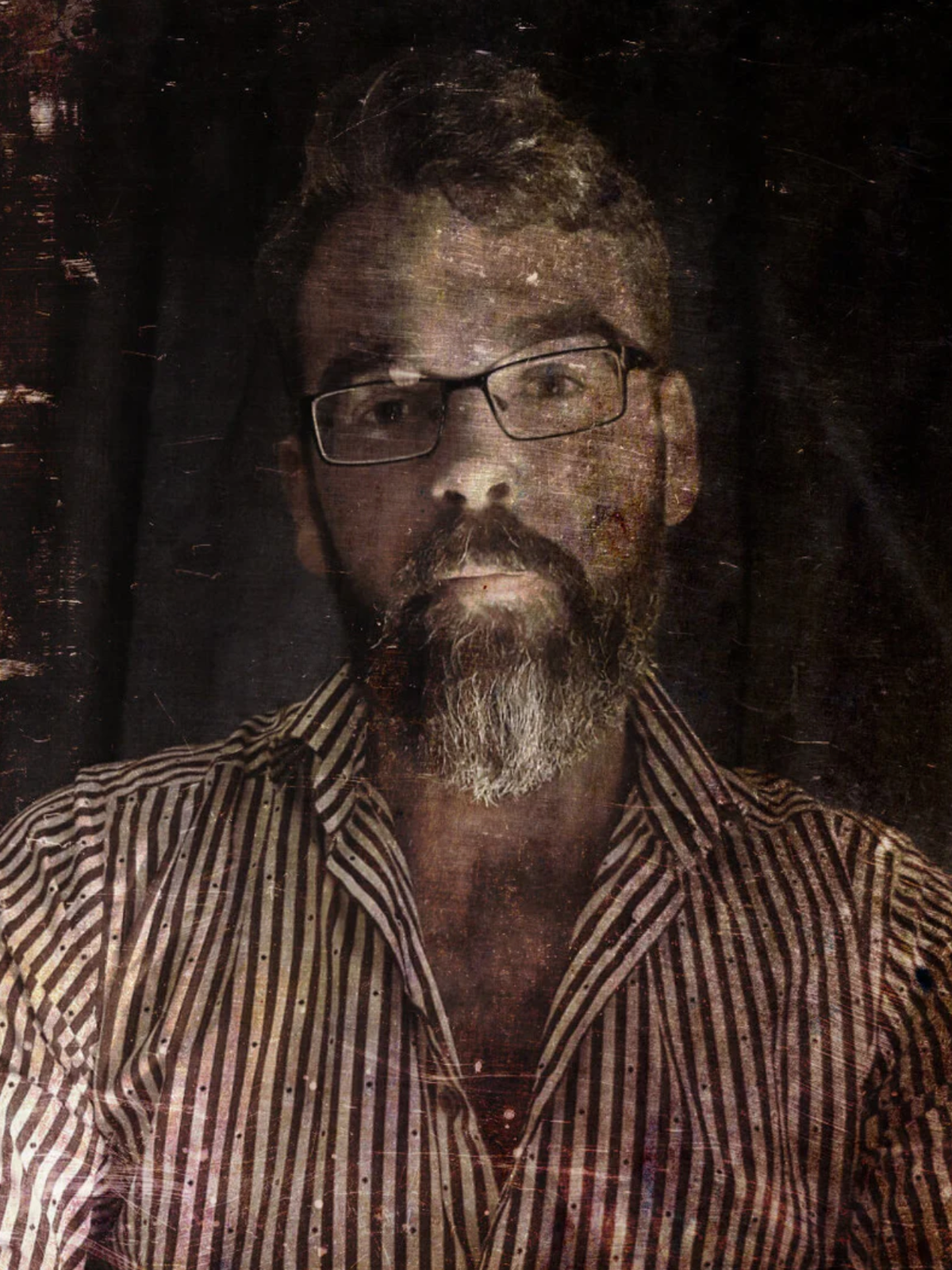
Adam Casey, book nook maker, miniature builder, and self confessed hoarder of junk, on authenticity, A.I, all things creative, and dealing with finding a larger audience on social media.
In 2021, Adam Casey made his first Book Nook and has been on an exciting, inspiring artistic journey ever since. Revelling in and reimagining iconic horror imagery and embracing the spooky, Adam’s miniature building has grown in scope and complexity over the years - but has always remained authentically Adam.
Now, we've been friends with Adam Casey for many years and it's not only a joy to see his art and voice develop and grow, there is also a huge sense of pride in seeing him blow up. His work has gone from a lovely, quite little hobby into a full-blown practice that has seen him take on commissions and collaborate with the biggest toy brand in the world. Having the opportunity to witness this ascent from a place of love and admiration is a great privilege, which is why we wanted to celebrate this in our first multi-part interview - to really, really get into it.
And so, we sat down to talk about his process, art and community on social media, and how helpful creativity can be for improving mental health. Let's go!
May you please give us a bit of context about your creative journey?
I've had a number of creative journeys over the years, sort of jumping on projects at a whim. But the one that I'm currently on, this whole Book Nook/diorama thing that I started, happened during the pandemic. So it began with me just bored and I started collecting action figures. I had a couple of weeks without work so I just started going through ebay looking for, well, mostly for things based on Aliens. I just want to start building a collection. And what happened was, my collection got bigger and bigger and I started joining some collectors groups and then I came across some people who were building dioramas with these action figures. And I thought, you know, that looks like fun. And I started doing that myself. So the first thing I made was a little diorama of a ‘what if’ thing showing what happened to Burke from Aliens after he gets taken away, and you don't really see him after that. I created this little diorama of him plastered to the wall in alien sludge with a little egg and a face hugger on the floor. And that kind of sparked everything off.
Hit play to get spooked on the metro
Do you have any brand of figures or models that you have gone back to? Any that have met your vision or inspired you?
Yeah, so when I was still doing dioramas for Ash (from The Evil Dead) figures, I tended to just use NECA models. They produce - not the best ones - but at that scale, that 7 inch scale, they had the most detail and the most variety. And a great range of horror characters which I was using, but you know, I've used a few more. I think it just depends on what I'm working on and who does the best figure to fit the project.
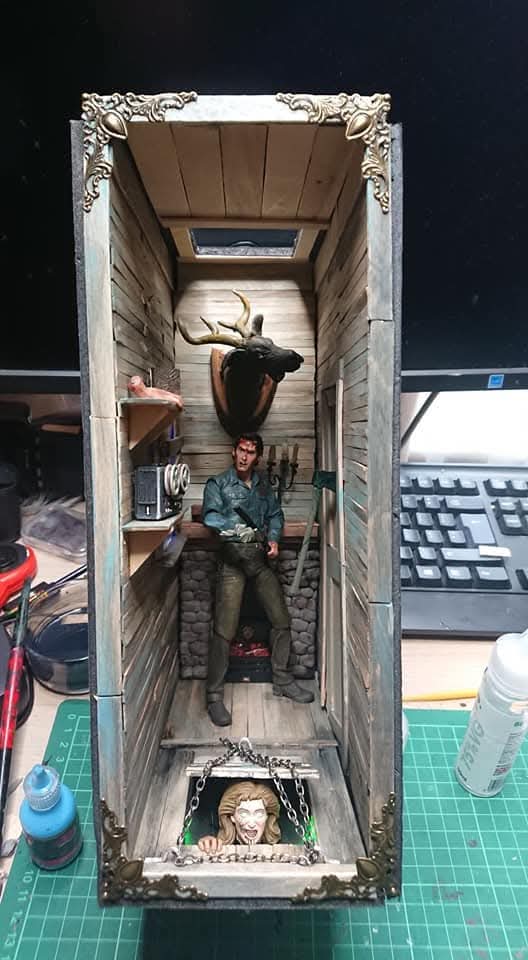
Have you got certain design steps that get you from idea to posting that you follow? Is each project that you tackle a little bit different? How do you get the work out of your head and into reality?
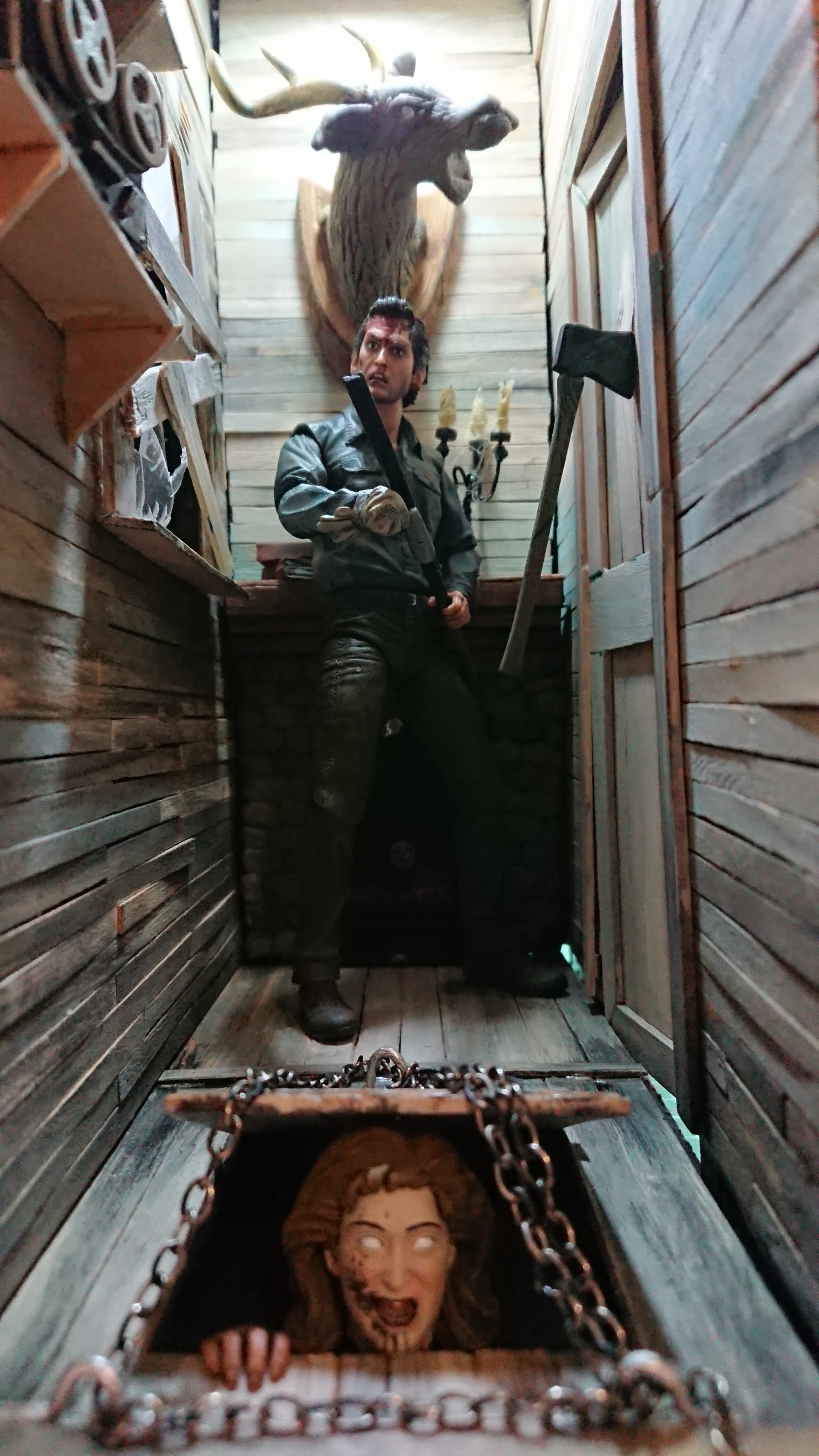
Yeah, interesting question. My process has evolved somewhat from when I was doing movie scenes to more esoteric stuff. When I was doing the horror movie characters - I’d think what horror movie do I want to tackle and what figure is available? For example, the Evil Dead was my first one that I did. I had the figure and I was thinking what makes that movie iconic? What scenes, what setting can people see and instantly be reminded of that movie or that scene. I try and distill all those feelings and those scenes into an arresting image, like a movie poster does. You're trying to capture the essence of a movie in one thing. Whereas a poster does it in 2D. I try to do it in 3D. I wanted to try and tell a story within the composition so you could follow it around and you can tell a little visual story.
In the beginning when I was doing this, it was a case of okay, I know what I want to make, how am I going to make it? You go through a period of sourcing things that look like other things. When you're starting out as a model maker. Before, before I had a 3D printer, anything, it was always a case of problem solving, oh, I need to make this thing. I don't want to make it out of clay because it might not be good enough. Can I make it out of, I don't know, a broken cigarette lighter and something else, you know.
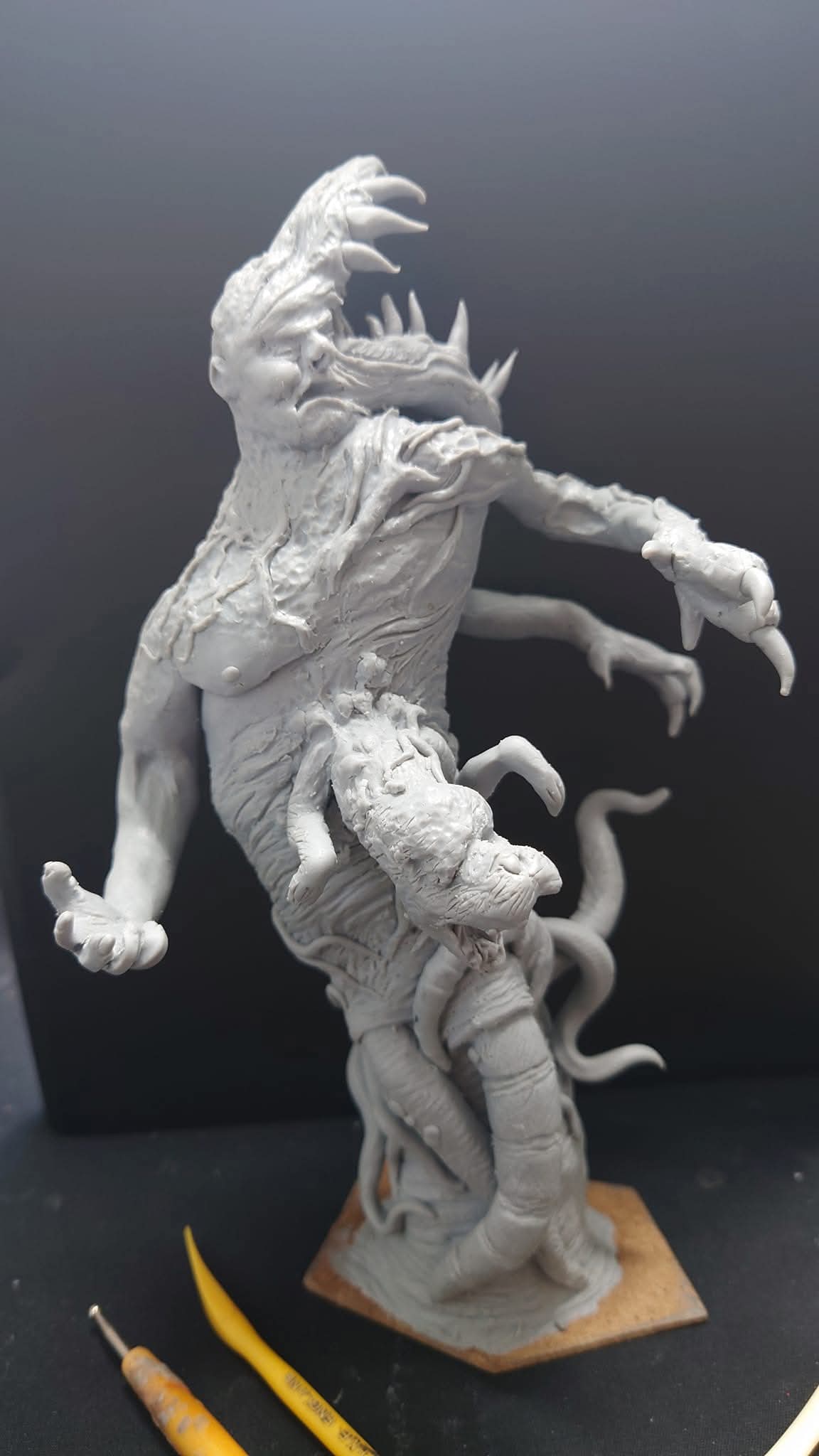
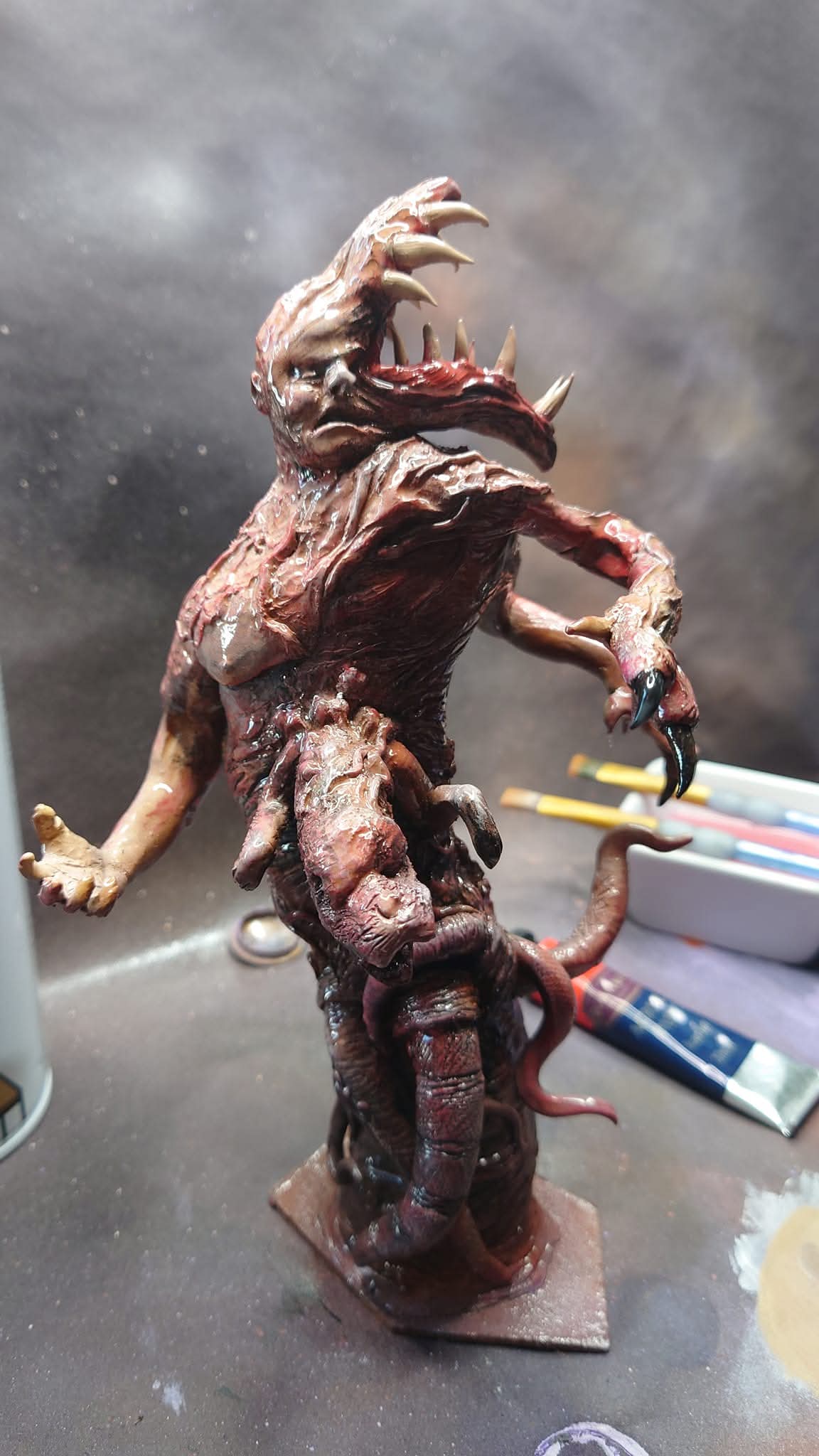
Are you constantly on the lookout in your day to day life for materials that you want to sideline for potential future work?
Exactly that. Whenever I go into town shopping with Claire (Adam’s wife), I'm always looking in the junk shops for stuff - fidget toys at the moment are great for those things. They have lots of weird little textures and buttons and tubes and things and I think, oh I'll save all those and they'll come in handy at some point. There's a lot of gathering of bits and then storing that in the back of your head later on. I'm sure I've got that somewhere. I spend like hours rummaging around my studio trying to find bits.
Have you got a drawer set-up for your workspace? Or certain drawers sorted into certain objects, how does that work?
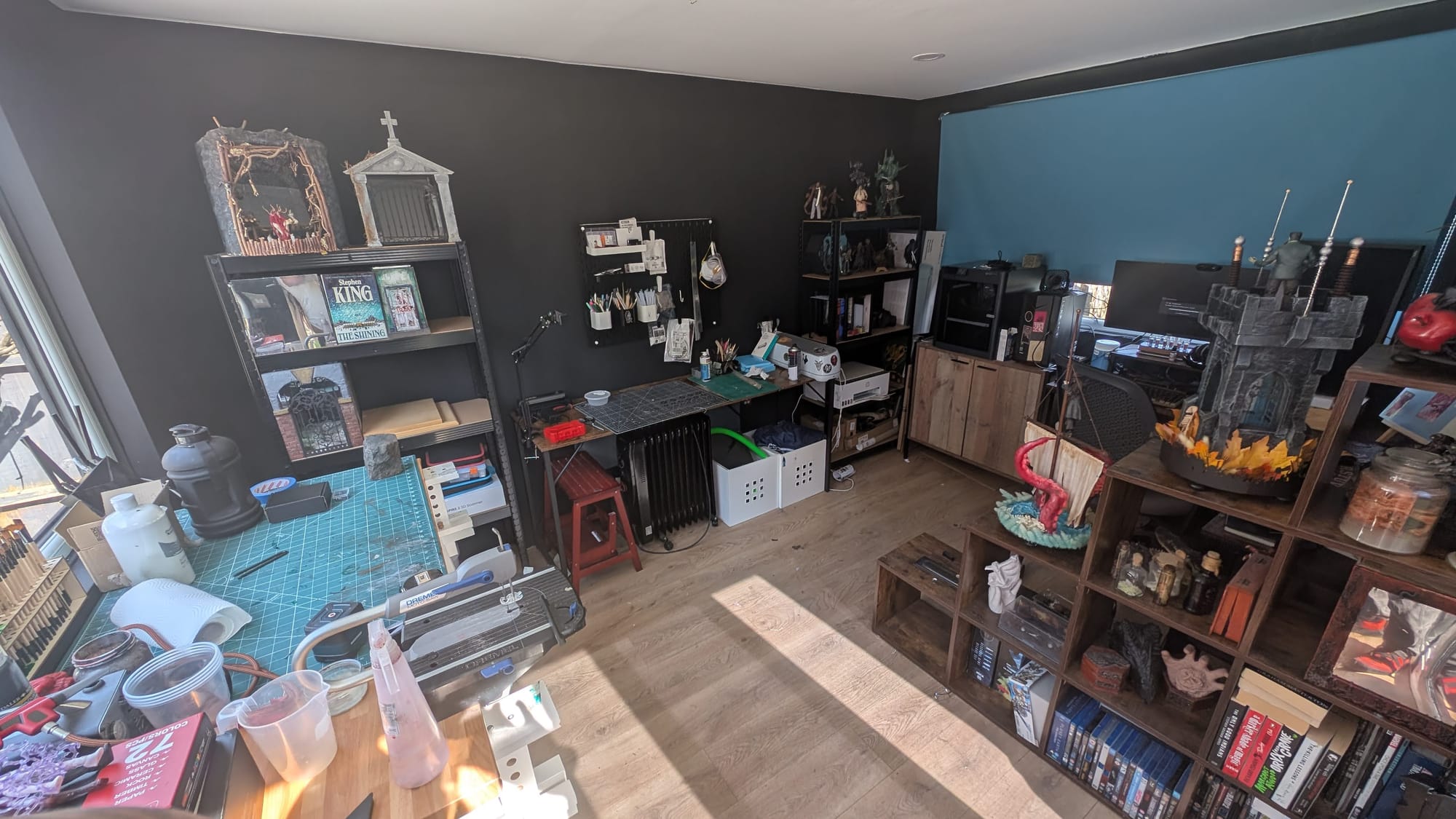
Nothing so organised! My entire workspace is just one big junk drawer. There is just stuff everywhere. There's bins full of bits. There's discarded bits of model kit everywhere. You just snap a bit off and think, ah, that'll be perfect.
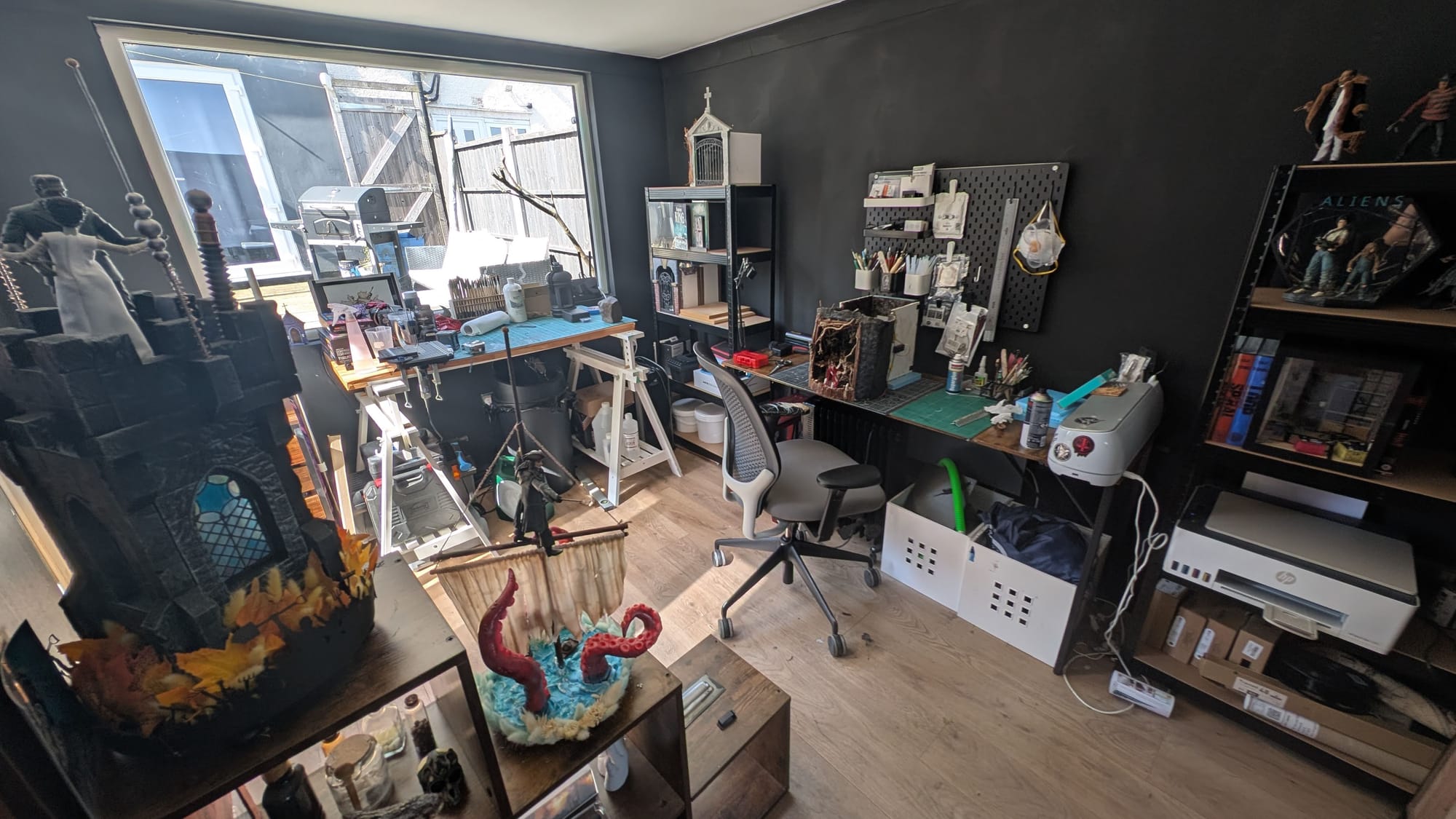
We may just be intellectualising your bad habits, thinking about it! How did you go from collecting random objects that you thought would become useful to maybe sourcing specific materials? How do you choose the materials you work with, how have they progressed and changed as you've continued your journey?
As I've progressed, each thing that I worked on has become more complex than one before. And my range of materials has expanded with that. But now it's weird, it's gone full circle because now that I'm doing 3D printing, it's just one thing. It's just a filament and that's it. I'm designing all the aspects myself rather than trying to work out how to make something from something else. I can just create them.
So you’re building the meshes for the 3D prints yourself as well?
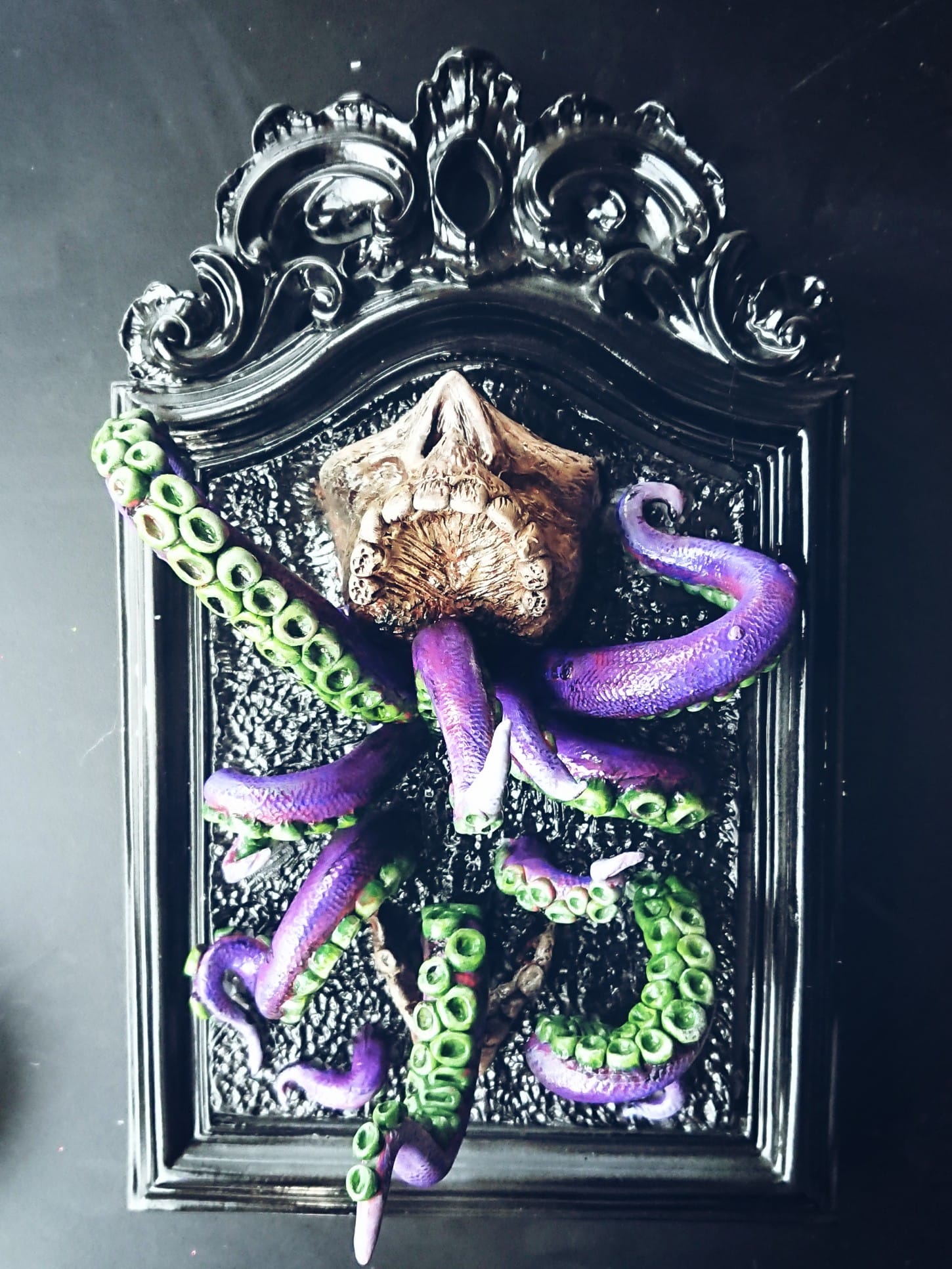
Yes. This is the first year I started using 3D printing. I've been making these models for about five years now and this is the first time I've started doing 3D printing. That's because I only got a 3D printer last Christmas. At first I didn't know anything about 3D printing at all. So at first I was looking for ready made models online to populate my designs.That can only take you so far. You need to create your own thing. There's been advance, quite considerable advances in generative AI for 3D model making. I did some experiments with that and it's, well, not perfect. You can get some decent models. So my Book Nook of the Infinity Cemetery, the New Orleans cemetery - I got some 2D photographs of mausoleums from cemeteries and I put them into Rodin AI and created these 3D models which I was able to print out. Thing is though, I'm quite anti AI. Generative AI. I don't really agree with it, especially in art. This was all very much experimental. I wanted to see how far it could get me and it could get me quite far. But, I was very uncomfortable with doing that as a process going forward. I wanted all the designs to be my own. I didn't like scraping the Internet for other people's work. So after that I taught myself the basics of CAD design. So I use a browser based programme called Tinkercad which is, I think it's meant for school kids and students. It's very intuitive.
Basically if you understand how building blocks work, you understand Tinkercad. It's just putting shapes together and then stretching them out, making them smaller, twist them around and then just building up your model from these basic shapes. I found I could create what I wanted quite quickly through that.
It sounds like 3D printing has streamlined your process, made it easier to get from your head to reality. Does it just remove blockers between what you imagined and getting it into a tangible form?
Yeah, very much so. I was surprised by myself how quickly I was able to get from brain to sketch to 3D model. I'm sure I could do it quicker if I learned a more complex, more powerful tool. Even in the beginning, use the most basic of tools and the basic materials, you can still get a decent result.
Hit play for creepy Nola action
And that's the end of Part One of this series - we'll be back with more insights from Adam Casey soon. In the meantime, drop him a follow on Instagram and TikTok below.
We're constantly on the look out for new artists, creatives and initiatives to feature in TheNeverZine - so if you are, or know someone who is going their own way and doing their own thing on their own terms and would be a good fit to feature please smash that button below and get in contact. By talking to each other, and sharing our journeys, ideas and insights on creativity, art, mental health and resilience we can all create, share and thrive together. Nice thought that.
PS - Don't forget to subscribe below for more content from TheNeverPress 👇