Interview: Joshua Clarke, artist

The creation of art is a great teacher itself, it helps you understand more about yourself, what’s important, what isn’t, what works, what doesn’t... it helps me feel like me. 
Interview: Joshua Clarke, artist
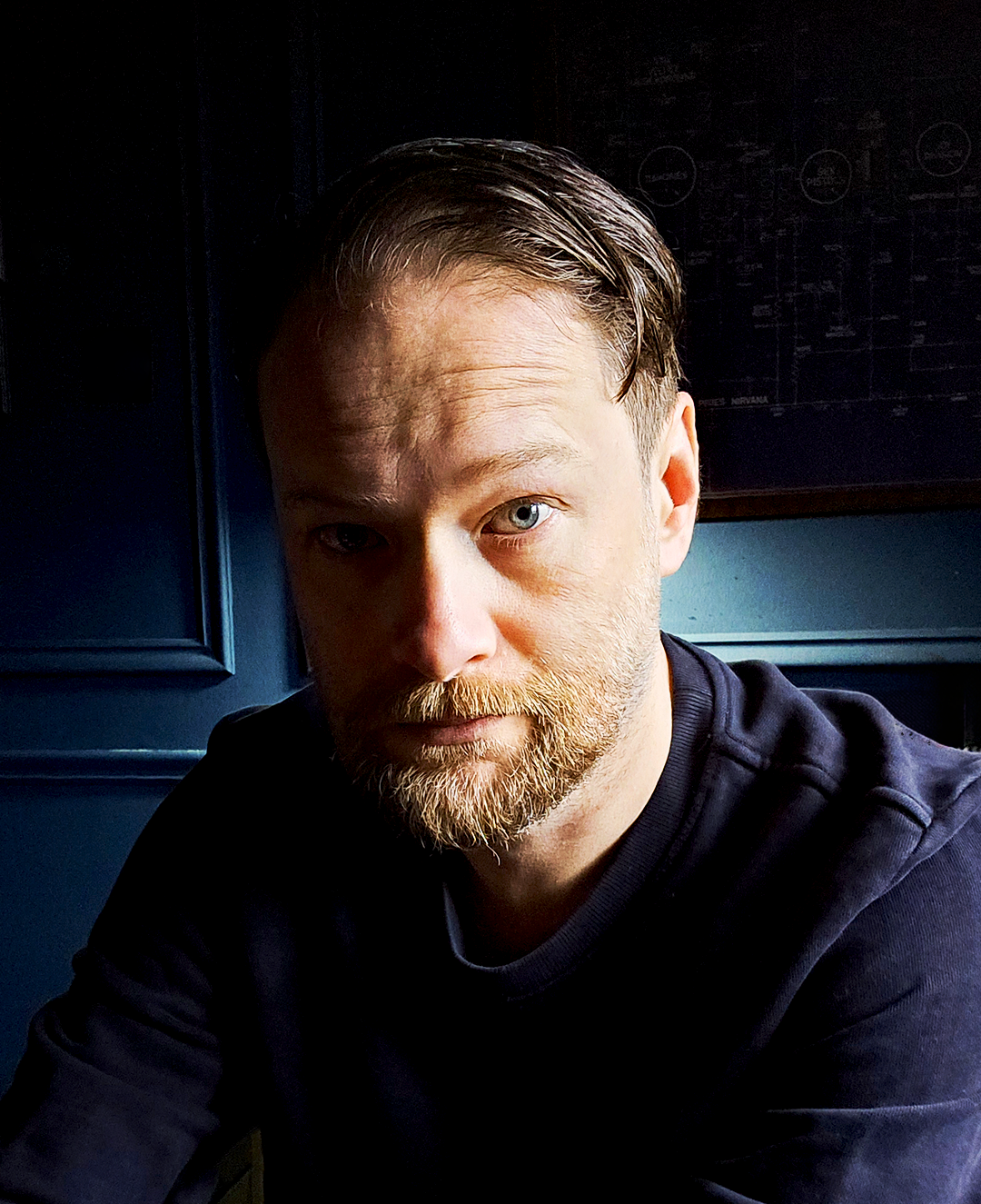
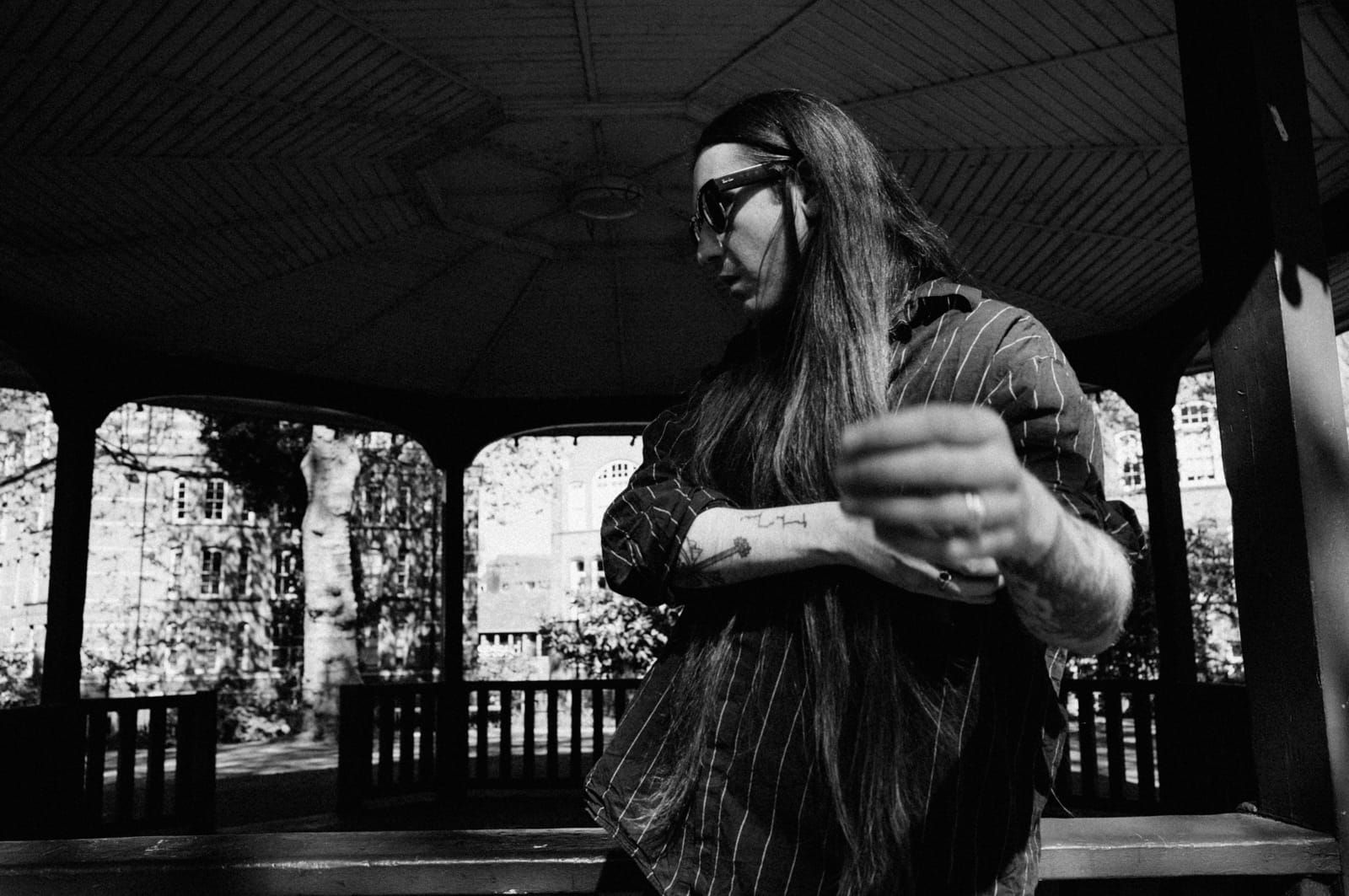
Photo credit: Dominic Lucaciu

We get into it with Joshua Clarke, a highly accomplished and prolific multi-disciplinary artist. A self-taught creative force with sardonic humour lacing his work that veers for delicate to biting, from intricate to visceral.

Joshua opens up to us about the journey, the thresher of a world that is a constant bombardment on over-stimulation and facing the tsunami of hopelessness that we seem to be facing...and finding a way to stand and face it back. But before we get into it, let it be known that Joshua is exhibiting this week (20/04 - 25th) at the 54 The Gallery, so go see for yourself. Interview after the poster!

So, now that's done we can crack on...

Joshua, great to spend time with you. Let's start from the start - may you please tell us about your creative journey so far
My creative journey has been quite eclectic. I have always been a creative person, since I was a kid I remember drawing things; destroying colouring books and all that. But I sort of lost that part of myself through the natural processes of growing up, so reconnecting with that in my mid-20’s was, perhaps, the most rewarding aspect of that creative journey. 

You work across painting, portraiture and illustration – when the idea comes, how do you know which form it will take, or does it dictate that as it grows and develops?
Yes, sometimes something just ‘is’ a painting or a drawing in my mind. But I tend to work slightly differently. Sometimes the medium is the focus and I think of ideas that work mainly in that medium, there are some ideas I have that I would love to do a painting of, but just would work better for now as an illustration. There are some pieces that combine both, but generally I am focusing on a medium. 

Are you precise in your undertaking of creative projects, or do you dive straight in and see what happens?
Very much dive straight into the deep end. I am a big believer in the final piece emerging through the process. But I have enormous respect for those that can plan, I am getting better at planning things out more in terms of general composition or colour, but still, that element is minimal. 

Talk to use about the themes of your work
I think my work is highly thematic, at least to me. All art has a narrative on some level and mine tends to be way up towards the surface. Obviously I am not immune to the state of the UK at the moment and I am influenced by that - many people are struggling, looking for identity, coming to terms with the fact that we can’t just ‘be what we want to be’. That’s a big focus of my work, especially at the moment. 

How do you manage the relationship with the political landscape and your artistic voice – how does one provide commentary and provoke thought and action through art, instead of furious reaction? Is the latter also not as valid?
I feel intellectually paralysed by the world and events within it. Art helps me make sense of that chaos. I do not feel like a commentator. I feel far more akin to the tourist watching the Tsunami approach. Remembering the futile tidbits of knowledge that may extend our lives for one moment more. So, to consider myself an unattached observer of the world I live in seems cowardly. I seek to, at most reflect it - to reflect my experience back to those that subject me to theirs. 

0:00
/0:50

Guitar by Anelya Krasnova

How does your art reflect your more personal lived experience – is it a tool to cope, or an amplifier of expression?
Perhaps more than others, I find myself deeply impacted by other people, both positively and negatively, it’s likely a result of my neurodiversity. So in some ways my lived experience could be made incalculably worse by other people, and I also know that it is made so much better by other people. Don’t get me wrong, I love people, some of my best friends are other people, I almost exclusively use people as the focus of my work, including myself. But I find the grotesque fascinating, and can feel anxious terror in the mundanity of a SuperDrug queue, so I draw inflatable hipsters invading the skies above Brick Lane. I have ADHD and ASD, so stepping outside is a step into the 9th circle of overstimulation, and I try and bring that frantic, melancholic, desperate energy to my work 

Art as escape – can you talk to us about that, in relationship to your life and your past?
Art allowed me to escape a stagnant, self destructive state of mind. There was a period of time where my life was work, pub, home, cans, video games. It needed to change. After seeing an Egon Schiele painting as part of an online article, I just wanted to paint. I had never seen art like that before. I must have been about 23 at that point. So it started as a hobby to pass the time and grew from there.


As a self-taught artist, are there certain processes or ways of working that you have established that are, for you, far more freeing…or do you feel not having formal training or guidance means you have to work harder?
That’s an interesting one, because I don’t have direct experience to compare it to. Sometimes there is a slight feeling of inadequacy being ‘self taught’, but I really enjoy the chaos of trail and error that takes place throughout my work. There are so many examples of that ‘eureka’ moment where you just…get how to do something that has been challenging. Especially in the illustrations, using short, intersecting lines as I do is something I think is quite unique. So there are certainly pros and cons. I would say that not going to art school and building the connections one is able to in that environment does sometimes lead to insecurity. I think also the feedback one gets through that process can give one more certainty that they are producing work of value. That’s not a luxury I have. Being a working class artist also can lead to feeling out of place or insecure. The rules, conventions and strategies of navigating the art world have always been alien to me, and that can weigh me down. Especially when it comes to promoting or selling my work. 

Creativity requires a deep level of thought and commitment – how do balance that with day to day life?
Oh this is hard. It’s so easy to get wrapped up in one’s creative inner world, and I am certainly one for that. I can get lost in a project, or an idea, and yes, it can lead to neglecting other parts of life. Recently I have found it easier to balance, although creativity, for me, is not something I can turn on or off. I do my best work at night, when the world is quiet and settled. But, 3am drawing sessions are not conductive to a productive day the next day. It’s a constant battle to balance this out. 

I Love You More Than You Know

Where does it come from?
I don’t know. I have always been that way I suppose, drawing, writing and performing have been constants throughout my life in one form or another. I was allowed to nurture that as a kid, and I have a wonderful partner who takes a genuine interest in my work and always provides great feedback, so it’s never been something that was inaccessible from an acceptance point of view. I think being Neurodivergent helps in some ways, the crazy synaptic connections can produce things that need to be drawn or painted, and it helps form a distinct point of view. 

What inspires you day to day
History, politics, other artists, everything really. Animals can be a huge inspiration, and my own lived experiences. I am lucky enough to live in a very vibrant part of London, so you see about 30 renaissance masterpieces worthy human moments just on a trip to Tesco. 

I am not sure if what I am about to say falls into the category of ‘inspiration’, more likely ‘motivation, but I really thrive off negative energy, or setbacks. They give me a blinkered, laser focused compulsion to act and overcome them. It’s probably not a healthy perspective, but most of the successes and positive actions I make come from a desire to compete, to prove myself. 
Wot's All This Then?

Who or what have been great influences on your work, outside of your chosen medium
Unfortunately, we can all see the state of the world at the moment, and this is massively inspirational or, rather, informative for my practice. If I were to pick an individual, perhaps it would be David Lynch. Not a hugely original pick, but the stories of the productions of his films, how he creates magic with very little, the constant pushing of narrative and visual boundaries, is something hugely influential.

Splitting hairs, because they were not technically illustrators, the New Objectivity Movement is a cornerstone influence for me, and trying to evoke the chaos, joy, fear and friction of that time period (Weimar Germany) is a very conscious thing. I also see clear parallels between then and now, which just adds to the urgency and timelessness of their work. 

Mule

How can art help us and has your art positively helped your mental health in any way?
I can’t think of a way it doesn’t help. There are the pretensions of art as a reflection of society. But genuinely, society doesn’t seem in a reflective mood at the moment so that feels a bit moot. Practically, the creation of art is a great teacher itself, it helps you understand more about yourself, what’s important, what isn’t, what works, what doesn’t. In the periods where I am less productive or feeling less creative, I feel that absence, so for me, it helps me feel like me. 

Sometimes it’s better to leave an idea that isn’t working and move on, and sometimes it’s better to keep going and wrestle it into being. How do you know when to step away, or when to push on?
I work very quickly, usually, so there really isn’t time for something to become a ‘bad’ or ‘good’ idea in the moment. Usually once it’s done I can see if it works or not. There are a few pieces I have abandoned, but not many. I also don’t necessarily think one can make a mistake when creating an original piece of work, and I don’t strive for perfection. Perhaps this is because of the lack of formal training or because I don’t strive for realism in my work, that gives a lot of creative leeway, or maybe that’s just an excuse. 

What advice would you give to anyone out there who is starting out on their artistic journey?
I still feel at the start of my own, so I am not sure if I am the fountain of knowledge I would like to be, more like a puddle. But, and not to be corny, it’s just to create and share. I wish I had less self consciousness and could be a bit more shameless in my self promotion, I still struggle with that. So if a young artist was unfortunate enough to get any advice from me, it would probably be that.  


We're constantly on the look out for new artists, creatives and initiatives to feature in TheNeverZine - so if you are, or know someone who is going their own way and doing their own thing on their own terms and would be a good fit to feature please smash that button below and get in contact. By talking to each other, and sharing our journeys, ideas and insights on creativity, art, mental health and resilience we can all create, share and thrive together. Nice thought that.

PS - Don't forget to subscribe below for more content from TheNeverPress 👇

Share this article
The link has been copied!