Interview: Jonathan Hayter, artist and puppeteer

What is the key to longevity as an artist, both creatively and professionally? It's tenacity, strength, and belief you still have something to express and explore.

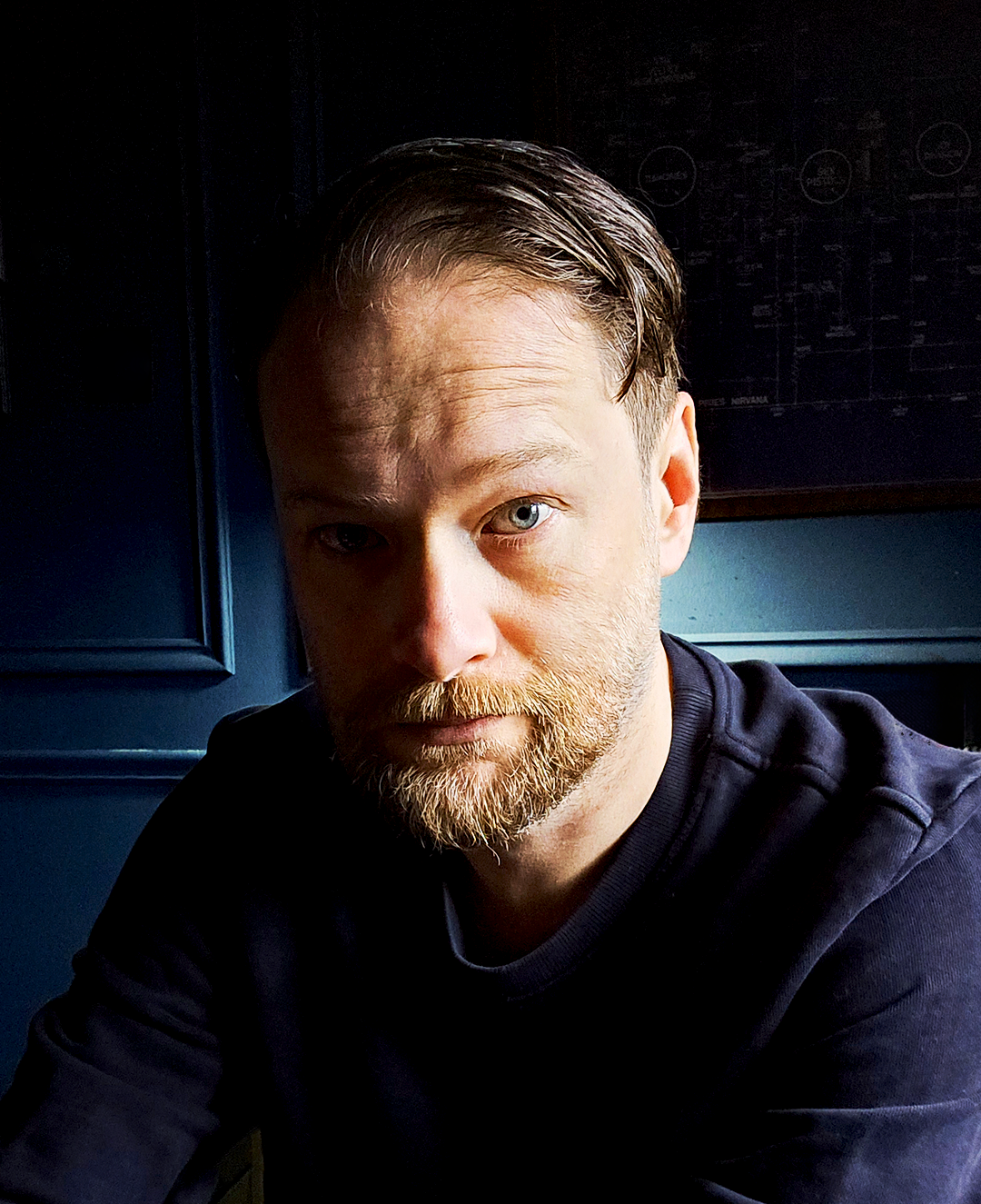
Interview: Jonathan Hayter, artist and puppeteer

Jonathan is a multi-disciplinary artist, constantly and consistently searching for new ways to express his voice and bring his creations into this world. This search, rooted in a sense of awe for the world and otherness in himself, has taken Jonathan on a journey across the world, and across mediums and disciplines - from poetry and writing, to painting, sculpture and puppetry. All of this has given his work an abundance of depth; one can see, feel and experience deep wells of thought behind the art. All of it powered by his inquisition. We're delighted to bring you this interview, so make a cuppa and settle in.

Jonathan, it's wonderful to chat to you. Let's start at the start; may you tell us about your artistic journey?
For me, one of the key factors of my creativity developed from a very early age alongside the enigma of self awareness. A self awareness that extended beyond this life. As a child, it was almost the Platonic belief that I had not truly gone through that river of forgetting so often talked about, before incarnation into this present life. But this sense of something before this life was peripheral, and so caused me anxiety as well as cultivating a sense of otherness, which as a child takes a tremendous amount of courage to hold ground.

Perhaps I wasn't always that courageous or forthright to hold myself in this spotlight. But I found that nature and the oddness of the world around encouraged me to make things, absorbing me in the pursuit of construction using anything to hand. My imagination was so vivid I truly believed one Christmas that Santa came personally to deliver me gifts in the middle of the night. Once, in a fever, Daleks entered my bedroom threatening to exterminate all. But it was in primary school that I mixed with other children and imagination dovetailed with reality. In my recent poem 'St Anne's Hill' I refer to these memories. One in particular fed my growing interest in other worlds, when a pupil smuggled a copy of his fathers magazine, a copy of 'Flying Saucer Review'. In the magazine were black and white photos of encounters with real flying saucers. Grainy black and white photos of lids in the sky. One story I remember told of an alien who hovered above a forest floor with a horrifying face 'like sick'. But nature was all around in ponds, rivers and streams. Watching the transformation of tadpoles into frogs always fascinated me. Keeping caterpillars in jars to watch them transform into a chrysalis then a butterfly or moth! Transformation as a key fact of life spoke to me somehow. Creatures that were able to completely change...

As a teenager, music and poetry filled me. I was lucky enough to be part of a massive cultural change embracing both prog-rock and punk in the same breath. Art college followed. A mixed experience. It certainly gave me a keen sense of design in the graphic design course I did. But I was no graphic designer. My heart was not in jumping to another's brief, to sell commercially some product based upon representation and graphic presentation. Instead, I drifted for a while, until I saw Ingmar Bergman's film Fanny and Alexander in the early 80's. The film is semi-autobiographical, showing Bergman's childhood influences as if they are happening in real time. This includes a sequence of exotic looking marionettes, which take on an archetypal role in the boy's childhood, as if God is speaking through them to the young Alexander!

I spent a year in Greece teaching English following the film. A year in which every morning I woke to look across the sea from Halkidiki to the mainland and wondered at this enormous dark protruding smudge on the horizon, that was, of course, Mount Olympus. Later, a visit snaking up the winter slopes in cloud cover made an impression on me as if I was at once touched by the Gods themselves! When I returned, I moved to Glasgow following my interest in puppets, and registered at the Scottish mask and puppet centre to learn about puppet making. But it felt to me that somehow I had drifted from my life purpose, lost sight of that hint of remembrance in the river of forgetting... that uneasy enigmatic calling that drove my creativity, would I find it through puppetry?

Talk to us about Figure of Speech – where did the idea come from, and how did you make it a reality?
Figure of Speech grew once I developed a means of expression through character. In late 1989, I had completed a marionette making course with the late John Wright of the Little Angel Theatre fame. Carving a one-sixth scale marionette from wood was quite a task. When I completed the task, I continued making more characters until I had enough to make a theatre. I started Figure of Speech to bring in other performers, to bring original storytelling through puppets to children. I think to be a puppeteer, you have to be a storyteller in order to hold character and story development in imagination and to express it through performance. Performance was the key to me reframing my creativity in this way and was an important milestone in my own creative career - establishing a performance language through recognisable archetypes. To bring children laughter and joy through performance gave me confidence in my own work whilst reconnecting with my own childhood experience.

It was also around this time I started Jungian analysis. Seeing in depth through dream and my own creative practice allowed me to reinforce my work with more meaningful depth both in character and story. It was at this time I learnt the importance of workshops. I became a facilitator offering many young people the opportunity to create puppets for themselves. By the mid to late 90's I had moved to Bristol and began working with shadow. Very quickly I developed a workshop style and performance, learning from the children themselves how shadows responded well to music and sound. Eventually my workshops, being effective creative and educational tools, spread from South Wales across the majority of South Gloucestershire, Wiltshire and the South West. The format was easy to follow and effective. I produced many multicultural workshops, in particular working with the Hindu epic the Ramayana. In my professional performance work under Figure of Speech, I combined video animation with live shadow performance. Shows such as 'Rama' played well at festivals, driven by trance and various oriental rhythms. I worked with a number of musicians to discover new ways of presenting puppets on screen to new audiences. New materials I still use today became vital alongside my general creative development in this field. By 2007, David Currell had included much of my work in this arena in his book Shadow Puppets & Shadowplay. The book is a landmark publication in its field, and puts my work on the world puppet stage for the first time.

You have been working ever since - what is the key to longevity as an artist, both creatively and professionally?
Tenacity, strength, self-belief and the belief you still have something to express and explore. The enigma of the self.

Your work is somewhat niche, how does one start out in this field – what practical advice can you give to people starting out, and for people to sustain work in the field?
I think it goes back to something you have that is unique: you. You always have yourself, that vision - however weird and warped it may appear to others. To be bold and brave in your creativity, to accept failure as success. Like I said, I think having a glimmer, an essence, a half-remembered truth from a life I once had is at the heart of my creativity. It's there in childhood, this creative 'home' I seek. Lately, and at the ripe old-age of my mid-to-late sixties, I am unafraid to say that home lies way-out beyond this immediate earth. In mid 2017, whilst going through a divorce, I discovered or uncovered the archetypal words in me - I began to write poetry again as I had in teenage years. Now, nearly 10 years later I read my poetry along with other hopeful poets once a month at Homeground cafe in Redruth, Cornwall, where I live. I have published works on my own and in anthologies, as well as my own self published works. So, the next stage in my more experimental approach to performance is to try and bring poetry, puppets and sound together to create a 'sonic light' show exploring the nature of shadow itself and its meaning on a social, archetypal and personal level. Working under the title 'Shadowstates', I hope to bring this to an audience later this year.

There is something so real and evocative when a puppet ‘comes to life’ – how does the puppeteer put that life into their creations, where does that come from?
Like I said, I can only speak for myself. It comes from the river of forgetting, where as a personal project I am trying to piece together my own origins. Seeing that as a home I would to return to before too long... a long way in/out there in the stars!

Tells about your working day – how do you practically approach your artistic practice?
It's sporadic. The idea has to germinate, first seeing it in my inner vision... then if it has wings I go to my studio to start the process of realisation.

You are multi-disciplinary – puppetry, design, painting, poetry – when the idea or dream comes to you, how do you know which vessel will be used to express it?
Very good question - poems are like paintings, it's not about the words themselves but rather something that exists in-between. Puppetry is about manifesting character to fulfill a role in a live performance and has a gestation period. A humunculus born into this realm with something from another!

Who have been your influences and mentors and how have they shaped you?
Music, film, other artists, writers. I went through a period recently where I was affected by the spiritual significance of ancient Egypt, and in particular the art and myth of Osiris and Isis. The work of the mythologist Joseph Campbell - in particular the hero myth. Many visual artists too.

Has your art positively helped your mental health in any way?
Yes, and it has helped others. For the last 10 years, I have been running expressive paint events for memory cafes helping those with dementia. Art helps keep good mental health for all, as we are all creative human beings!

How can art help us?
By connecting us to who we truly are.

Has there been a moment in your life or in your work when you have realised that you had something, that you were where you belonged. Tells us about that.
Yes, I think when I discovered shadows and worked with them in workshops with others, and in performance on my own over 20 years ago now, I still remember this as a happy time where the creativity of others fed into what I was doing. I think I am a visionary artist, but not afraid to share and collaborate - my work must have meaning for me.

What are you watching/listening/reading at the moment that you can recommend to us and why?
The History of Human Consciousness by Erich Neumann. An amazing insight into myth and psychoanalysis from the Jungian writer.

What advice would you give to any artists out there who are struggling to express their voice?
Do it, don't be afraid, don't listen to anyone but your inner voice.


We're constantly on the look out for new artists, creatives and initiatives to feature in TheNeverZine - so if you are, or know someone who is going their own way and doing their own thing on their own terms and would be a good fit to feature please smash that button below and get in contact. By talking to each other, and sharing our journeys, ideas and insights on creativity, art, mental health and resilience we can all create, share and thrive together. Nice thought that.

PS - Don't forget to subscribe below for more content from TheNeverPress 👇

Share this article
The link has been copied!