"I made wine from the Lilac Tree. Put my heart in its recipe. Makes me see what I want to see. Be who I want to be" - 'Lilac Wine', James Shelton
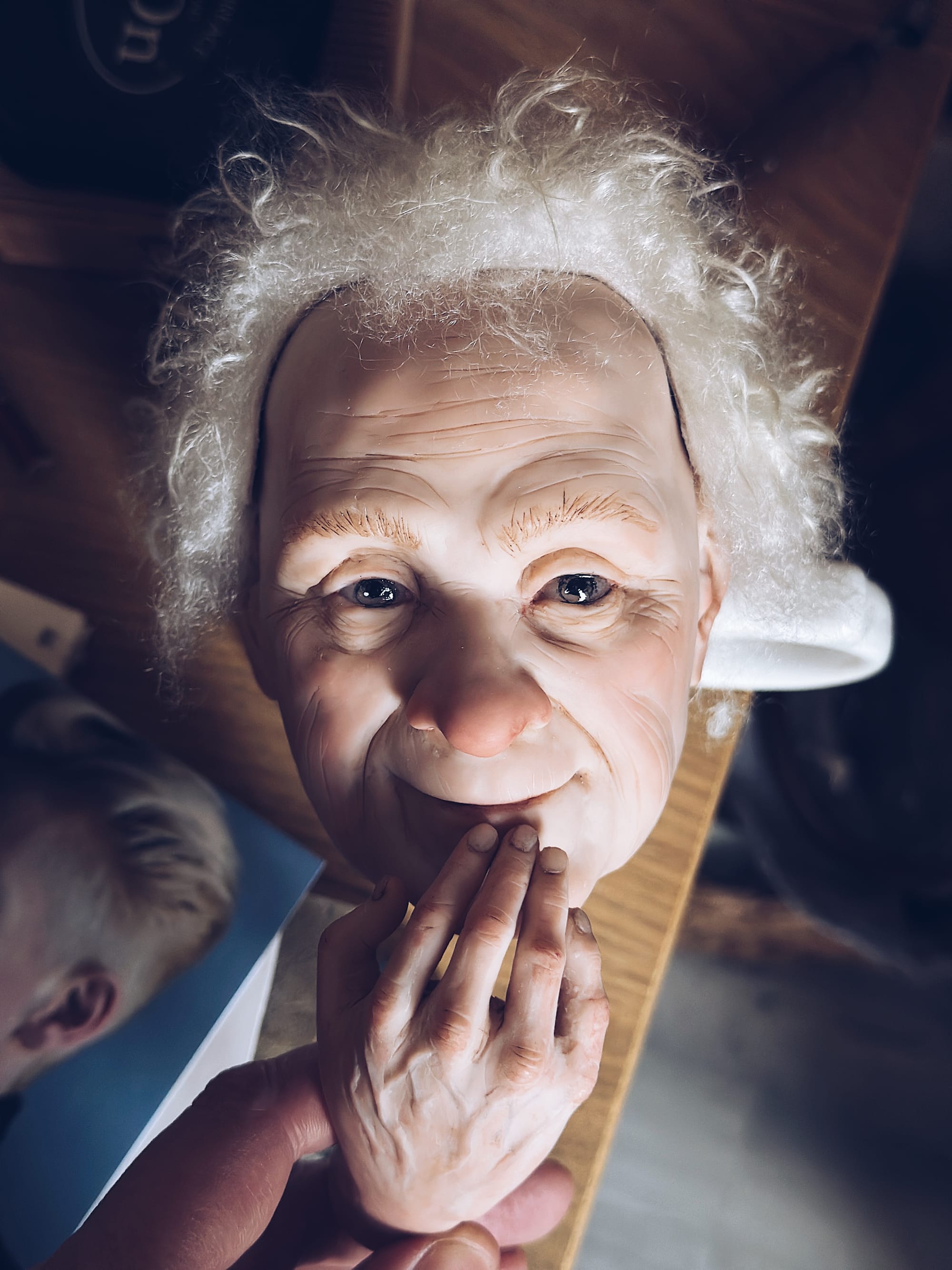
Master artist Alisa Jakimanskaja puts her heart into her recipes. It's evidenced in the craftspersonship of her dolls. It's evidenced in the care and detail of their manufacture... but more than that, it is in the life that she breathes into these creations. We are so innately conditioned to seek signs of life in each other, that when we come across something that seems life-like, but isn't, we recoil. The uncanny valley. However, sometimes we come across inanimate objects that are so real, so 'there' that we can't help but pour histories into them and build imaginary worlds around them. We mark them alive. We see a soul. It's rare, but it's undeniable when it happens. In Alisa's dolls, we can see life. We can see soul. We can see a heart that has gone into the recipe and whatever alchemy has been poured in, Alisa is about to disclose it... so let's talk about life.
Alisa, thank you so much for taking the time to talk to us to today. Let's begin as we always do. Please may you tell us about your creative journey?
My journey to my dolls has been a long one — in many ways, a journey of a lifetime. I am still walking this path, and I take great pleasure in the process itself. It has not always been as simple or as quick as I might have wished. Each step towards the dolls brought me closer to myself.
In 2004, I began making dolls from crumpled paper, wrapping them with woollen threads. They became amusing little cats with human faces, their expressions formed by the folds and creases of the paper. In this way, a whole collection of “crumpled” cats was born.
Later, I turned to mask-making. I sculpted masks from plasticine, cast moulds in plaster, worked with papier-mâché, and experimented with various surface treatments to achieve a smooth finish — in short, I was constantly exploring.
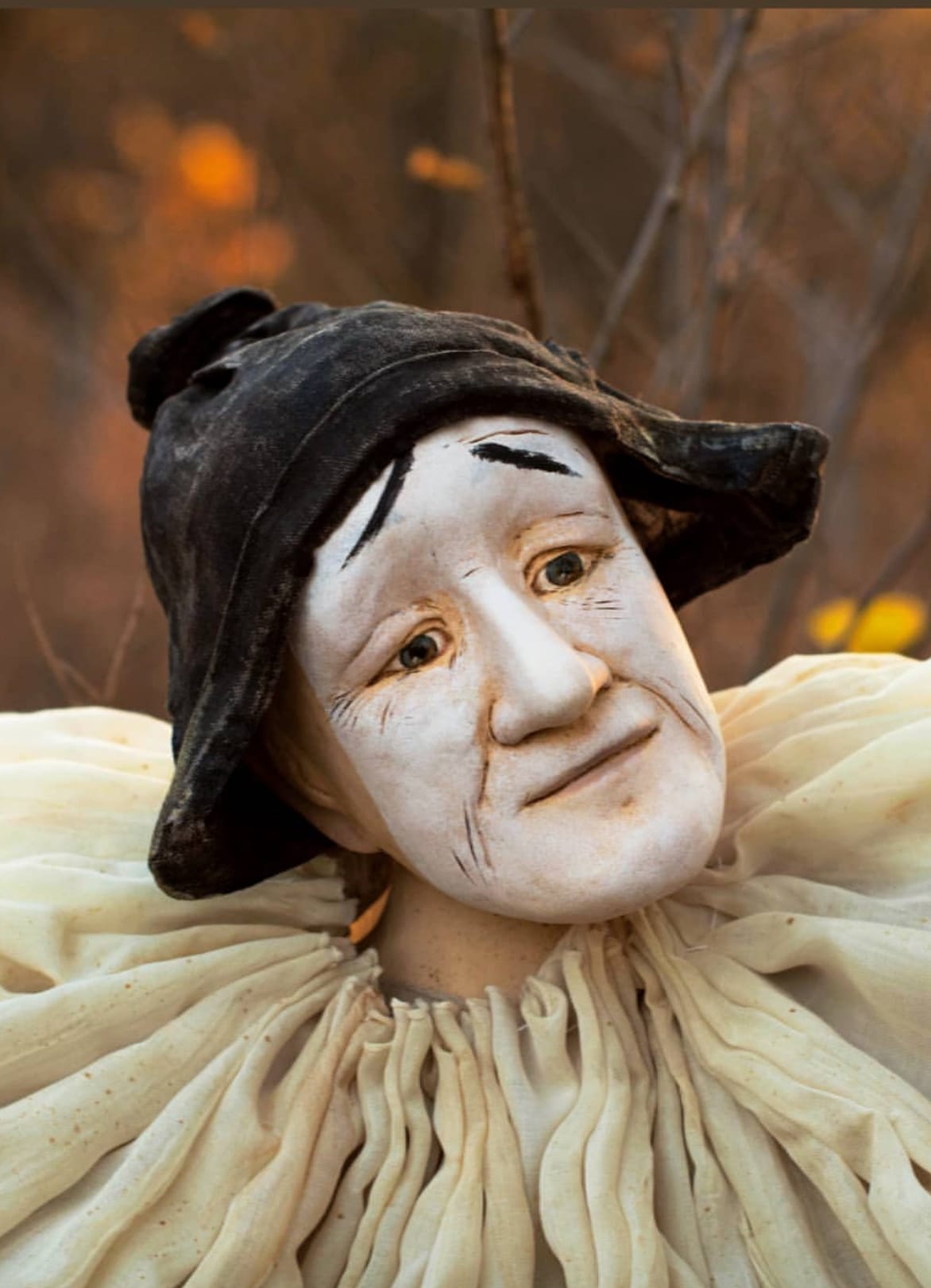
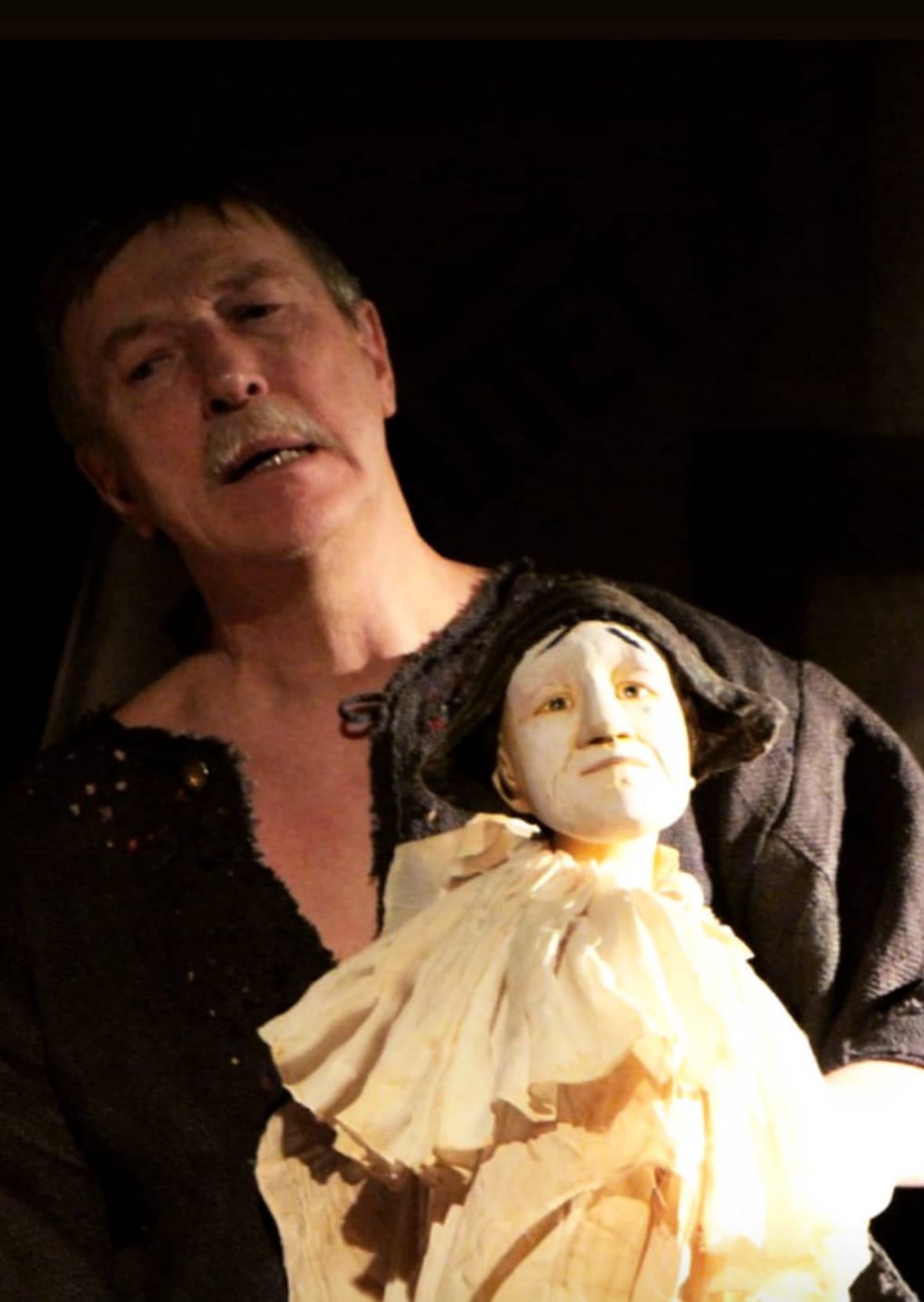
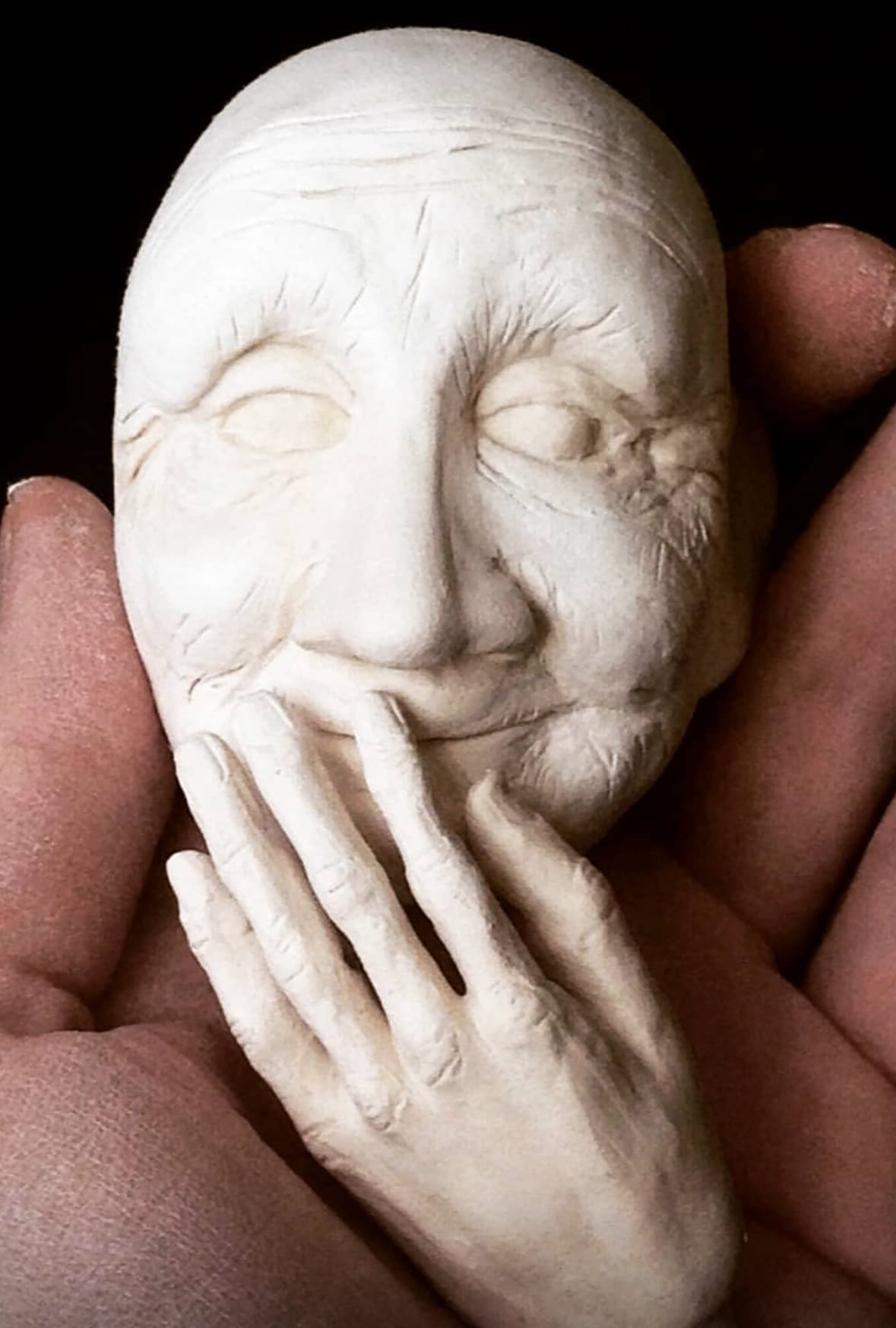
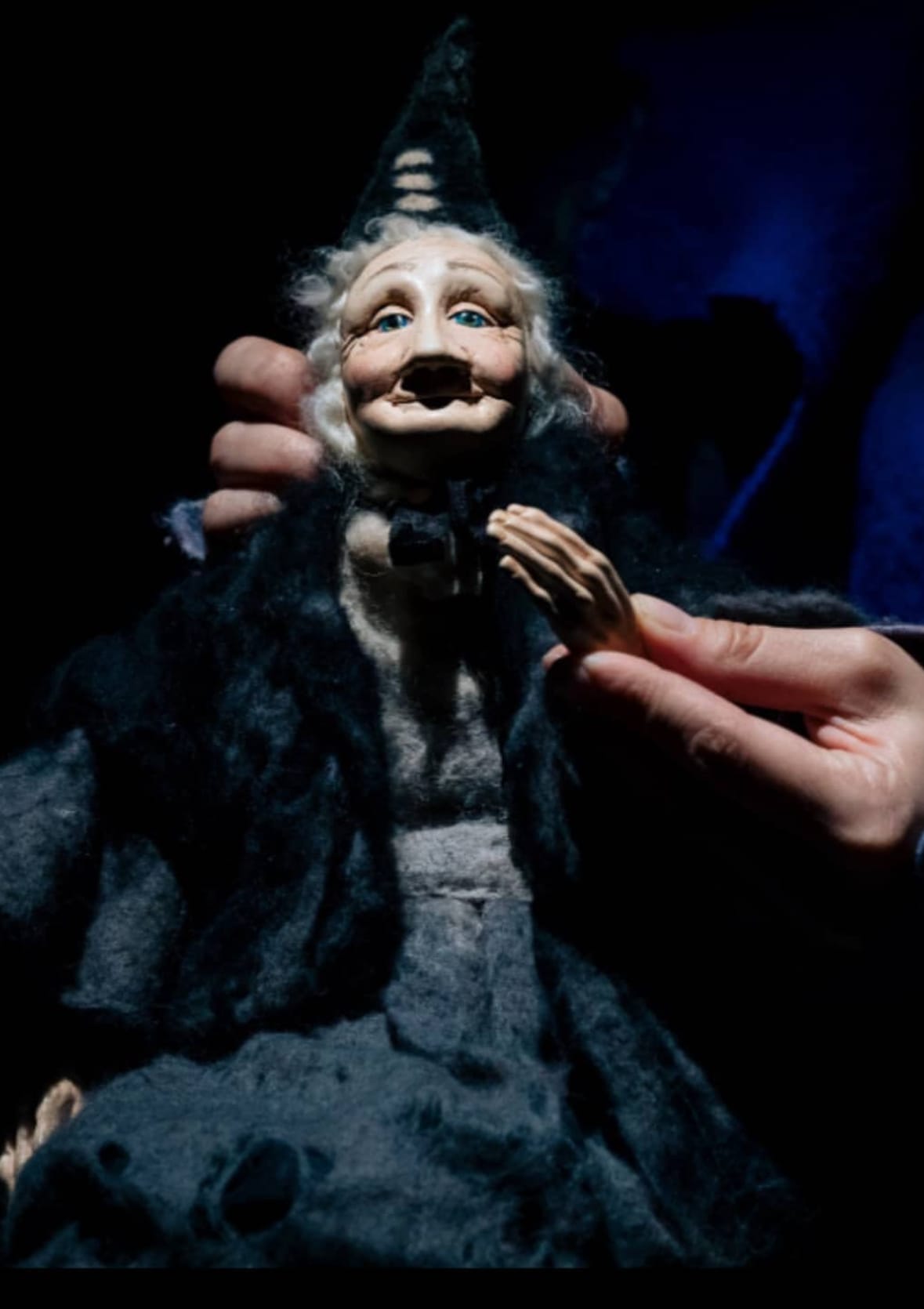
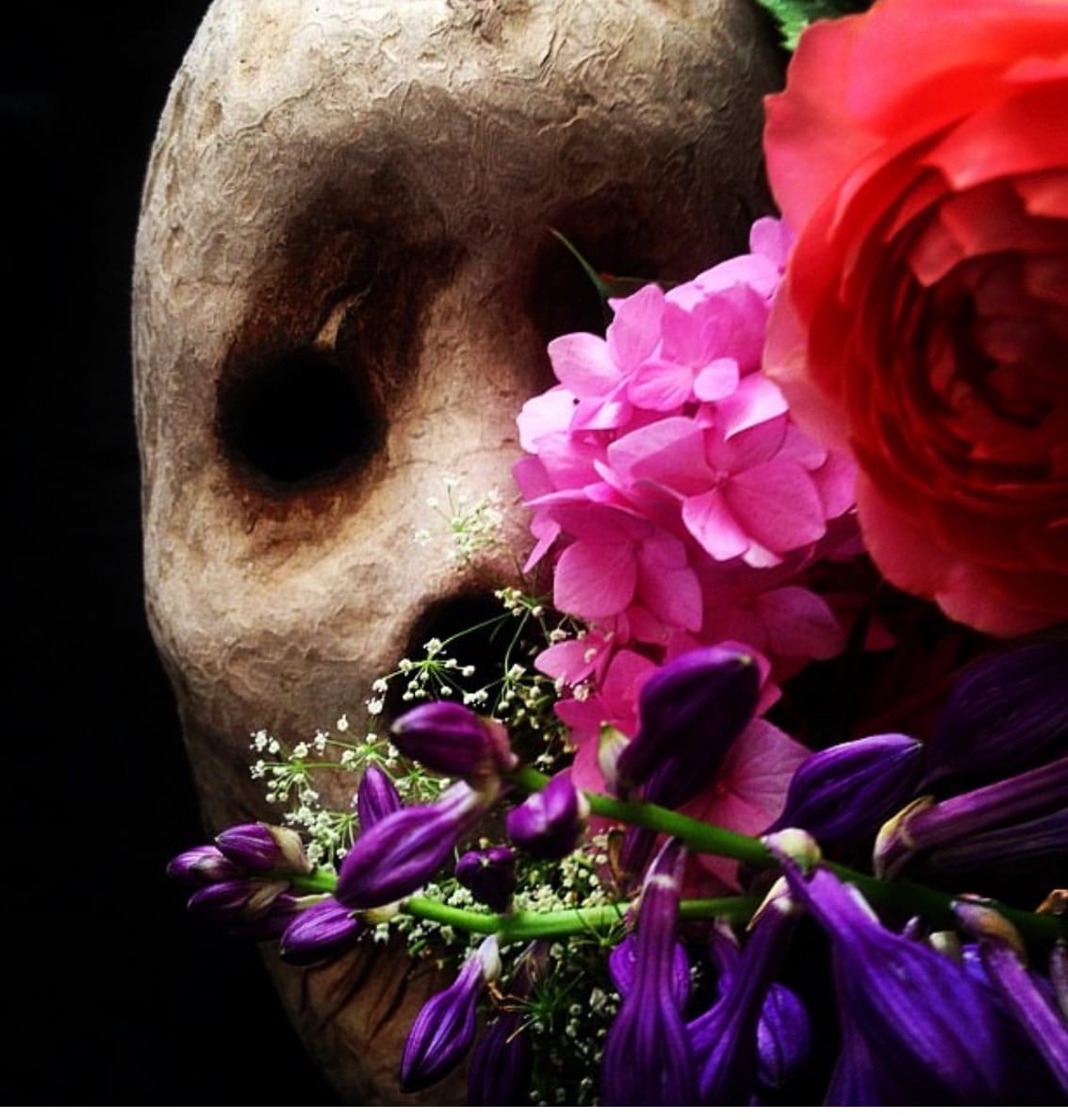
As life went on, the number of masks grew, my children were born, and I completed my university studies in psychology, all the while continuing to search for myself. I was deeply drawn to the world of art and found great joy in making things with my hands.
I studied with many masters and mastered a wide range of doll-making techniques, and I continue to learn to this day. Alongside dolls, theatre entered my life — almost like dolls, only larger. This led to theatre festivals and solo exhibitions…
Your works are imbued with life and history, woven into the lines on their faces. What do you think and feel when you create them?
I want to convey and say so much through the doll. That’s why I am constantly searching for that perfect facial expression, that specific wrinkle, those exact folds in the clothing, those precise textures, those proportions that will help reach the viewer's soul, to awaken memories and feelings. Before starting a new doll, I clean up my studio, sit down at the table, place a white sheet of paper in front of me, and make a rough shape from a piece of foil. Even at this stage, I clearly imagine what my doll will look like, and I think only of it. All my thoughts, all my experience, all my observations and skill are concentrated in the centre of that small piece of foil.
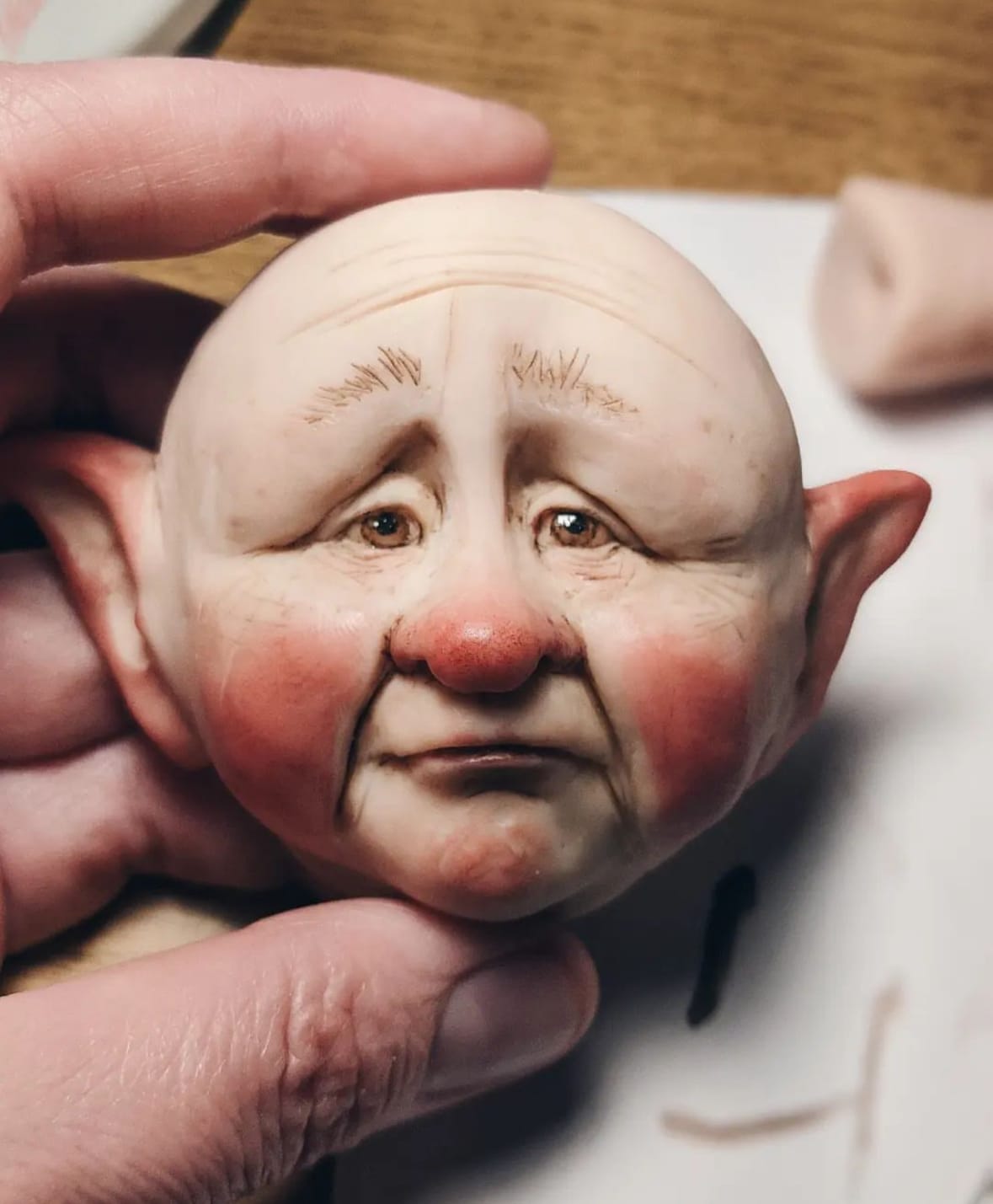
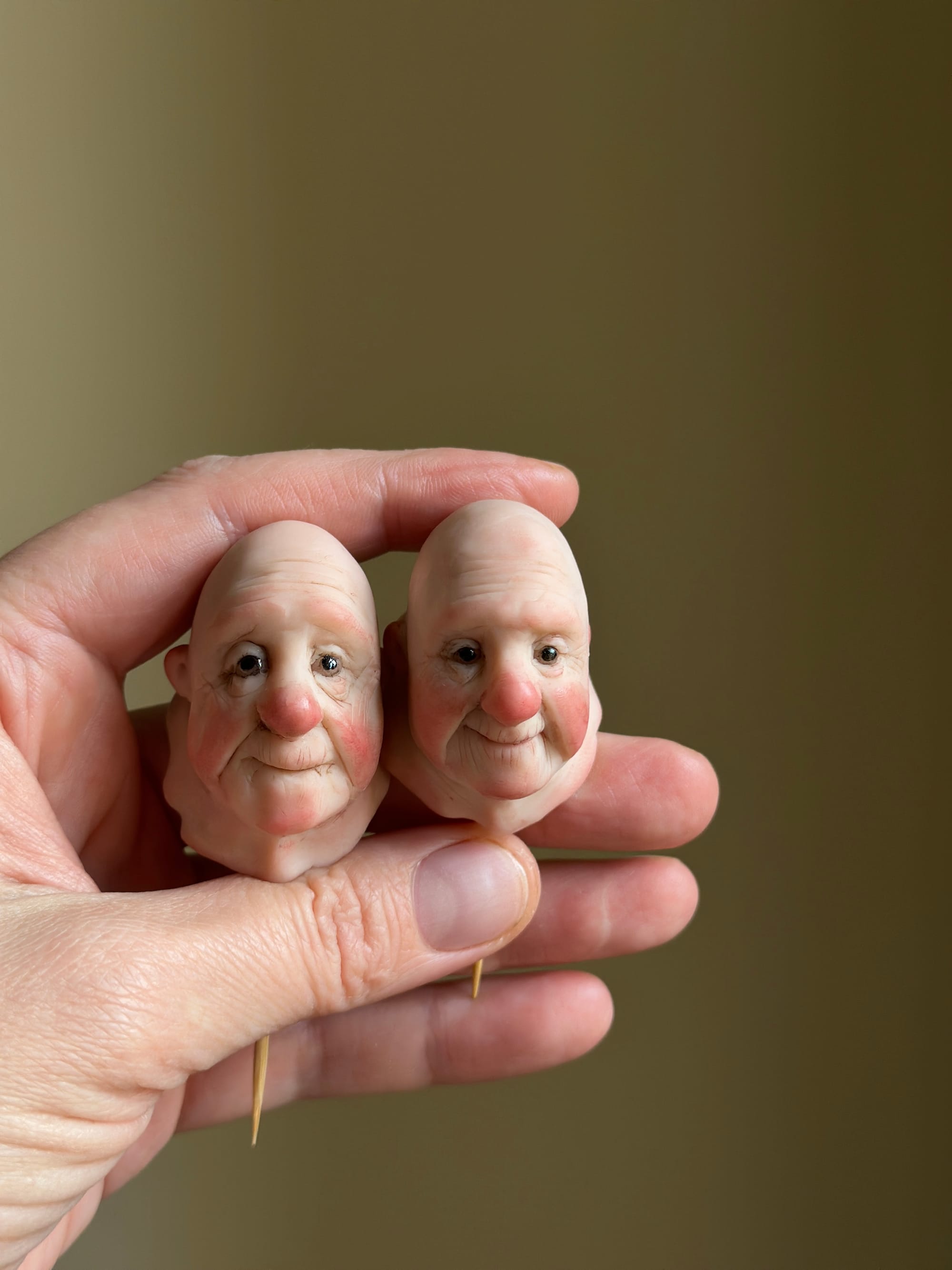
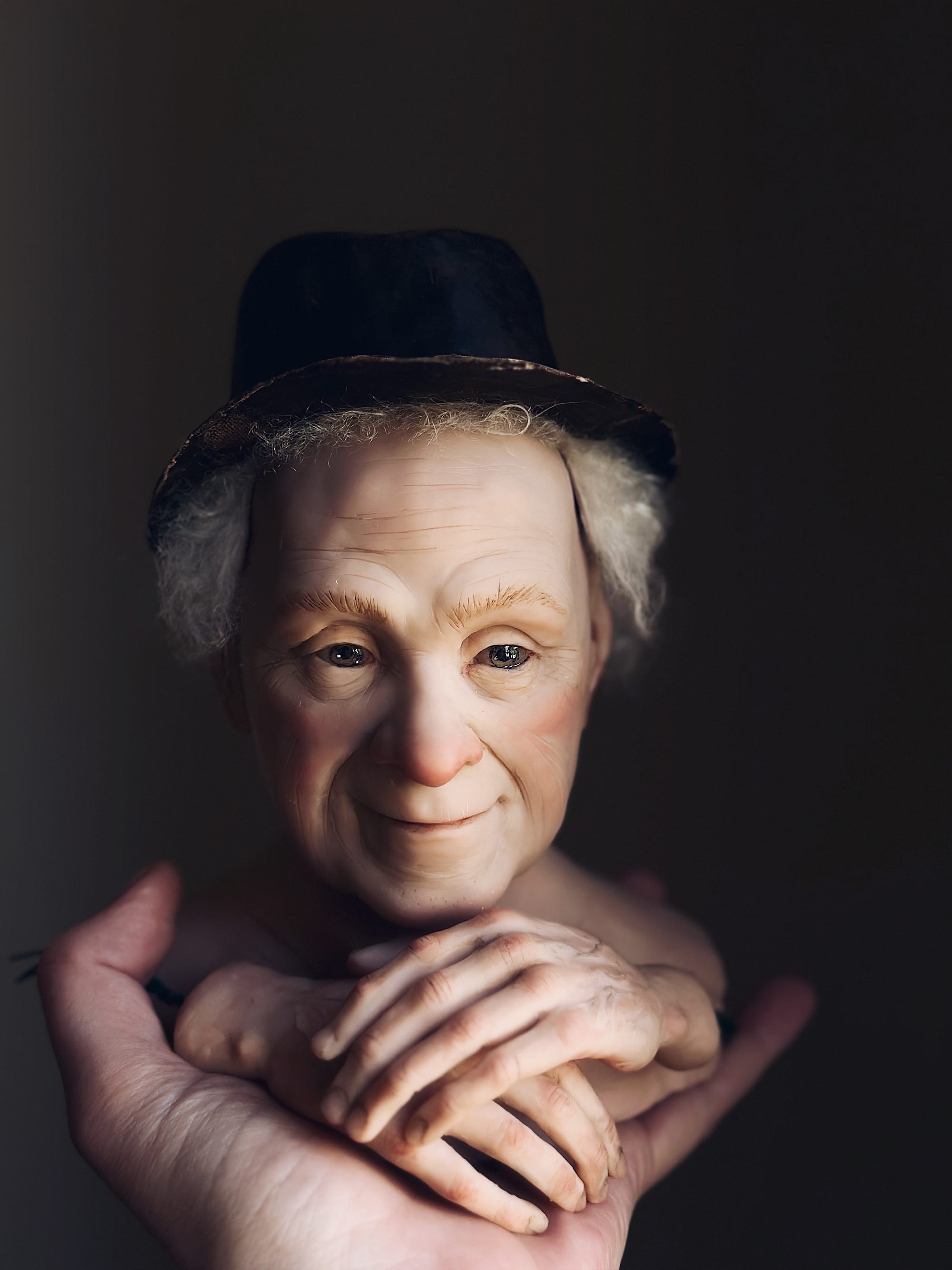
How do you create these characters? Do you work with a plot and an imaginary story, or are they formed from memories and lived experiences?
I have various characters, and the work on each one is carried out differently.
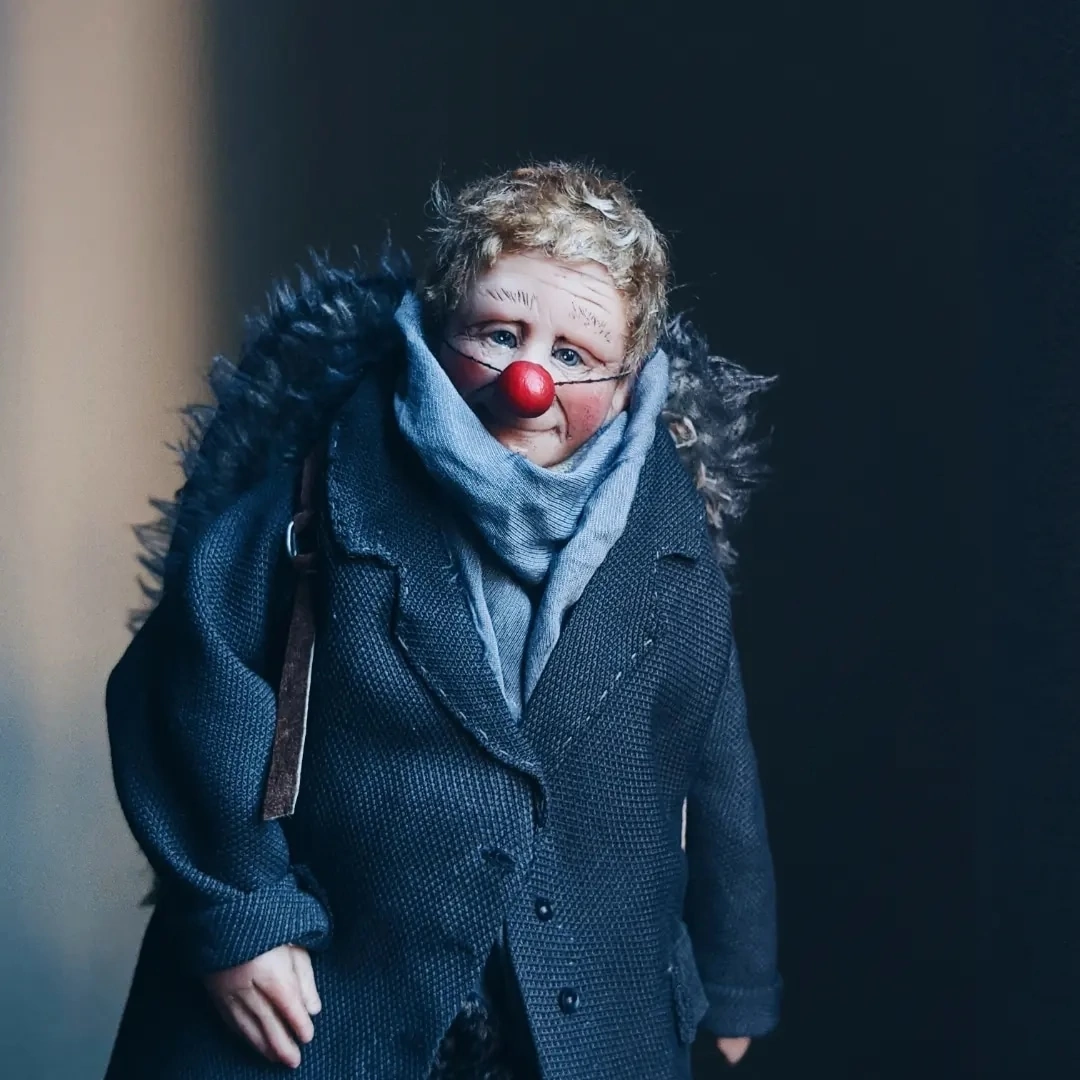
I have large dolls (35-40c). They appear rarely. The work on them takes a very long time. I can spend years on one piece. When conceiving these dolls, I nurture their image in my mind for a very long time. Every detail matters — every wrinkle, every fold in their clothing — for I must understand who they are, why they stand there, and what dwells in their soul. Small fairy tales and stories are born alongside the doll. Some of these dolls, together with their stories, find their way into performances. I dream of one day writing and illustrating a book featuring my characters.
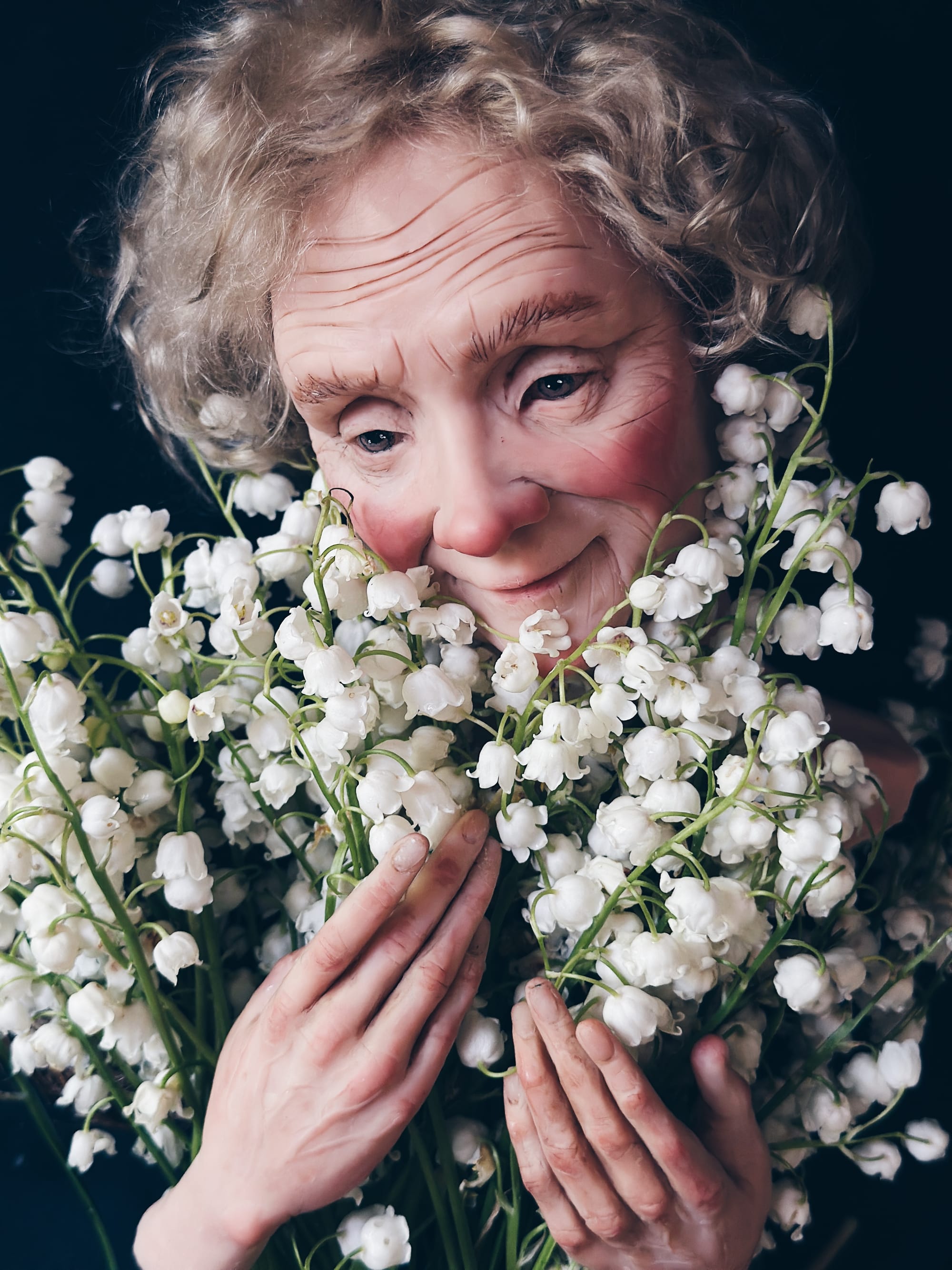
There are also dolls for theatrical performances. These are created using a range of techniques and materials: shadows manipulated by performers hidden behind large screens, marionettes brought to life in the actors’ hands, and masks that transform people into entirely different characters…
At present, I am attempting to embrace the vast and varied world of doll-making, creating both large and small figures, for private collectors and the stage.
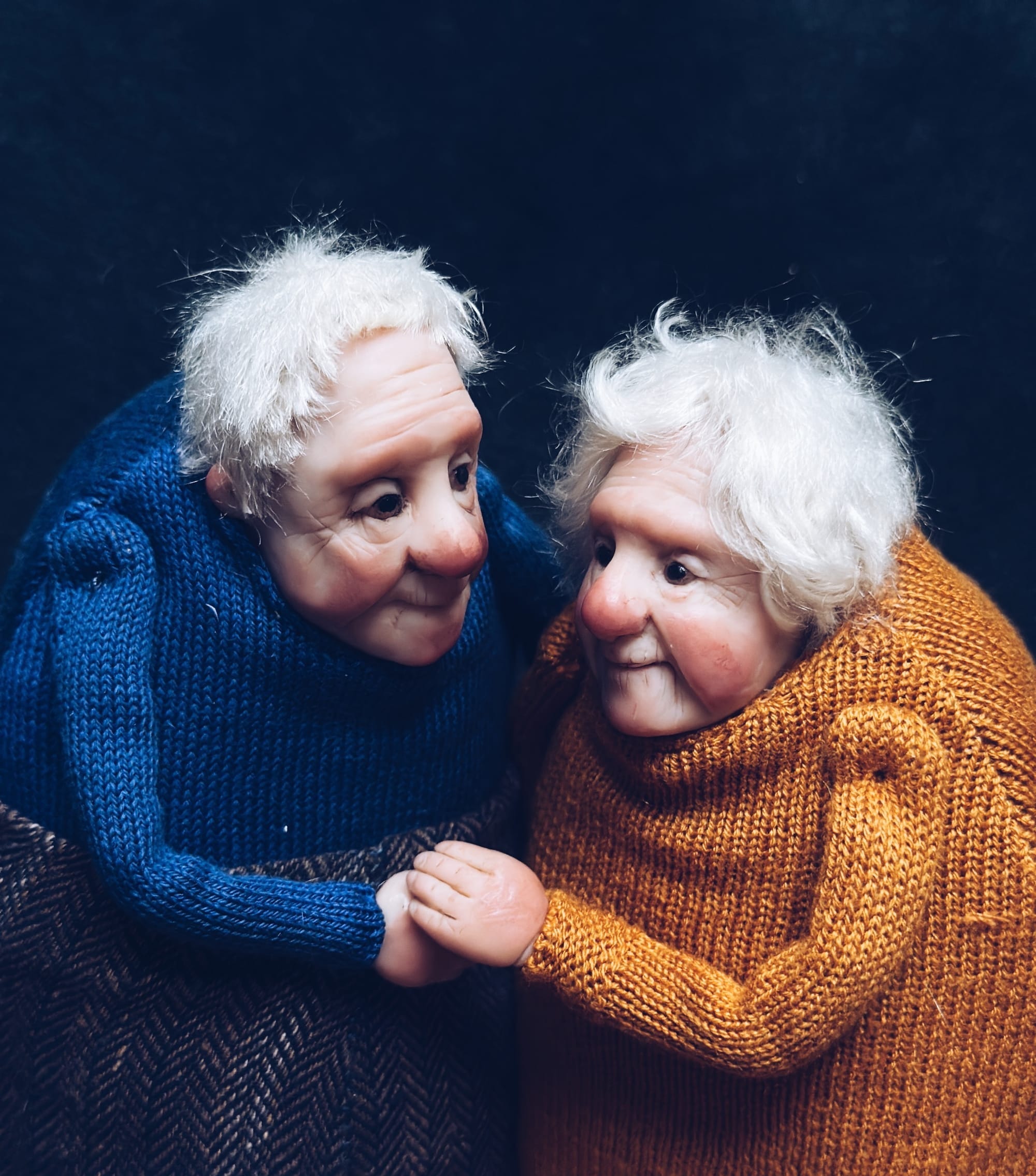
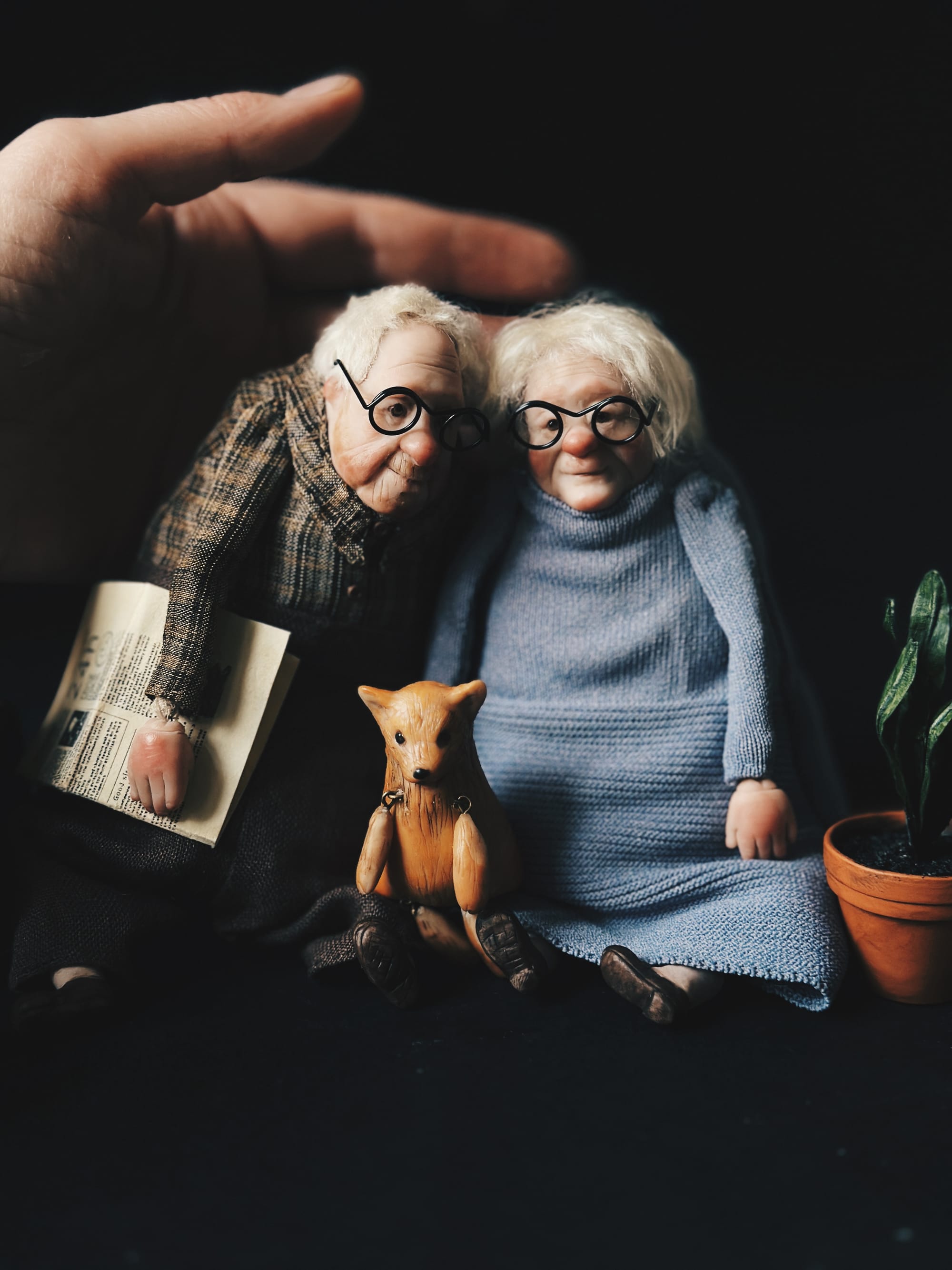
I have developed several collections of smaller works: Trusting Angels, Old Folks on Chairs, and The Enchanted Forest.
How do you bring them to life?
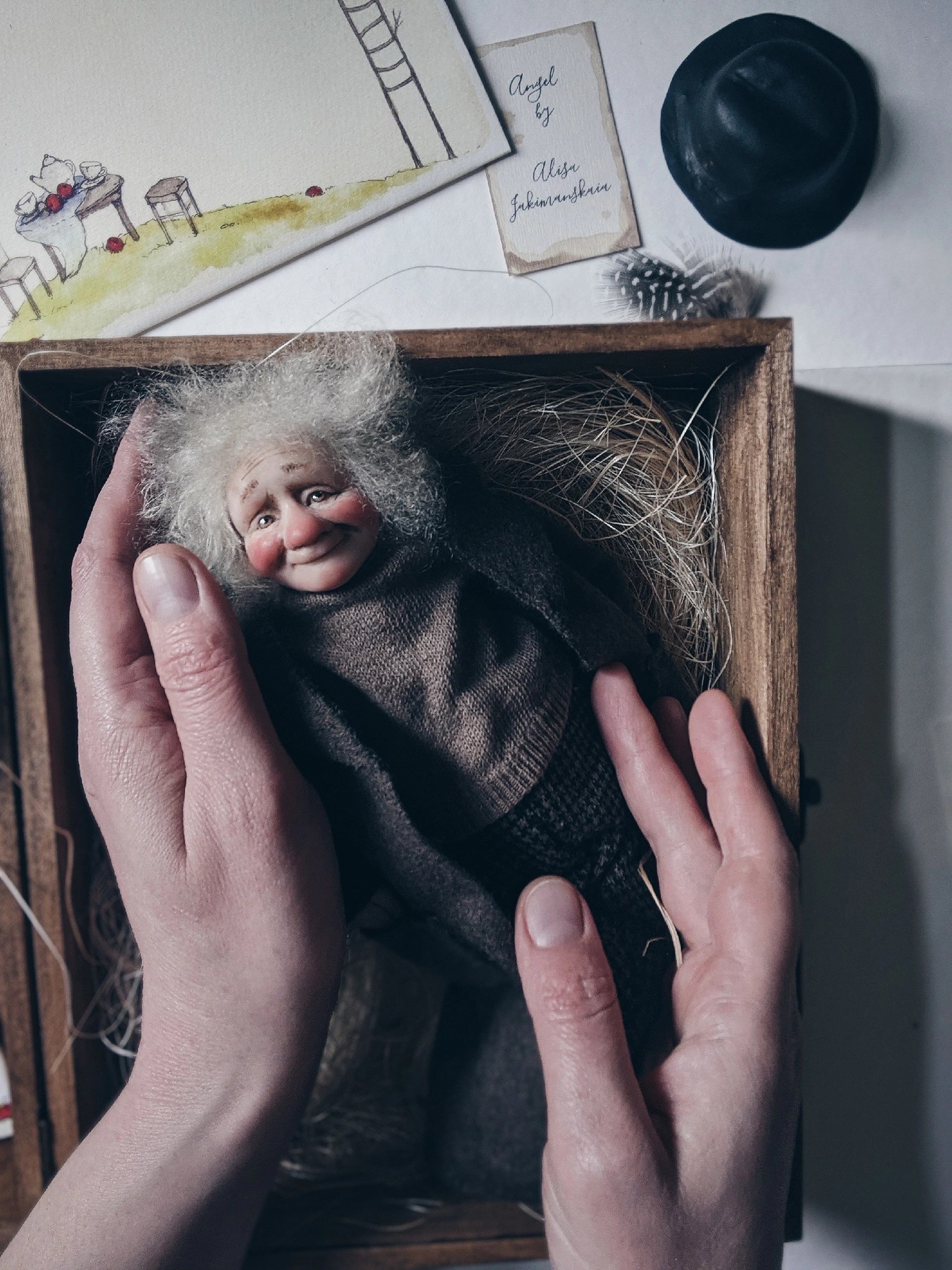
Let me illustrate the process of a character coming to life using the angels as an example. These are small dolls (18–20 cm in height). The Trusting Angels themselves, their style, proportions, and construction, evolved over a long period until they took the form they have today.
The creation of each new angel begins when someone writes to me: “I would like you to create my angel.” From that moment, the work begins. We converse at length, deciding not only how the angel will look, but also what the angel will be like. For example, what do they love most? Maybe they love tea with jam, or watching the ocean.... Maybe they love walking barefoot on wet sand and skipping flat pebbles across the water... Maybe they love reading books upside down, or looking at a big beetle through a green pane of glass... Perhaps they love wrapping themselves in a scarf, or in the collar of an old coat... I have accumulated so many angel stories that I could write an entire book.
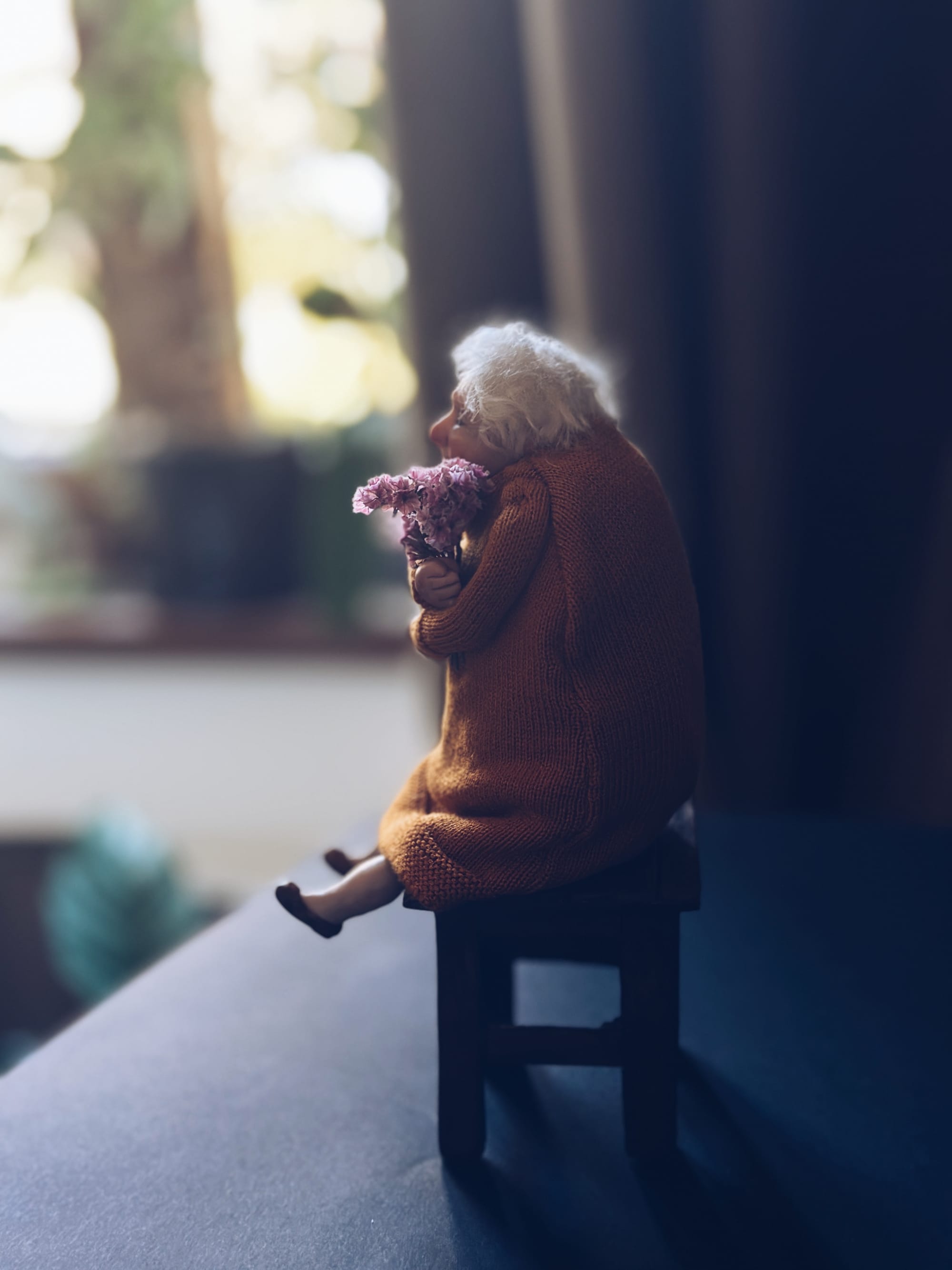
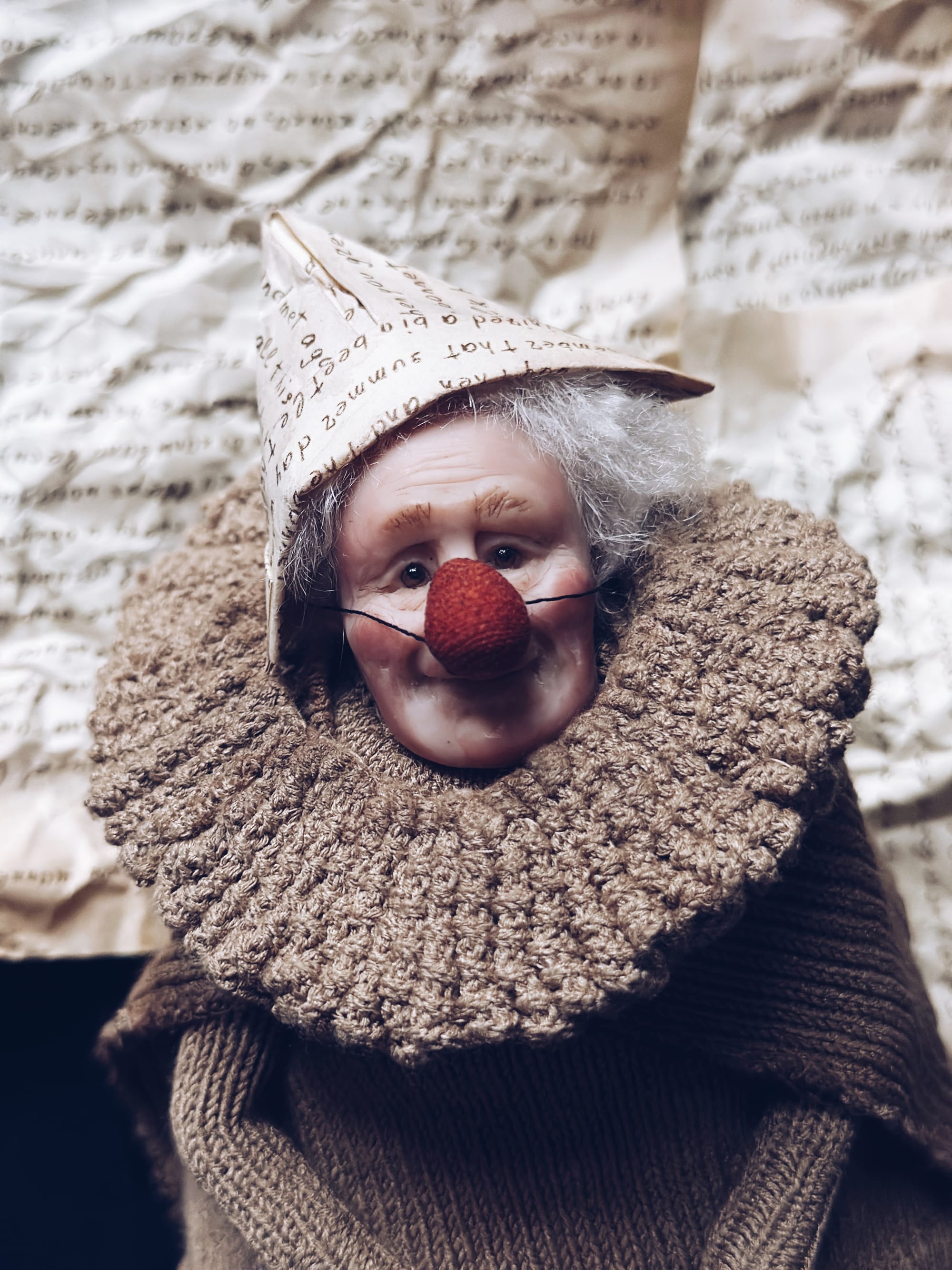
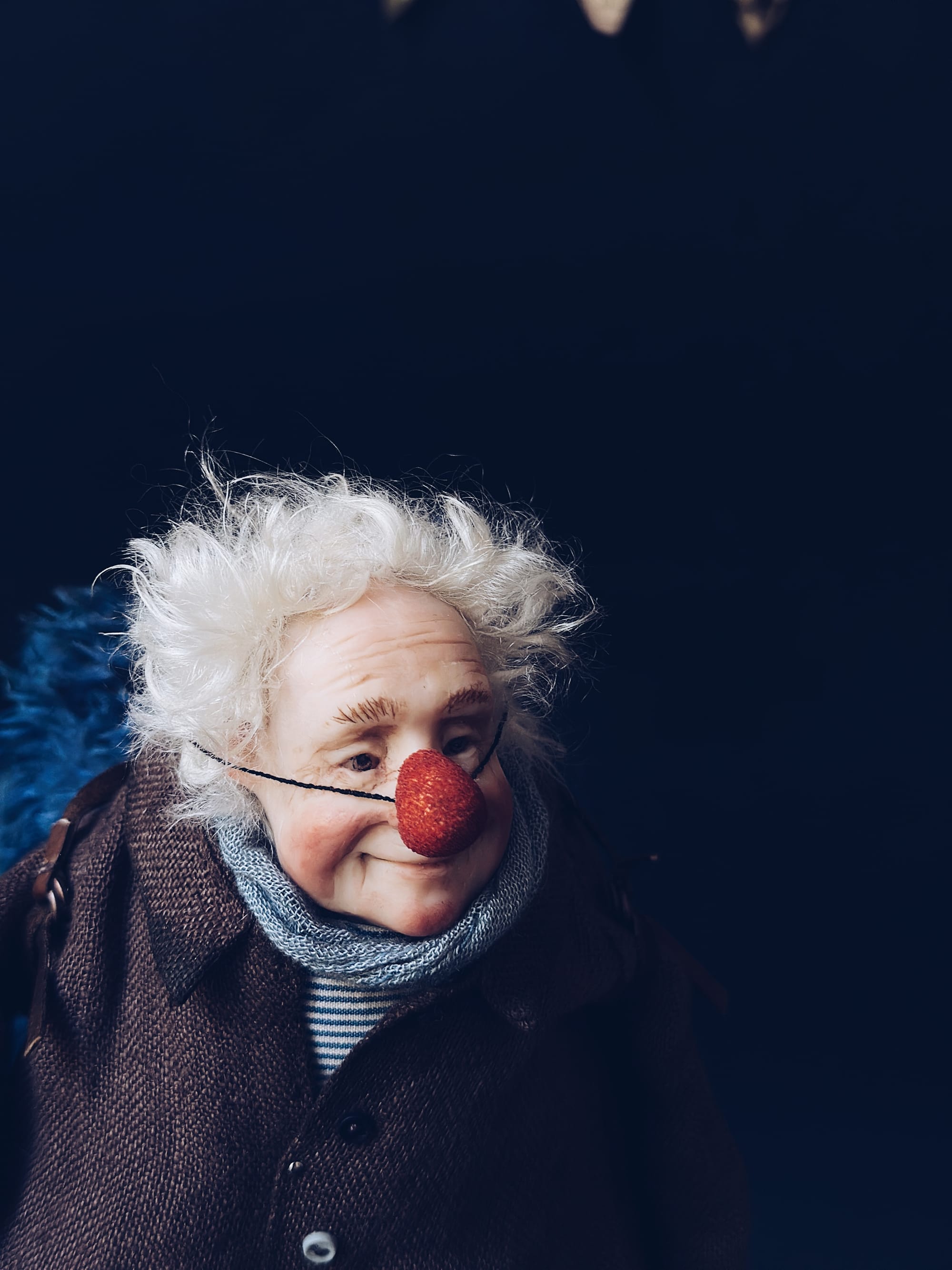
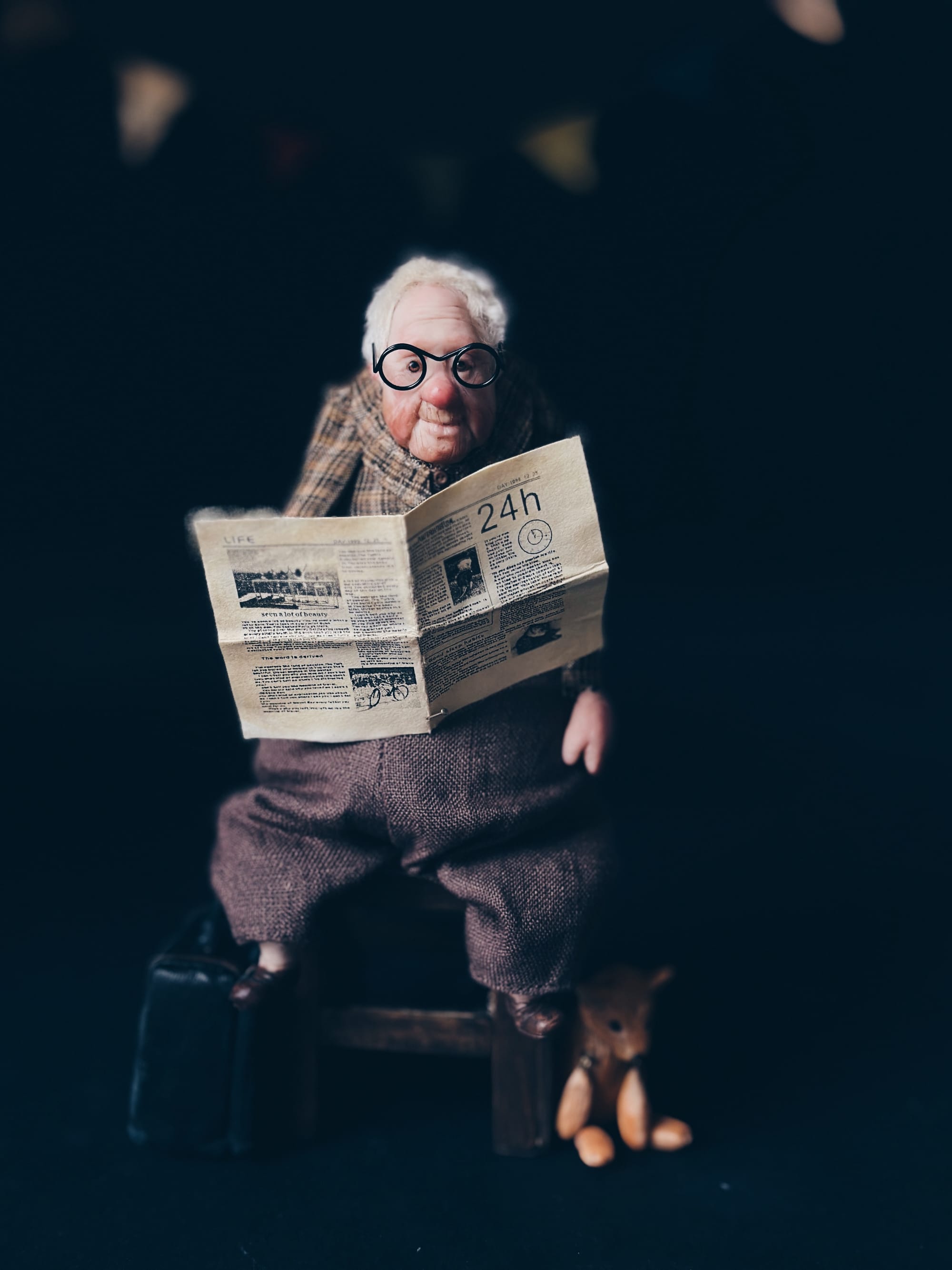
Once the image is found, I take all my experience and mix it with the impressions from the conversation with the person, with buttons, clouds, time, wool, and silk. That is how a new angel, who is eagerly awaited, comes into being. The process itself—sculpting the details, sewing the body, the costume, the boots, the suitcase, the wings...—is very painstaking and requires a lot of time.
Each doll collection also has its own boxes. I make these myself, too. For the angels, it's a wooden casket on which I carve a picture using special wood knives. The Old Folks on Chairs have their own portrait on their box.
Where do you draw inspiration?
I find inspiration in everything. In children, in old people, in crumpled paper, in the rustle of leaves, in paintings by famous artists, in pre-dawn sunbeams, in raindrops, in grass, in fairy tales, in music, in books, in people, in sorrows, in sadness, and in joy…
They seem so loved and cared for. How does it feel when they are sold and leave?
Parting with a doll is always difficult for me. Sometimes I even subconsciously delay sending the doll: I want to redo something, I often lose some important small details, like a red nose or glasses. I keep and keep looking for it …
Just today, the nose was lost on the day of shipping. And it seemed completely accidental, but it wasn't.
I spent two more happy days with the angel. I found the nose, made him flags, a small chair, lots and lots of photos and videos... And I didn't even notice when the shipping day arrived again. With willpower, I carefully wrapped the doll and all its belongings in protective film, closed the box, and took it to the post office! I don't know about other artists, but for me, every such parting is like parting with someone close and dear to me...when there is emptiness inside afterward...
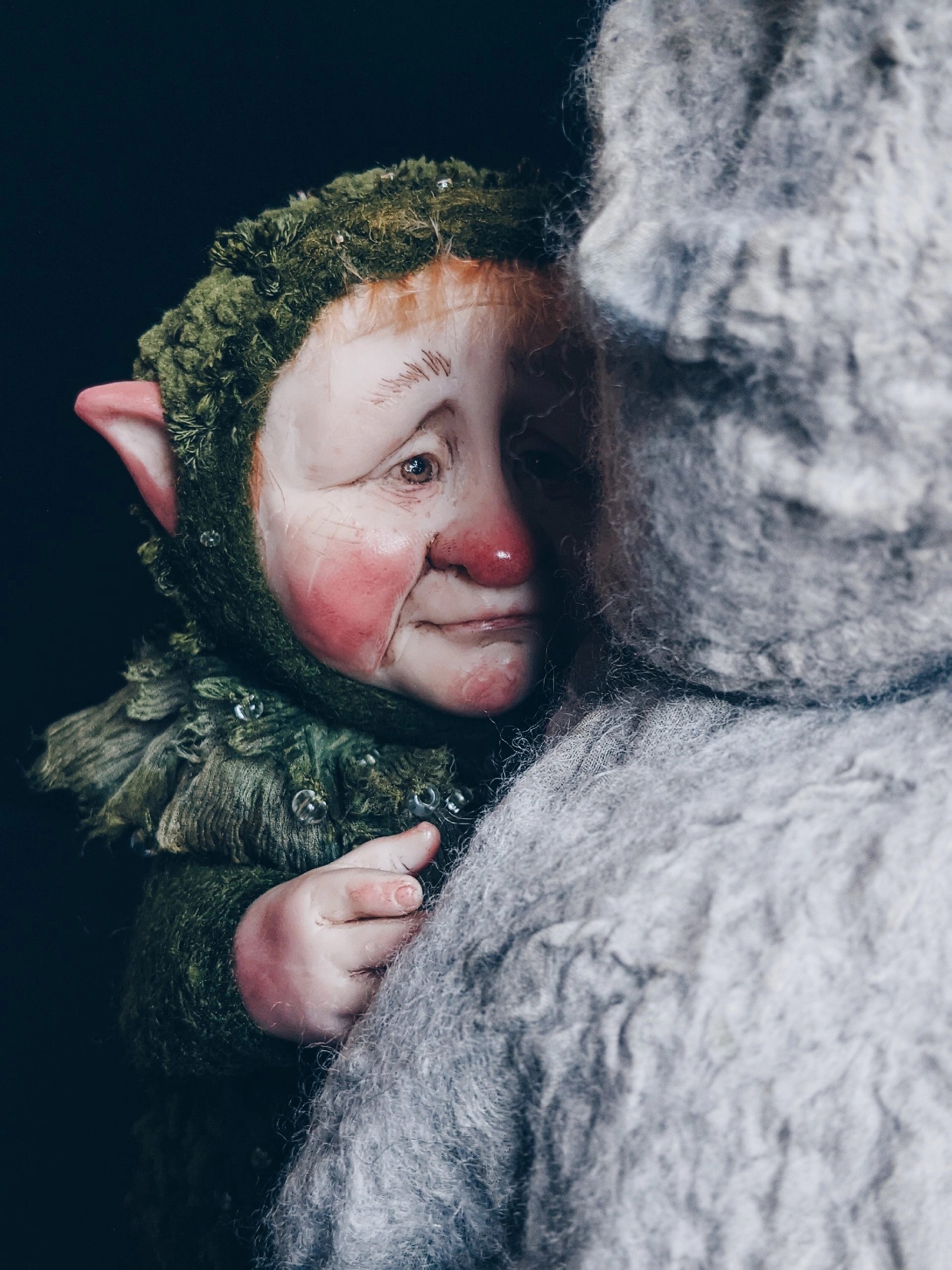
But I understand how much warmth this doll will bring to the person who chose her, and the emptiness slowly releases its grip.
And the emptiness needs to be filled, so today I'll start making a new doll…
What has been your journey with materials—what tools and techniques do you prefer?
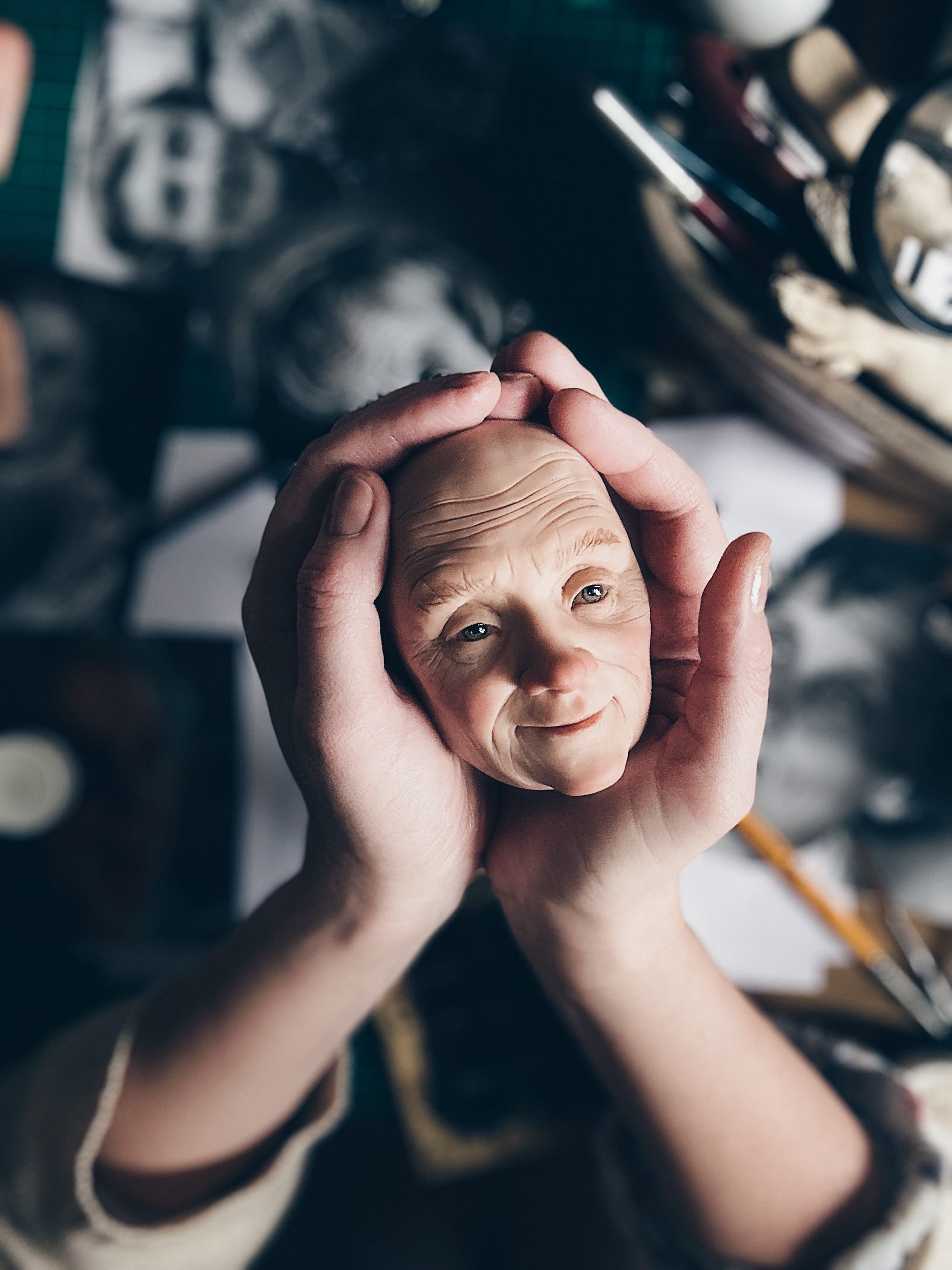
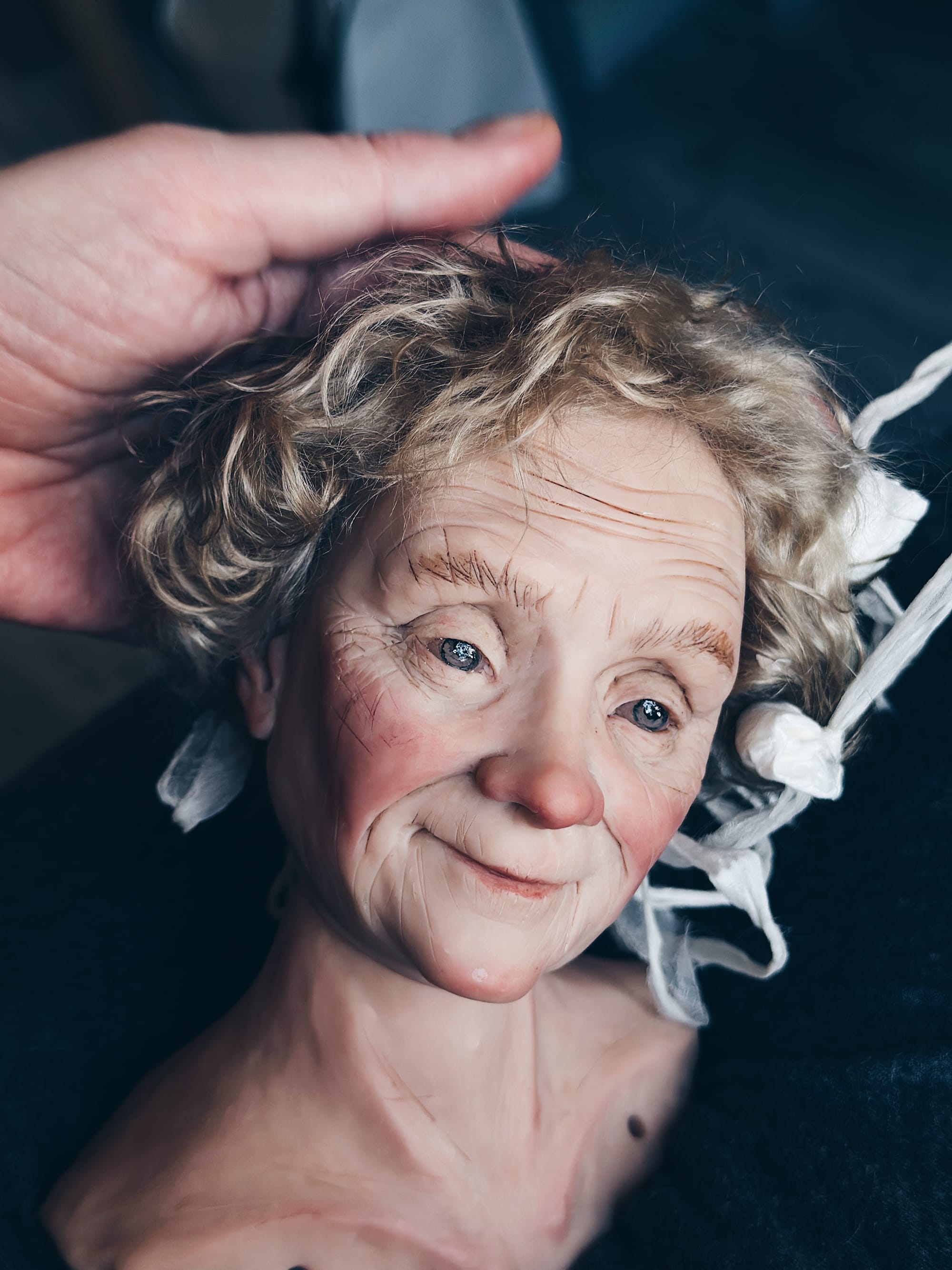
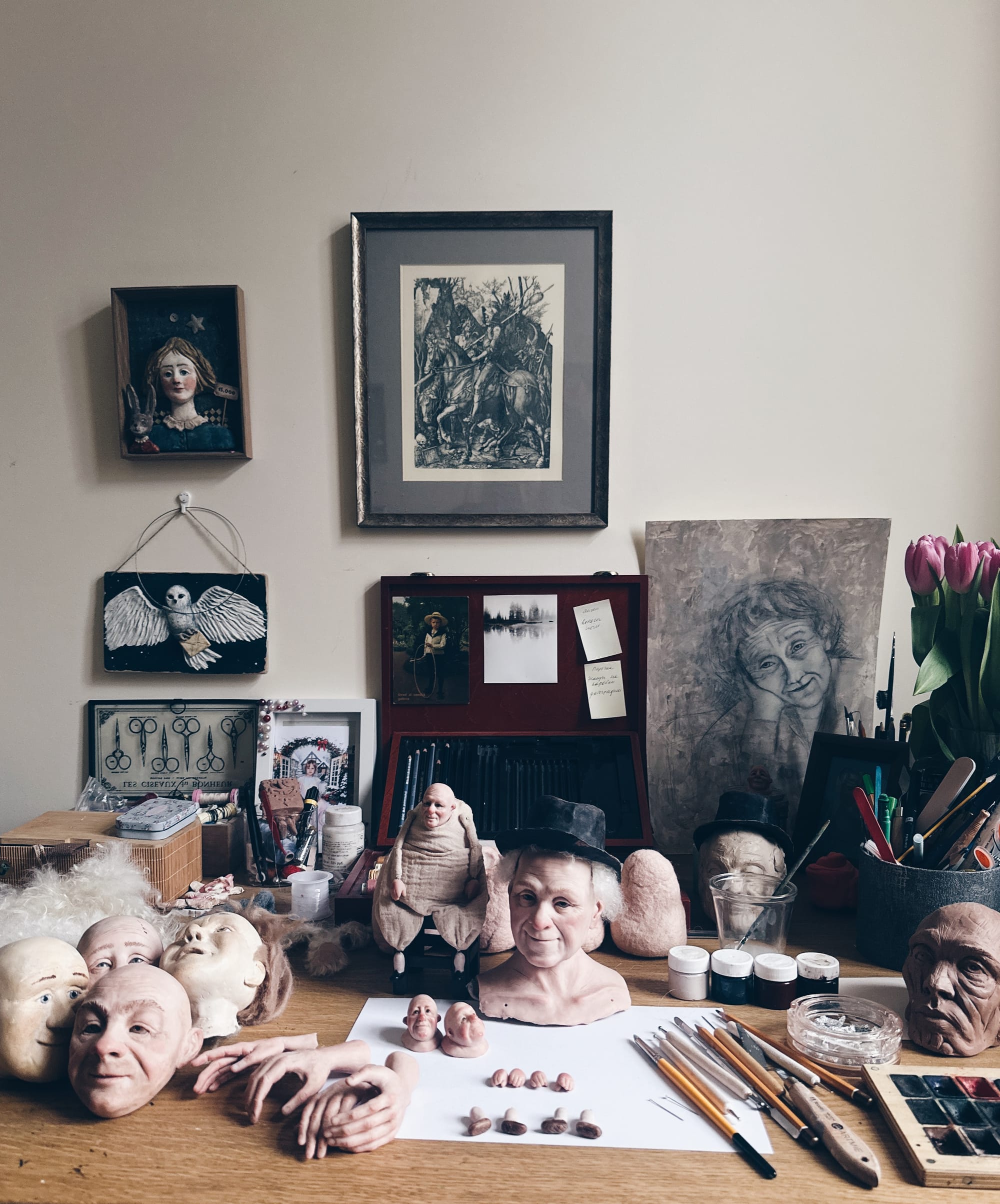
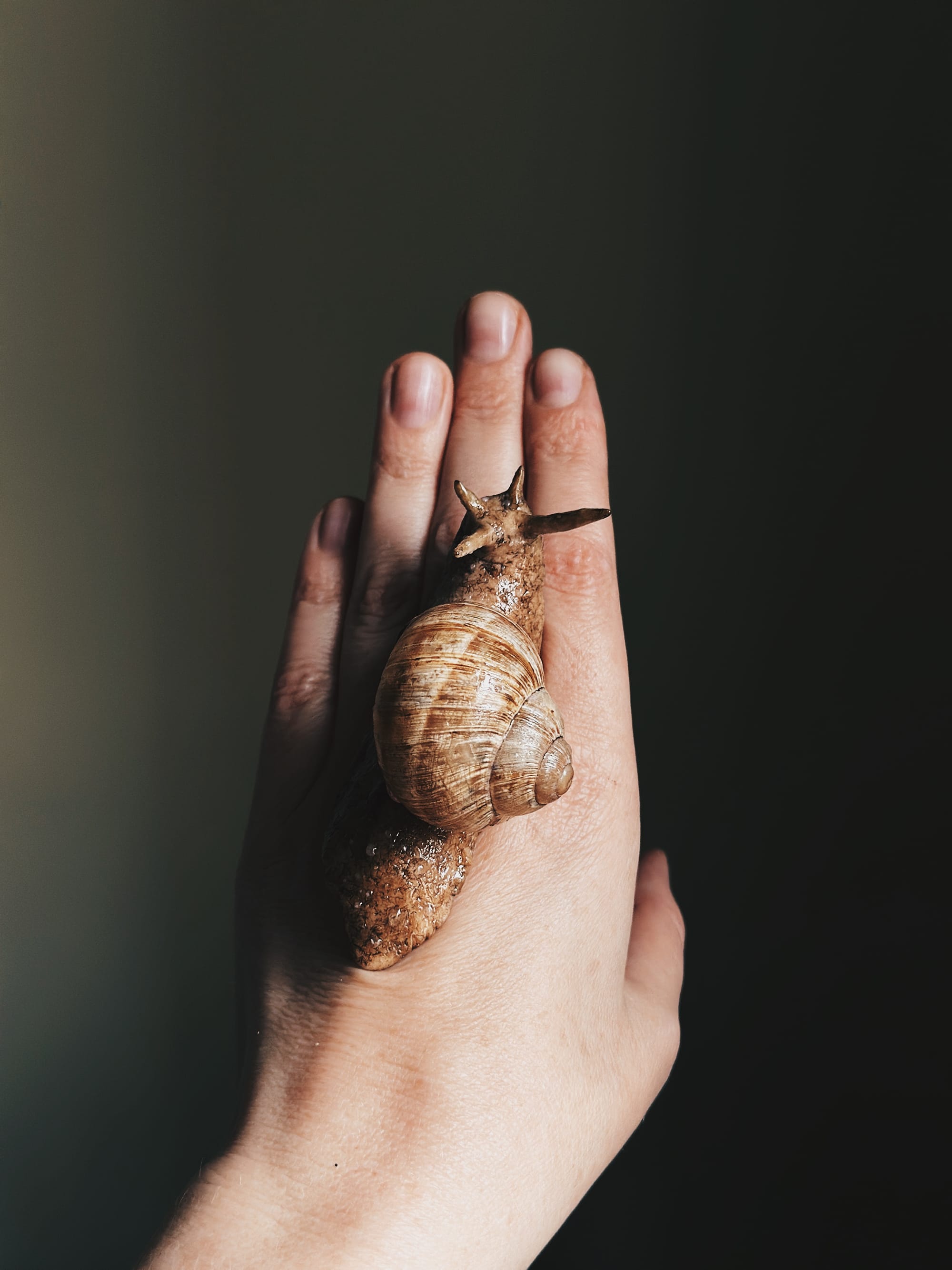
Every artist searches for their material—one that is capable of conveying everything they want to express. And I am no exception! I sculpt from anything that can hold a shape: from paper, foil, sand, plasticine, clay, plastic, bread crumbs, fabric, from anything that has volume and texture. Children in my workshop classes are surprised when a piece of foil transforms in my hands into a bird, a fox, or a bunny in a few seconds. For creating dolls, I really love polymer clays, which allow me to convey an inner light without complex facial painting—for example, Super Sculpey Living Doll. I have a lot of sculpting tools—probably more than 100—but I have 4 favorites: my hands, a dental spatula, a needle, and a stick with a soft tip.
Have there been moments of serious doubt or self-doubt on your path, and how did you overcome them?
Of course, there have been many. They are here even now. They sit right next to me on a chair. I imagine them as funny characters with whom I can negotiate. It just takes effort. Read a book together, watch a movie, learn something new, and the doubts and uncertainties shrink or disappear completely for a while, and then they return. Sometimes the doubts grow and become giants. That's when I need help, I need someone to believe in me.
When someone believes in you, it gives you strength, and you can conquer all doubts and failures.
It's a continuous cycle of doubt. You can't avoid it.
Creativity requires a deep level of thought and dedication—how do you balance this with everyday life?
It's difficult to combine. I am still learning how to balance creativity and everyday life. For this, the help and support of loved ones are crucial. Discipline and day planning also help me. I am a “running” artist. Running helps me concentrate on new projects, run away from doubts (they run after me, too!), find solutions, and recharge my energy for the whole day.
What inspires you every day?
The thought that I have this new day and it will be exactly what I want it to be. It is within my power to make it wonderful and magical, not just for myself, but for someone else too. On this day, I can hug my loved ones, run through the sleeping city, dream, find something new and surprising on my way to work, celebrate the success of my young students, read messages from people under the photos of my work, cry tears of joy, sculpt a new doll... any movement of the soul is a step on the path to inspiration…
Who or what has had a major influence on your work, aside from your chosen technique?
Firstly, of course, my parents; they taught me to see the world, notice its beauty, hear, feel, empathise, and love. Now I am thinking about who else has influenced my creativity, and I realise that practically every person (and not just people) I have met in my life has taught me something. The list of my teachers would be huge, but I won't bore you and will name a few:
- Two elderly men in a sun-drenched outdoor cafe—they taught me that love neither demands nor accuses (incidentally, they became the prototypes for my angels);
- A child running toward me—taught me unconditional love.
- Irina Kacharava—taught me how to make dolls.
- A dog waiting for its owner—taught me loyalty.
- Eric de Sarria—believed in me and taught me not to be afraid of new facets of myself in the world of theatre.
- Books on the shelves—taught me wisdom.
- The rustle of leaves—taught me sensitivity.
- Elena Kunina—believed in me and taught me sculpting and painting the doll's face
- Svetlana Rumak—taught me not to be afraid to draw, various acrylic techniques, and how to make collages…
The list could go on forever... and that's great!
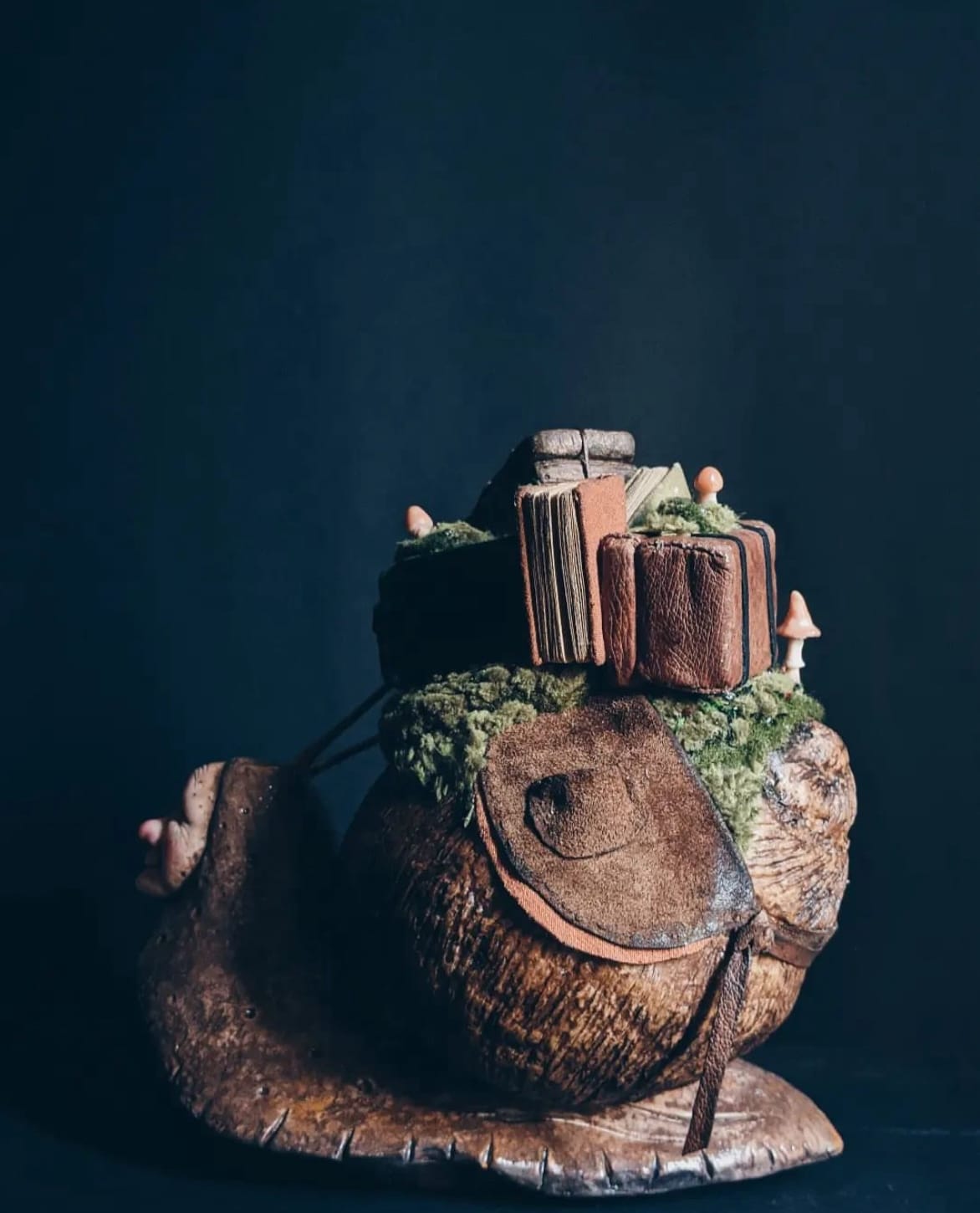
How can art help us?
It can help us just by being there alongside us. It reminds us that we are feeling, empathic human beings. Art helps the artist themself and the people who look at their work. Speaking of my work, one small doll can evoke the same emotions in people from all over the world. People write in different languages from different corners of the world, looking at a doll: about love for their loved ones, about the fear of loneliness, about the soul... If a doll can evoke emotions, feelings, tears, or memories—it's all worth it. People notice this inner light and are lit up themselves. It's also amazing how similar we all are, no matter how much people try to divide us with conventions and borders. This is my most important discovery and treasure!
Has your art had any positive impact on your mental health?
Yes, of course. After all, I am doing what I love immensely. And love is the best medicine for many psychological problems. Moreover, my dolls even help to heal people.
In the skilful hands of a psychotherapist, a doll turns into medicine. There is such a method of working with people whose mental health is unstable. It is a method of clinical psychotherapy for treating a wide range of borderline mental disorders (including slow-progressing schizophrenia), which are characterised by the painful experience of patients feeling their own inferiority. As far as I know, in the second stage of treatment, when the patient already knows a lot about their illness, the doctor, along with other techniques, may introduce the patient to one of my dolls and suggest creating its story. This kind of creative search contributes to self-understanding, acceptance of the illness, and entering a state of inspiration.
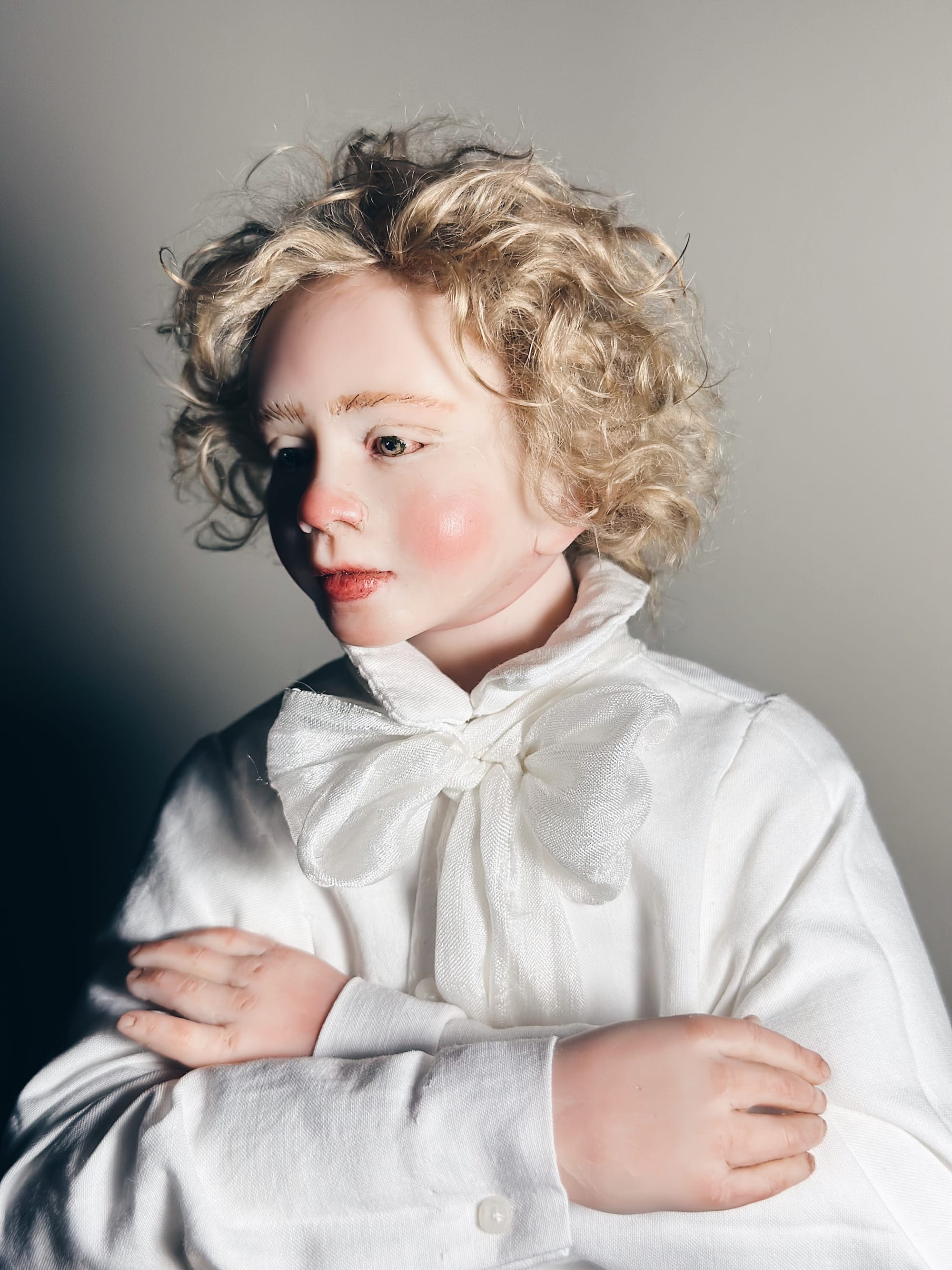
Sometimes it’s best to abandon a non-working idea and move on, and sometimes it’s better to persist and fight for it. How do you know when to retreat and when to move forward?
I have something for such cases—a jar of unsuccessful ideas. The thing is, I am my own strictest critic. It's very important to me that I want to hug every single one of my dolls. If I don't, they are sent to live in the jar of unsuccessful ideas. It sits right here on my desk, and I put not-so-successful heads, arms, and legs in it. It's transparent, and they sit there watching me and waiting for their moment.
What are you currently watching/listening to/reading that you can recommend to us, and why?
I am currently rereading Franz Kafka—his stories and biography. I watched the film Kafka. This is for a future performance that I cannot talk about yet.
I am also rereading Roadside Picnic by the Strugatsky brothers. After that, I want to watch Tarkovsky's film based on that book, which is called Stalker. I really love this work and the film itself. Sometimes I feel like I live inside Tarkovsky's films. It is endless pleasure and inspiration.
What advice would you give to those who are just starting their creative journey?
I would advise them to simply keep doing what you love, what makes your eyes light up and your heart beat faster. It will require a lot of spiritual and physical strength, so it's important to find time for physical activity, for rest, for learning new things, and in your free time, you can also work! If giant doubts arrive, you now know how to make friends with them.
If inspiration is lost, go for a walk, read books, watch movies... Preserve and cherish your inner light.
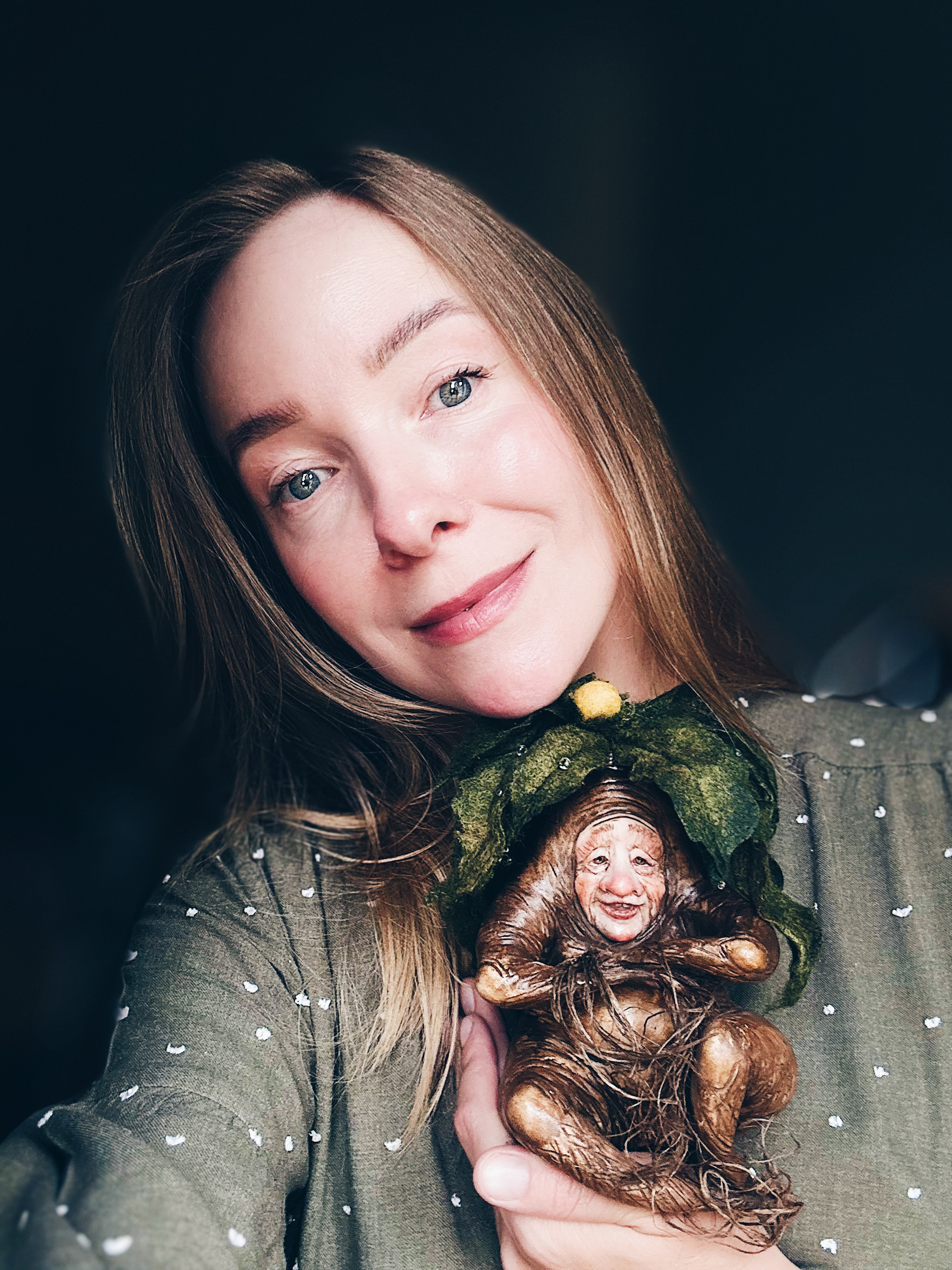
We're constantly on the look out for new artists, creatives and initiatives to feature in TheNeverZine - so if you are, or know someone who is going their own way and doing their own thing on their own terms and would be a good fit to feature please smash that button below and get in contact. By talking to each other, and sharing our journeys, ideas and insights on creativity, art, mental health and resilience we can all create, share and thrive together. Nice thought that.
PS - Don't forget to subscribe below for more content from TheNeverPress 👇